Calendars.
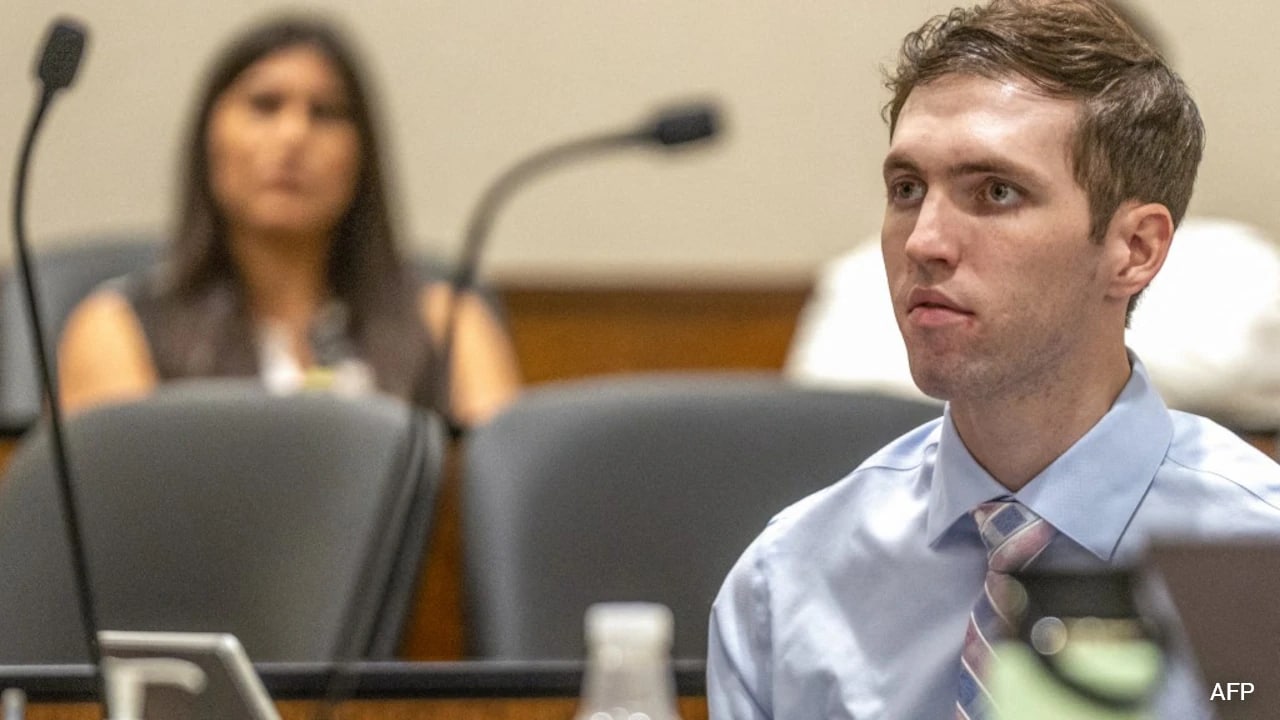
Most of us flip through them without thinking much about the blank squares staring back at us from the far edges of the year, treating future dates like faint pencil sketches that might still be erased or redrawn. Yet when a courtroom puts a marker on June 2028 for a murder trial tied to Charlie Kirk, that blank square stops looking like open time. It starts feeling like a locked room.
Wait.
Two years is a long stretch in the life of a family waiting for answers, a long stretch for witnesses whose memories of a chaotic day are already competing with every headline and clip they have watched since the shock hit, and a long stretch for a public hungry for a clean, settled account of what happened. Setting a trial date in June 2028 is not merely an administrative scheduling choice on a docket sheet. It is a collision between the slow, deliberate machinery of criminal justice and the raw, impatient human ache for closure.
I have sat in enough courtroom galleries over the years to know the particular texture of waiting. The fluorescent lights hum with a low, steady buzz that makes the minutes feel heavier than they are. Shoes squeak softly on linoleum. Lawyers shuffle thick binders tied with red or blue ribbon, speaking in measured cadences while outside the heavy oak doors, people are grieving, arguing, or trying to figure out how to get through a Tuesday without their chest tightening every time a phone buzzes.
You do not need to be a trial lawyer to feel why a June 2028 date stirs friction. In everyday life, when something breaks—a pipe in the wall, a trust between friends, a promise made at a kitchen table—we want to fix it while the water is still wet and the words are still fresh. Criminal courts operate on a different clock entirely. Evidence has to be cataloged, tested, challenged, and suppressed or admitted under strict constitutional rules. Motions fly back and forth like sparks off a grinder. Judges juggle crowded dockets, defense teams hunt for every crack in the prosecution's timeline, and prosecutors try to build a case strong enough to survive every appeal waiting down the road.
(Note: The following portrait of a courtroom observer and a family member is a hypothetical composite created to illustrate the human stakes of long pre-trial timelines, not a report of a specific real-world person.)
Picture Elena, a hypothetical cousin who followed every update from the day the news broke. In the first week, her world narrowed to a single glowing screen. Every notification felt urgent, almost physical, like a tap on the shoulder. By the time a June 2028 trial date appears on the calendar, that sharp edge has nowhere comfortable to go. Grief does not march in a neat, straight line toward a verdict date; it loops back on ordinary errands, catches you off guard in a grocery aisle, and leaves you explaining to coworkers why you still look tired months or years after strangers have moved on to the next story.
Consider what happens next when a case stretches out that far: memory itself becomes a fragile witness.
Human memory is not a video camera sitting on a shelf, waiting to be replayed in high definition in 2028. It is more like a sketch artist working from a mix of sharp impressions and secondhand talk. Over months and years, a person who saw a crowd scatter or heard a loud sound hears other people's descriptions, reads theories online, and watches replays until their own mind stitches together a smoother story than what they originally perceived. Defense attorneys know this. Prosecutors know this. That tension—between wanting time to prepare a thorough case and fearing that time will blur the edges of truth—sits right at the center of major criminal prosecutions.
There is another invisible stake that rarely makes the short wire summaries. A trial date far down the road shapes the public square long before a single juror is sworn in.
When a high-profile murder case has a firm trial horizon years away, the space in between does not stay empty. Speculation rushes into every quiet corner. People fill the silence with certainty—sometimes fierce certainty—long before witnesses take the oath or physical evidence is tested before a jury. In an era where clips travel faster than context and outrage spreads quicker than correction, waiting until June 2028 means living through years of competing narratives while the formal legal reckoning stays out of reach.
Some folks hear "June 2028" and immediately suspect stalling. Others hear it and recognize the grim reality of complex litigation, where rushing a major prosecution can backfire later if shortcuts are taken during discovery or jury selection. Both reactions come from a real place. Skepticism toward long delays is not cynicism for cynicism's sake; it is often frustration born from watching life keep moving while justice seems parked in a holding pattern. At the same time, anyone who has ever watched a sloppy investigation or a rushed trial unravel knows that speed without precision carries its own steep price.
Why The Clock Feels So Heavy
To understand why a murder case linked to Charlie Kirk drawing a June 2028 trial date feels so charged, it helps to separate two things that often get tangled together: what the law requires and what human beings need.
The law demands proof beyond a reasonable doubt. That standard is intentionally high, built out of a hard-earned historical fear of what happens when the state moves too fast and convicts the wrong person or builds a case on shaky ground. Before a jury ever hears opening statements, both sides fight quiet, technical battles over digital records, witness statements, chain of custody, and constitutional protections. In a case carrying heavy public weight, every single ruling is scrutinized with a magnifying glass because a misstep early on can poison the entire proceeding later.
Human beings, though, do not live inside rules of evidence.
When tragedy strikes a public figure or touches a polarized political moment, people look for meaning and accountability right away. A distant date on the court calendar can feel like an emotional deferral. You carry the weight of the event for a while, set it down for a stretch, and then pick it back up every time a new filing hits the news—like carrying a heavy suitcase through an airport terminal that never seems to reach the gate.
And honestly, watching a major case stretch across years can make even attentive citizens feel a little worn out or disoriented. You might find yourself asking what happens between now and then, whether dates like June 2028 ever shift as motions are argued, or how a jury is supposed to weigh events after so much time has passed. That confusion is completely understandable. Court schedules are notoriously fluid, and legal jargon often hides human reality behind Latin phrases and procedural motions.
The Quiet Battles Before Opening Statements
Most people picture a trial as what happens once the gavel comes down and the witnesses take the stand. In reality, much of the fate of a criminal case is shaped in the months and years leading up to that moment.
(Here is a metaphor to make that invisible work concrete: think of a trial like a house built on shifting soil.)
If the foundation is poured in a hurry, the walls might look fine on day one, only to crack when weight is added later. Pre-trial discovery, evidentiary hearings, and legal motions are the foundation work. Prosecutors turn over mountains of material to the defense; defense lawyers test every link in the chain; the judge rules on what information is fair and lawful for a jury to hear. None of that makes for neat thirty-second clips, yet all of it determines whether a verdict holds up when the pressure is highest.
Even something as basic as finding an impartial jury grows more complicated as time rolls on and opinions harden. Jurors are asked to set aside outside noise and judge strictly by the evidence presented in court. That task is never easy in a high-profile case, and a multi-year runway gives attorneys plenty of time to argue over venue, publicity, and fairness—while giving everyone watching more time to form firm views of their own.
What Stays Alive While The Court Waits
History shows us time and again that major criminal cases tied to prominent figures become mirrors for the society watching them. People project their hopes, grievances, fears, and convictions onto the proceedings. Sometimes that produces fierce solidarity; sometimes it deepens divides that were already wide.
Yet underneath the legal strategy and public noise, the core of a murder case remains stubbornly personal. A life was ended. Families are left with an empty chair that no court date—not this month, not next year, not in June 2028—can refill. No verdict, whatever it turns out to be, rewinds the clock or erases the grief of the people closest to the loss.
What a trial can do, when done carefully and fairly, is establish an accountable public record tested by cross-examination and governed by rules rather than rumors. Waiting until June 2028 tests everyone's patience in the meantime, forcing a long stretch of endurance between the moment of fracture and the moment of formal judgment.
Out in the quiet hours before dawn, long after the day's debates cool down, that long stretch of calendar pages still sits there—unturned, heavy with expectation, waiting for time to catch up to the courtroom door.