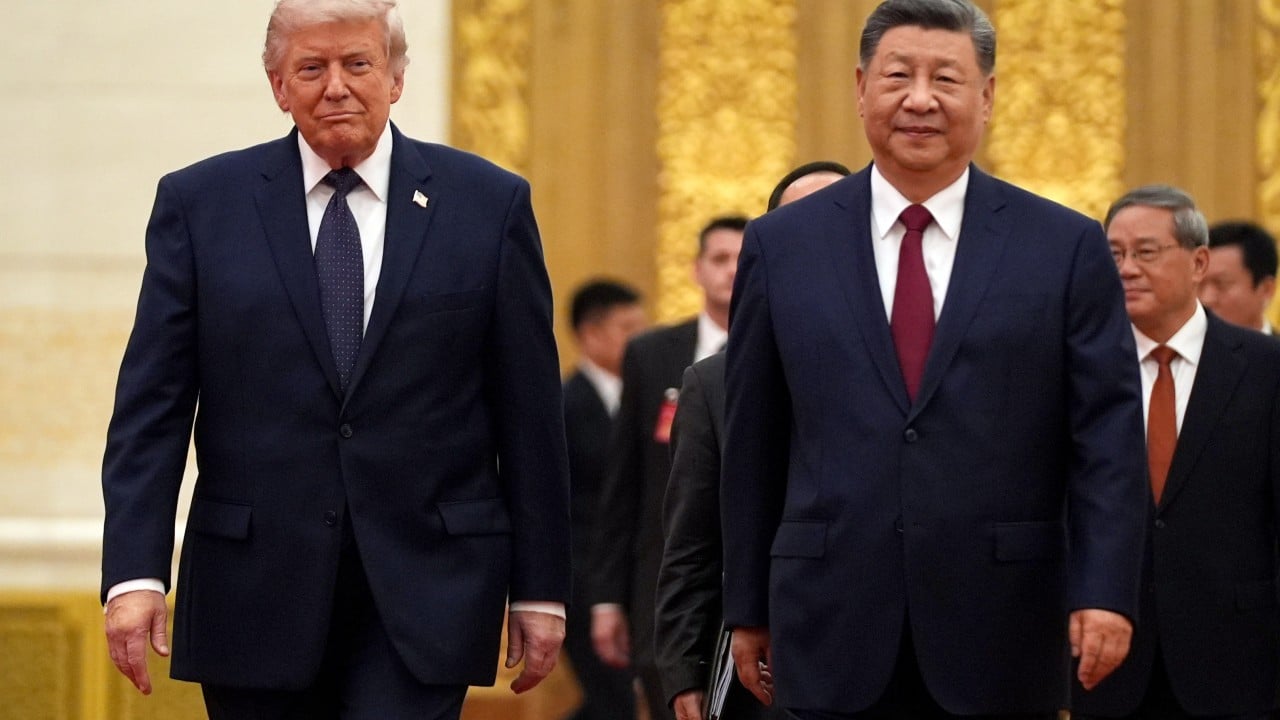
Most equity desks are pricing the upcoming Xi-Trump summit like a binary coin flip. Either Donald Trump and Xi Jinping shake hands on a sweeping tariff truce and the S&P 500 rips higher, or the talks blow up and supply chains seize overnight.
That framing is lazy. And if you're positioning your portfolio around a simple "deal or no deal" outcome, you're probably going to get whipsawed on the headline.
Having watched institutional desks trade through the 2018–2019 trade war, the Phase One signing, and the tariff escalations of 2025, I can tell you the real market-moving signal rarely comes from the joint press conference. It comes from the boring, technical footnotes buried in the readout three hours later. Investors are bracing for best and worst scenarios right now, yet almost nobody is talking about the messy middle ground that actually moves bond yields, currency pairs, and semiconductor multiples.
Why the Binary Summit Narrative Fails Investors
Wall Street loves clean stories. Traders want to know whether to buy the Hang Seng Index and American industrials at the open, or hide in Treasury bills and gold.
The problem is that neither Washington nor Beijing enters a high-stakes bilateral meeting with the domestic flexibility to offer a grand bargain. Trump's economic platform rests heavily on reciprocal tariffs, reshoring manufacturing, and shrinking the bilateral goods deficit. Xi, meanwhile, is managing a Chinese economy leaning hard on high-tech manufacturing exports—electric vehicles, solar panels, legacy chips, and industrial machinery—to offset a prolonged domestic property slump.
When two leaders have structurally incompatible economic priorities, a handshake doesn't erase the friction. It just changes the rules of engagement.
Think back to the Phase One trade deal signed in January 2020. Markets rallied into the ceremony because everyone wanted the uncertainty to end. Yet the core 25% Section 301 tariffs on roughly $250 billion of Chinese goods stayed right where they were, and China ultimately fell well short of its agricultural and manufacturing purchase commitments. The headlines screamed peace, while the actual cost of doing business across the Pacific barely budged.
If you treat this Xi-Trump summit preview as a binary event, you'll miss the structural shifts happening beneath the surface. The real question isn't whether they agree. It's which specific sectors get carved out for exemptions, and which ones get handed over as sacrificial lambs.
The Best Case Scenario Isn't a Tariff Rollback
Let's be realistic about what a "best case" outcome actually looks like for markets. It is not a full repeal of U.S. tariffs on Chinese imports. Expecting Trump to abandon tariffs as his primary economic tool is like expecting the Federal Reserve to stop talking about inflation.
Instead, the genuine upside scenario for global equities involves three specific, plausible concessions:
- A formal pause on new tariff escalations. Freezing the current tariff schedule gives multinational CFOs something they haven't had in months—predictability. Even high tariffs can be modeled into corporate guidance if the rate stops jumping every quarter.
- Targeted agricultural and energy purchase pledges. Beijing knows how to play to Trump's domestic base. A renewed commitment to buy American soybeans, corn, liquefied natural gas, and Boeing aircraft costs Xi very little politically while giving the White House an immediate talking point.
- Clearer guardrails around export controls. If the Commerce Department agrees to pause new additions to the Entity List while working groups meet, global semiconductor equipment makers like ASML, Applied Materials, and Lam Research could see an immediate relief rally.
Notice what's missing from that list? Any real concession on intellectual property, state subsidies, or advanced AI compute.
In this upside case, cyclical stocks, freight carriers, and multinational consumer brands with heavy China revenue exposure—think Apple, Nike, and Starbucks—would likely catch a strong bid. The offshore yuan (CNH) would strengthen back toward more comfortable ranges, taking pressure off emerging market currencies across Asia.
Still, smart money won't chase that rally blindly. A tactical truce is not a structural reset. If you buy into a relief bounce, you have to watch whether corporate guidance in the following earnings season actually reflects lower input costs, or if companies are just breathing a sigh of relief that things didn't get worse.
What the Worst Case Scenario Actually Looks Like
On the flip side, everyone thinks they know what the worst case looks like. They picture Trump walking out of the room and slapping blanket 60% tariffs on every container leaving Shenzhen, followed by Beijing dumping U.S. Treasuries.
Hold on. Let's separate real tail risks from financial media fear-mongering.
First, China dumping its roughly $750 billion to $800 billion pile of U.S. Treasuries is largely a myth. Doing so would crash the value of Beijing's remaining reserves and send the yuan soaring, which would destroy Chinese export competitiveness overnight. Beijing isn't going to shoot its own currency in the foot just to spike 10-year Treasury yields for a few weeks.
The real worst case scenario is much more surgical, and frankly, much harder for corporate America to hedge against.
It looks like a breakdown in talks followed by asymmetric retaliation. Rather than matching U.S. tariffs dollar-for-dollar—which China struggles to do simply because it imports far less from the U.S. than it exports—Beijing targets the choke points of American corporate profitability.
We've already seen the playbook. China can tighten export licensing on critical minerals like gallium, germanium, graphite, and rare earth processing technologies. Without processed rare earths, U.S. defense contractors, EV makers, and wind turbine manufacturers hit immediate production bottlenecks.
At the same time, Beijing can deploy regulatory friction against high-profile U.S. firms operating inside China. Sudden antitrust probes, customs delays on perishable goods, state-media boycotts, or restrictions on government employees using foreign devices hit American earnings without a single tariff line ever changing.
For investors, a breakdown at the summit doesn't just mean higher consumer inflation in the U.S. It means margin compression for S&P 500 companies that rely on Chinese manufacturing scale or Chinese end-market demand. If the talks collapse without even an agreement to keep talking, expect the VIX to spike, gold to attract aggressive safe-haven flows, and domestic small-caps with minimal foreign revenue exposure to outperform mega-cap multinationals.
Four Specific Signals to Watch During the Summit
Skip the pundit panels analyzing body language and handshake duration. If you're managing money around this event, keep your eyes on four concrete indicators.
1. The Fate of the De Minimis Loophole and Transshipment Rules
Tariffs only work if companies can't easily route around them. Over the past few years, Chinese manufacturers have poured billions into factories in Vietnam, Mexico, and Malaysia to assemble goods bound for the U.S. market. Meanwhile, direct-to-consumer platforms have leaned heavily on the U.S. de minimis threshold, which historically allowed packages under $800 to enter duty-free.
Watch the post-summit language around rules of origin and transshipment. If the U.S. insists on strict country-of-origin enforcement—meaning goods with high Chinese component value face tariffs even if assembled in Mexico or Southeast Asia—that hits a massive swath of retail, apparel, and electronics importers. Conversely, if Beijing negotiates softer language here, "China-plus-one" supply chain plays in Southeast Asia get a major reprieve.
2. Semiconductor and AI Equipment Language
Tech hardware is the sharpest edge of the U.S.-China rivalry. The Biden administration tightened controls on advanced AI chips and lithography equipment, and the Trump administration has shown zero appetite for letting Beijing catch up in frontier compute.
Pay close attention to whether the summit readout mentions "national security export controls" as off-limits for negotiation. If Trump holds firm that chip restrictions are non-negotiable, the market will immediately price in further decoupling in tech hardware. Any hint of licensing flexibility for legacy chips or consumer electronics components, however, will trigger aggressive short-covering in semiconductor names.
3. Currency Stability Commitments
Currency moves often offset tariffs faster than politicians realize. During the 2018–2019 trade disputes, the People's Bank of China allowed the yuan to weaken past the psychologically important 7.00 per dollar mark, effectively cushioning Chinese exporters against U.S. import duties.
If the summit produces a quiet understanding on exchange rate stability—similar to the currency provisions tucked into the Phase One deal—it signals both sides want to avoid a competitive devaluation spiral. If there is no mention of currency coordination, watch the daily PBOC yuan fixing rate the morning after the summit. A sharply weaker fix is Beijing's clearest way of telling markets it is preparing for prolonged tariff pressure.
4. Agricultural and Energy Volume Targets
It sounds old-fashioned in an era dominated by AI and green tech, yet commodities remain the fastest barometer of diplomatic goodwill. China is the world's largest buyer of soybeans and a massive importer of crude oil and LNG.
Look for hard numbers rather than vague promises to "expand trade." If state-backed buyers like COFCO or Sinopec announce immediate cargo bookings of U.S. Gulf Coast soybeans or LNG within days of the meeting, that confirms a working channel is open. Silence from commodity desks means the smiles for the cameras didn't translate into commercial orders.
How Different Asset Classes Are Positioned Right Now
Understanding the scenarios only helps if you know where markets are already leaning. Going into high-profile diplomatic events, consensus positioning often creates asymmetric risk—meaning the crowded trade suffers the most even on mild news.
U.S. Equities have spent much of the year treating tariff threats as a negotiating tactic rather than a permanent policy shift. Large-cap tech and industrial stocks are priced for resilient corporate margins. That leaves equities vulnerable to disappointment if the summit ends with immediate tariff implementation dates rather than another 90-day review period.
Chinese Equities, particularly offshore shares listed in Hong Kong and New York, trade at steep valuation discounts compared to U.S. peers. Because global institutional positioning in China remains relatively light, even a mediocre "no new bad news" summit can spark a sharp, tactical squeeze higher in beaten-down Chinese tech and consumer names. Just don't confuse a positioning squeeze with a long-term bull market until domestic Chinese consumer confidence actually recovers.
U.S. Treasuries face a tricky cross-current. Normally, geopolitical tension drives bond prices up and yields down as investors seek safety. With tariffs, however, bond traders have to weigh slower global growth against a one-time bump in U.S. goods inflation. If the summit goes badly and broad tariffs look imminent, the yield curve could steepen as short-term inflation expectations collide with long-term growth worries.
The U.S. Dollar remains the cleanest shock absorber. Nearly every textbook trade model shows that higher U.S. tariffs push the dollar higher against trade-weighted baskets, as U.S. demand for foreign currency drops to pay for fewer imports. A messy summit almost certainly strengthens the dollar, which in turn tightens financial conditions globally and weighs on dollar-denominated commodities like copper and crude oil.
Common Mistakes Investors Make Around High-Stakes Summits
I've seen smart portfolio managers make the exact same unforced errors during major geopolitical meetings. Avoid these three traps:
- Trading the first headline. Algorithmic trading systems scrape wire services and react within milliseconds to words like "productive," "tariff," or "impasse." The initial 15-minute move after a summit statement drops is almost always noise. Wait until both the White House fact sheet and the Chinese Ministry of Foreign Affairs readout are published before making allocation changes, because the two sides routinely describe the exact same meeting in completely different ways.
- Over-indexing on direct China revenue. Looking at a company's direct sales in mainland China only tells half the story. A U.S. industrial manufacturer might generate only 5% of its revenue in China, yet rely on Chinese suppliers for 40% of its specialized castings, circuit boards, or chemical precursors. Supply chain exposure hurts margins just as fast as lost sales.
- Ignoring second-order winners. When U.S.-China friction rises, global capital and supply chains don't vanish—they relocate. Industrial real estate in northern Mexico, ports in Vietnam, and manufacturing hubs in India have been the steady structural beneficiaries of bilateral tension regardless of who sits in the Oval Office.
What to Do Before the Leaders Meet
Don't try to guess what two unpredictable leaders will say behind closed doors. Instead, stress-test what you already own against both sides of the ledger.
Pull up your top ten equity holdings and check two specific metrics from their latest 10-K filings or earnings transcripts: gross margin sensitivity to imported components and Asia-Pacific revenue concentration. If your portfolio is heavily tilted toward companies that both manufacture in Asia and sell high-margin goods to price-sensitive U.S. consumers, you're carrying uncompensated event risk into the summit.
Trim concentrated positions that have already priced in a smooth diplomatic outcome, keep enough cash or short-duration Treasuries on hand to buy high-quality domestic compounders if a headline dip hits the tape, and let the fast-money algorithms fight over the first thirty minutes of press coverage.