Silence.
Not the comfortable quiet of a Sunday morning, nor the peaceful hush of snow falling on an empty street, but the suffocating, pressurized stillness of half a million teenagers holding their breath at the exact same second.
In South Korea, every November, the nation stops. Planes are grounded for thirty-five minutes so the roar of jet engines does not disturb an English listening comprehension test. Stock markets open an hour late. Police motorcycles idle outside high school gates, ready to ferry panicked, oversleeping students through parted traffic like heads of state. Construction sites fall mute. Office workers delay their commutes. The entire machinery of an economic superpower slows to a crawl, all to protect the concentration of nineteen-year-olds sitting at wooden desks.
This is the Suneung—the College Scholastic Ability Test. To call it an exam is like calling the ocean a puddle. In a society built on hyper-competitive meritocracy, those eight grueling hours determine which university you attend, which conglomerate will hire you, whom you might marry, and where you will sit in the social hierarchy for the rest of your breathing life.
And because the stakes are absolute, the desperation to beat the system has shrunk down to the size of a pinhead.
Literally.
When South Korea’s Ministry of Education announced ahead of recent exam cycles that proctors would begin physically inspecting students’ eyeglasses and shirt buttons for hidden cameras and micro-transmitters, the outside world read the headline as a piece of bizarre, cyberpunk trivia. A quirky news brief from Seoul. Something to chuckle at over morning coffee before scrolling to the next story.
They missed the tragedy entirely.
To understand why a government official has to peer intently at the plastic button on an eighteen-year-old’s uniform, you have to understand the weight resting on that teenager’s shoulders. Let us imagine a student—let’s call him Min-jun, a composite of thousands of young men I have watched stumble out of test centers at dusk with hollow eyes and ink-stained fingers.
Min-jun has spent the last twelve years preparing for this single Thursday. Since he was seven, his days have followed a brutal rhythm: public school from eight in the morning until four in the afternoon, followed by hagwons—private cram schools—until ten or eleven at night, followed by silent, solitary study in a cramped reading room until one in the morning. His parents have poured nearly a quarter of their household income into his tuition. His mother has spent the past hundred days praying at a local Buddhist temple, bowing one hundred and eight times each dawn.
When Min-jun walks through the school gates at 8:10 AM, he is not carrying a backpack full of books. He is carrying a family’s entire generational ambition.
And waiting for him at the classroom door is a proctor holding a handheld metal detector, eyeing the frames of his glasses.
The Architecture of Paranoia
If you have never sat in an exam hall under suspicion, it is difficult to describe how quickly a testing room turns into an interrogation cell.
I remember my own standardized testing days—nothing nearly as ferocious as the Suneung, yet the memory of that sterile fluorescent hum still makes my stomach tighten. You become hyper-aware of your own body. Every cough sounds like a coded signal. Every shift in your chair feels like a suspicious movement. Now, multiply that anxiety by a factor of a thousand, and add a state-mandated inspection of your clothing.
The mechanics of the Suneung anti-cheating protocol read like the security clearance for a nuclear facility. Before the first bell rings, students must surrender every electronic device they own. Smartphones, smartwatches, digital cameras, electronic dictionaries, MP3 players, e-cigarettes, Bluetooth earphones—all go into a collection bag at the front of the room. Even analog watches are banned; test-takers can only use basic mechanical or battery-operated timepieces with no LCD screens, no stopwatch functions, and no memory storage.
Proctors are issued their own specific, government-approved pencils and erasers to hand out, ensuring no one smuggles a miniature scanner disguised as a mechanical pencil. Students are patted down with wand scanners during bathroom breaks. Only one student is allowed in the restroom at a time, escorted down the hallway by a proctor of the same gender who checks the stalls before and after.
Yet, despite this fortress of rules, the cat-and-mouse game continues to escalate. Why? Because consumer espionage technology has become shockingly cheap, terrifyingly small, and accessible with a few clicks on an overseas shopping portal.
Think of a standard plastic shirt button, roughly ten millimeters across. To the naked eye, it is a mundane piece of notched resin holding two pieces of cotton together. Now, imagine hollowing out the center of that button to house a pinhole camera lens no wider than the tip of a ballpoint pen. A hair-thin ribbon cable runs beneath the fabric of the shirt to a matchbox-sized transmitter taped to the wearer’s ribs.
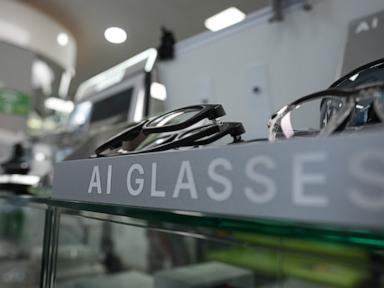
Or consider a pair of thick-rimmed acetate glasses—the exact style worn by millions of bleary-eyed, nearsighted South Korean teenagers. Hidden inside the temple arm is a tiny battery and a micro-camera aimed directly at whatever the wearer is reading. Paired with a bone-conduction earpiece so small it disappears completely into the ear canal, the setup turns a student into a live broadcasting station.
In theory, the operation works like an intelligence extraction. The student looks down at the dense Korean language passages or complex calculus problems on the exam sheet. The lens captures the page. An accomplice sitting in a parked van three blocks away, or in an apartment across the city, receives the high-definition feed on a laptop, solves the questions in real time—often using a team of hired tutors—and whispers the multiple-choice answers straight into the student’s inner ear.
It sounds like a thriller script. Except South Korean police and education officials have actually caught people doing it.
Ghosts in the Exam Hall
The modern era of Suneung anti-cheating paranoia began in earnest in November 2004, a watershed moment that shattered the country’s illusion of an incorruptible test. In the southwestern city of Gwangju, authorities uncovered a massive, coordinated cheating ring involving over a hundred students and accomplices. Using modified mobile phones strapped to their bodies and hidden earpieces, test-takers transmitted answers out of the exam halls to hired "solvers" waiting in nearby motels, who then texted coded vibrations back to the students’ phones.
The scandal rocked South Korea to its foundation. In a country where the Suneung was viewed as the one great equalizer—the single arena where the child of a factory worker could theoretically outscore the child of a conglomerate chairman through sheer grit—the realization that money could buy invisibility inside the test room felt like a national betrayal.
The government responded with an iron fist. Penalties were cranked up to draconian levels. Under South Korea’s Higher Education Act, anyone caught cheating on the Suneung does not just fail the test. Their entire exam is voided immediately. They are banned from taking the test the following year. And if the cheating involves organized fraud or electronic devices, they face criminal prosecution, heavy fines, and actual prison sentences.
Yet the ghosts never really left the exam hall. They just got smaller.
In subsequent years, sporadic cases kept the authorities awake at night. Police uncovered conspiracies involving miniature transmitters sewn into underwear, modified calculators, and bone-conduction receivers. Every time the Ministry of Education closed one loophole, online black markets began advertising a newer, sleeker piece of spyware just weeks before November.
This is the invisible arms race happening beneath the surface of East Asian education. It is not driven by hardened criminals; it is driven by sheer, unadulterated panic.
Consider what happens when a society funnels all its youth through a single, narrow doorway. When the penalty for stumbling is perceived as social death, rational ethics begin to warp. A desperate parent, watching their child suffer panic attacks and nosebleeds from sleep deprivation, might stumble across an encrypted messaging channel promising a "guaranteed score boost" via micro-camera glasses. Suddenly, buying a piece of espionage gear doesn't feel like a crime. It feels like buying a life preserver for a drowning child.
And so, the proctors are forced to become counter-intelligence agents.
The Human Cost of Suspicion
Let’s step back inside that chilly November classroom for a moment. Forget the criminals and the spy-tech vendors. Look at the 99.9 percent of students who would never dream of cheating.
Imagine you are eighteen years old. You have slept four hours. Your hands are trembling slightly from a combination of cold air, caffeine, and sheer adrenaline. You are wearing your favorite lucky sweater—or perhaps a crisp button-down shirt your mother ironed the night before—and the thick glasses you have worn since middle school because years of staring at textbooks under dim desk lamps ruined your vision.
Before you can even read the first question of the Korean language section, a middle-aged teacher steps up to your desk. They ask you to take off your glasses. They hold the frames up to the fluorescent ceiling light, inspecting the hinges, running a thumb along the plastic arms, checking the bridge of the nose for unnatural bulges or tiny dark pinpricks. Then, their eyes drop to your chest. They lean in, peering closely at the buttons running down your shirt, looking for mismatched stitching, slightly thicker plastic, or the telltale glint of glass inside a thread hole.
How does that feel?
It feels like being presumed guilty before you have even picked up a pencil.
There is a profound, quiet humiliation in that inspection. Even when conducted with the utmost professionalism and politeness—and South Korean proctors are rigorously trained to minimize disruption—the subtext is unmistakable: We do not trust you. The stakes are too high to trust anyone.
Proctors hate it, too. Most of the officials tasked with policing the Suneung are ordinary high school teachers pulled from their regular classrooms for the day. They know these kids. They have watched them grow up, comforted them when they cried over mock exam scores, and written their recommendation letters. Having to frisk them with metal wands and scrutinize their eyeglasses turns mentors into prison guards for eight agonizing hours.
And the margin for error is terrifyingly thin. If a proctor misses a hidden camera, a fraudulent score slips through, stealing a coveted university seat from an honest student who studied until their fingers bled. On the other hand, if an overzealous proctor falsely accuses an innocent student—or causes a twenty-minute commotion inspecting a weird-looking novelty button while the clock ticks down on the math section—they have just ruined a young person’s future through sheer bureaucratic paranoia.
There have already been real-world casualties of this hyper-vigilance. In recent years, the South Korean government has faced lawsuits from students whose exams were invalidated after a proctor’s phone accidentally rang in the room, or when a test-taker forgot an unpowered, dead MP3 player at the bottom of their bag—an honest mistake treated with the exact same severity as a coordinated high-tech spy ring.
When the rules become absolute, nuance dies. A piece of lint in a buttonhole looks like a camera lens. A nervous twitch looks like a signal.
Why We Build Traps for Our Own Children
It is easy for outside observers to look at South Korea’s Suneung security measures and shake their heads at the absurdity of it all. Inspecting shirt buttons? Banning digital watches? Grounding commercial airliners? It sounds like dystopian satire.
Yet before we judge, we ought to look closely at what this obsession reveals about modern education everywhere. South Korea is simply the sharpest, most concentrated version of a global sickness: the belief that a human being’s worth, potential, and future can be accurately measured on a single day, using a standardized Scantron sheet.
When you compress an entire youth into one high-stakes exam, you create an unnatural pressure cooker. And physics tells us what happens when you heat a sealed vessel without a release valve. Something breaks.
Sometimes, what breaks is the integrity of the test itself, pushing desperate families toward micro-cameras and hidden earpieces. Far more often, what breaks is the spirit of the students sitting at those desks. South Korea consistently records some of the highest rates of youth stress and academic burnout among developed nations. Walk past any hagwon district in Seoul—like Daechi-dong—at ten o'clock on a Tuesday night, and you will see thousands of exhausted teenagers pouring onto the sidewalks, their faces lit by the blue glow of smartphones as they wait for shuttle buses to take them home to do more homework.
They are bright, resilient, extraordinarily hardworking kids. They deserve a system that honors their effort rather than one that has to pat them down like suspects at an airport security checkpoint.
Policy experts in Seoul know this. Every few years, a new administration promises sweeping reforms to reduce reliance on the Suneung, to expand holistic university admissions, or to ease the suffocating grip of private cram schools. Yet the cultural gravity of the exam remains immense. Parents distrust subjective admissions criteria, fearing that interviews and extracurricular portfolios favor wealthy families with connections. To millions of South Koreans, the cold, brutal objectivity of the Suneung—for all its psychological cruelty—remains the fairest arena they have.
And so, the fortress walls must be maintained. If the exam is the only gate people trust, then the guards at that gate must inspect every single thread, every lens, and every button that passes through.
The Last Bell
At 5:45 PM on that November Thursday, the final bell rings across the country.
For students taking the optional second foreign language section, the ordeal stretches past five o'clock, long after the autumn sun has dipped below the concrete apartment towers of Seoul. Outside the school gates, hundreds of parents stand huddled in padded winter coats, clutching thermoses of warm barley tea and bouquets of flowers, stamping their feet against the chill.
The heavy iron gates swing open.
Out they come—Min-jun and half a million others. Some are weeping openly, collapsing into their mothers’ arms as twelve years of pent-up tension finally detonates. Others stare blankly ahead, too numb to process whether they succeeded or failed. A few pump their fists in silent triumph.
Their glasses are back on their faces, untouched and unremarkable. Their shirt buttons are still fastened against the November wind.
Inside the empty classrooms behind them, weary proctors gather up the test booklets, sealing them in boxes to be whisked away under police escort. For another year, the perimeter held. The cameras were kept out. The system survived intact.
Yet as those teenagers walk away into the darkening streets, blinking against the streetlights, it is hard not to wonder what was truly protected inside those rooms—and what was quietly left behind on the floor.