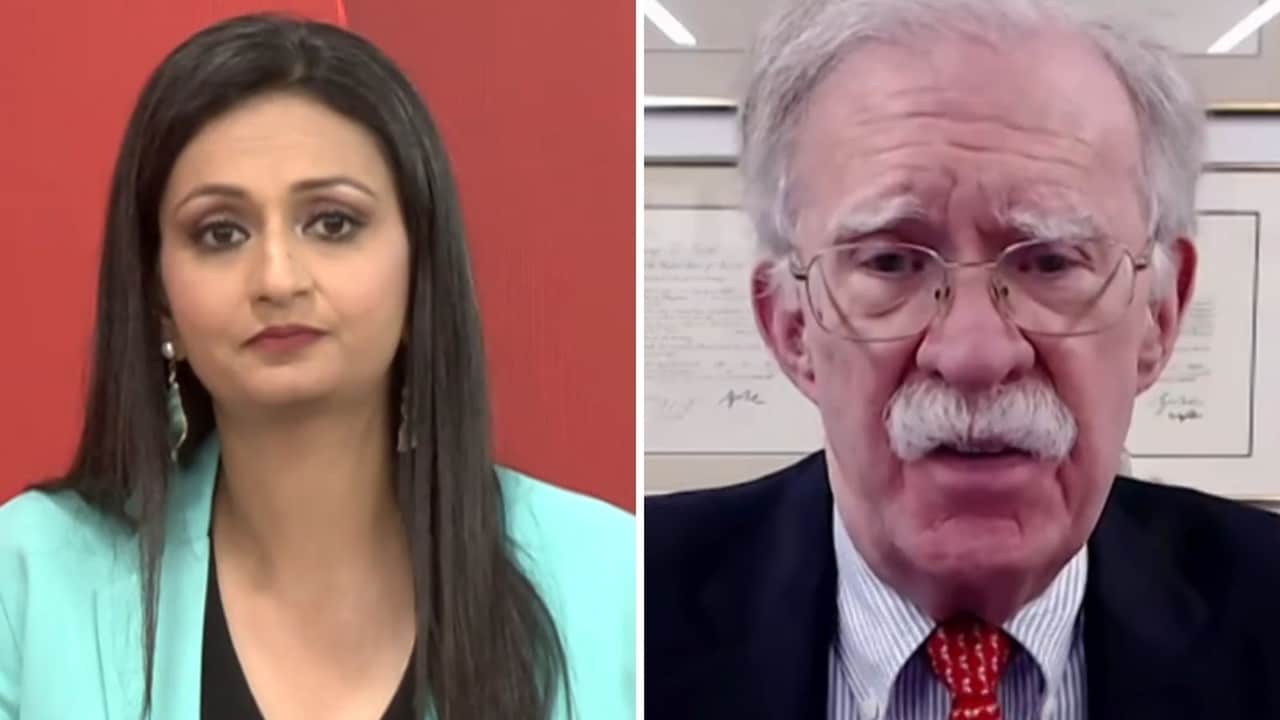
The foreign policy establishment is obsessed with the myth of the brittle regime. For decades, the talking-head circuit—most recently exemplified by John Bolton’s standard-issue analysis on international networks—has peddled a comforting narcotic: the Iranian regime is too fractured, too chaotic, and too inherently unstable to withstand targeted American pressure. They point to internal factional infighting, street protests, and economic stagnation as proof that the Islamic Republic is always one bad election cycle or one harsh round of sanctions away from total collapse.
They are fundamentally misreading the mechanics of authoritarian survival.
What career diplomats and hawkish pundits dismiss as a fatal weakness is, in reality, a deliberate feature of the regime’s structural design. The assumption that internal friction dooms external strategy is a projection of Western democratic anxieties onto a theological autocracy. Washington keeps expecting a house of cards. Tehran keeps building a shock-absorber.
The Friction Myth and the Error of Projected Vulnerability
The conventional consensus rests on a flawed premise: that a government must be harmonious to be effective. When analysts dissect the rivalry between Iran’s presidency, the parliament, and the Islamic Revolutionary Guard Corps (IRGC), they see a mess. They conclude that a second Trump administration or any aggressive Western posture will easily shatter this fragile equilibrium.
This is a misunderstanding of how power functions in Tehran.
The Iranian political architecture is not a monolithic corporate hierarchy; it is a controlled ecosystem of competing power centers designed specifically to prevent any single faction from launching a coup against the Supreme Leader. The friction is the point. By allowing managed competition between hardliners, ultra-hardliners, and technocrats, the system vents internal pressure without compromising its core ideological objectives.
When the West increases economic and military pressure, it does not widen these fractures. It glues them together. Historically, whenever Washington tightens the screws, the internal bickering pauses. The regime unifies against the external existential threat, uses the pressure to justify the brutal suppression of domestic dissidents, and consolidates power further into the hands of the security apparatus.
The False Dichotomy of Reformers vs. Hardliners
Western commentators love to categorize Iranian politicians into neat boxes: the "moderates" who want to talk, and the "hardliners" who want to build bombs. This taxonomy is entirely useless.
Every actor permitted to operate within the Iranian political structure must pass through the rigorous vetting of the Guardian Council. There are no true dissidents in the Iranian government. The debate between factions is never about whether to maintain the Islamic Republic’s regional hegemony or its nuclear ambitions; the debate is merely over the tactics used to achieve those goals.
- The Technocratic Approach: Utilize diplomatic engagement to secure sanctions relief, building economic resilience while quietly advancing technical capabilities.
- The Security Approach: Deploy regional proxies and kinetic deterrence to force the West to the negotiating table from a position of strength.
To view these tactical disagreements as a sign of an imminent regime collapse is wishful thinking disguised as strategy. I have watched successive administrations base their entire Middle East roadmap on the hope that the "right" faction wins an election in Tehran, only to be blindsided when the underlying hostile foreign policy remains completely unchanged.
Sanctions Do Not Break Tyrannies They Refine Them
The bedrock of modern Western strategy against Iran is the economic chokehold. The logic seems simple enough on paper: restrict oil exports, freeze assets, cut off access to the global financial system, and the resulting economic misery will force the regime to capitulate or face a popular uprising.
The data proves the exact opposite.
+------------------------------------+------------------------------------+
| Expected Sanctions Outcome         | Real-World Autocratic Adaptation   |
+------------------------------------+------------------------------------+
| Economic isolation starves the     | A massive black-market economy     |
| regime's security apparatus.       | emerges, controlled entirely by    |
|                                    | the IRGC, enriching elite loyalists|
+------------------------------------+------------------------------------+
| Public outrage over inflation      | The state blames external actors,  |
| triggers a regime-changing revolt. | nationalizes industries, and       |
|                                    | crushes dissent with fewer eyes on |
|                                    | the ground.                        |
+------------------------------------+------------------------------------+
Sanctions do not bankrupt dictatorships; they destroy the independent middle class—the very segment of society most likely to push for democratic reform. When the formal economy collapses, the state becomes the sole provider of resources, food, and employment. The population becomes entirely dependent on the regime for survival.
Furthermore, decades of isolation have forced Tehran to master the art of sanctions evasion. They have constructed a global network of ghost armadas, shell companies, and illicit financial corridors that operate completely outside the reach of Western regulators. By the time Washington announces a new round of penalties, the regime has already priced them into the cost of doing business.
The Proxy Network is Modular Not Centralized
Another common blind spot is the belief that striking the head of the snake in Tehran will instantly paralyze its regional proxies—the "Axis of Resistance."
This view treats groups like Hezbollah, the Houthis, and various Iraqi militias as mere mercenary units waiting for orders from an Iranian general. It ignores the localized grievances, indigenous funding mechanisms, and independent political power these groups possess. Tehran provides strategic alignment, advanced weaponry, and intelligence, but these proxies are highly autonomous, modular organizations.
If a confrontation significantly degrades Iran’s domestic infrastructure, the proxy network does not dissolve. It recalibrates. These groups are built to operate in chaotic, ungoverned spaces. An aggressive Western policy that assumes breaking Iran’s domestic economy will automatically secure the Red Sea or stabilize the Levant is executing a strategy based on a map that does not exist.
The Strategy Shift: Stop Waiting for the Collapse
If you want to counter Iranian influence, stop base-lining your strategy on the fantasy of an internal regime implosion. It is an intellectual cop-out that allows policymakers to avoid making difficult, long-term decisions.
Accept that the regime is resilient, deeply entrenched, and highly adapted to pressure.
Instead of waiting for a internal fracture that isn't coming, the focus must shift to structural containment and the systematic degradation of their asymmetric advantages. This requires abandoning the high-profile, symbolic gestures that look great on cable news but do nothing to alter the balance of power on the ground.
Stop treating Iran like a fragile target that will shatter with one more push. Treat them as a permanent, highly capable adversary that must be out-competed, out-maneuvered, and contained over decades. Anything less is just noise.