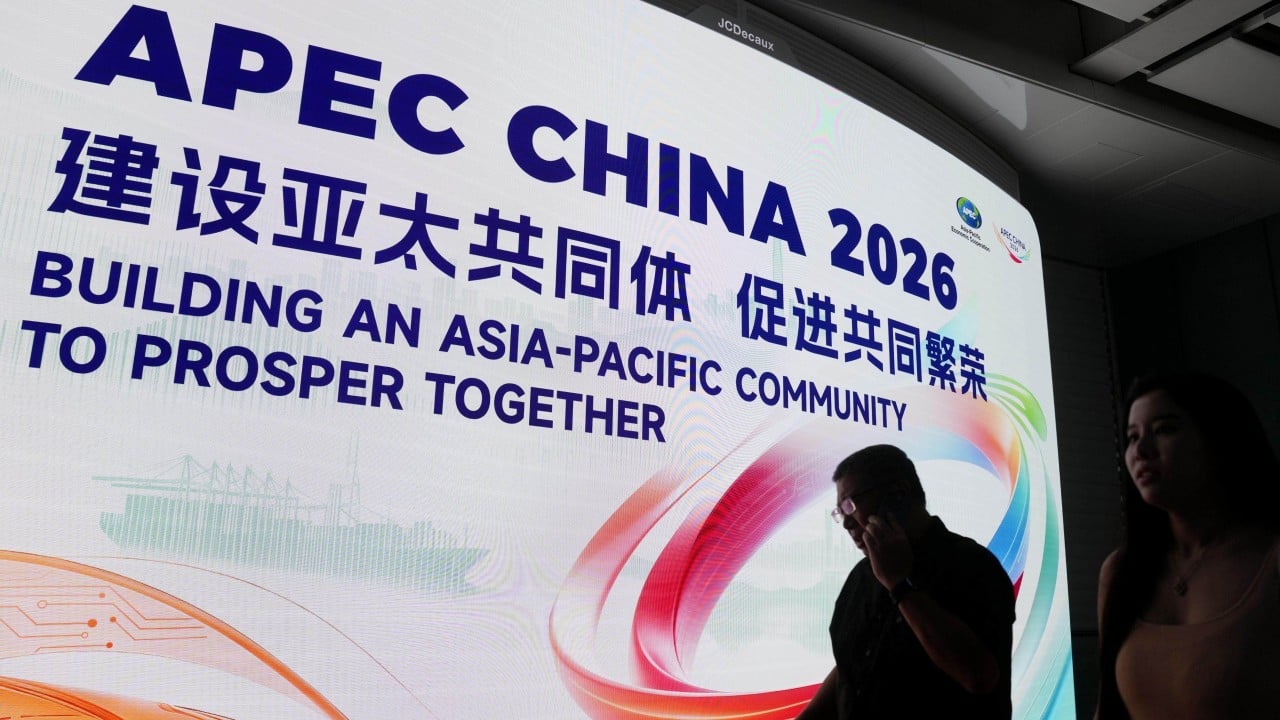
When the official U.S. corporate delegation for the Asia-Pacific Economic Cooperation (APEC) CEO Summit takes shape without the world's most valuable semiconductor company on the manifest, it is not a scheduling conflict. It is a deliberate geopolitical signal. According to reporting on the delegation lineup, Alphabet's Google secured a coveted seat at the table while Nvidia was conspicuously left off the roster, a split decision that exposes the widening fault line between software diplomacy and hardware containment in American foreign policy.
For decades, trade delegations to Asia followed a predictable script. Washington packed planes with its biggest industrial winners to project economic dominance and open new markets. Today, the logic has inverted. Bringing Nvidia into an international forum dominated by Indo-Pacific trade ministers and Chinese economic observers creates immediate diplomatic friction that the State Department and Commerce Department are eager to avoid. Google, by contrast, offers a cleaner, software-driven narrative of digital infrastructure, cloud collaboration, and enterprise productivity that plays well in diplomatic communiqués without triggering export-control landmines.
The Geopolitical Liability of Silicon
To understand why Nvidia stays home while Google boards the flight, you have to look at what each company represents to foreign ministries across the Pacific Rim. Nvidia is no longer viewed merely as a commercial vendor of graphics processing units. In the eyes of Washington, Beijing, Seoul, and Taipei, Nvidia is the physical chokepoint of modern artificial intelligence.
Every high-level summit in the Asia-Pacific region eventually circles back to semiconductor export controls. Over the past several years, the U.S. government has systematically tightened restrictions on advanced AI accelerators—such as Nvidia's H100, H200, and Blackwell architectures—preventing their sale to Chinese entities and restricting shipments to dozens of other nations suspected of acting as transshipment hubs. Putting Nvidia executives on a stage at the APEC CEO Summit forces a conversation Washington does not want to have in a multilateral trade setting.
If Nvidia is in the room, every bilateral sidebar becomes a negotiation over compute allocation. Regional leaders want exemptions, sovereign AI data center approvals, and clarity on licensing delays. Meanwhile, Chinese delegates use Nvidia's presence to highlight what they characterize as American technological unilateralism. Leaving Nvidia off the delegation removes the lightning rod before the summit even begins.
There is also the matter of corporate survival. Nvidia's leadership walks a razor-thin line between complying with Washington's national security mandates and protecting tens of billions of dollars in Asian supply chain dependencies and commercial revenue. Participating in a government-sanctioned U.S. delegation signals tight alignment with Washington's containment policy. For a chipmaker whose entire manufacturing existence depends on Taiwan Semiconductor Manufacturing Company (TSMC) and complex packaging networks spanning East Asia, overt alignment with American political delegations carries real operational risk. Staying off the official roster allows Nvidia to conduct its own quiet, commercial diplomacy away from the cameras.
Why Google Fits the Diplomatic Playbook
Google occupies a fundamentally different position in the geopolitical stack. While Alphabet designs its own custom silicon—the Tensor Processing Units (TPUs) used to train and run its models—it does not sell standalone chips on the open market. Google exports cloud services, subsea cables, software ecosystems, and enterprise AI tools.
In trade negotiations across Southeast Asia, Latin America, and the broader APEC bloc, Google's pitch aligns neatly with Washington's soft-power objectives. When Google announces a billion-dollar cloud region in Malaysia, a subsea fiber-optic cable connecting Pacific island nations, or an AI upskilling initiative in Indonesia, local governments treat it as foreign direct investment and economic modernization. It builds goodwill without triggering national security reviews over dual-use military hardware.
Software Diplomacy vs Hardware Containment
This divergence reveals a two-track strategy inside the U.S. executive branch:
- The Containment Track: Applied to physical compute, advanced lithography, and high-bandwidth memory. Here, the goal is friction, licensing, and strict territorial control. Companies like Nvidia, ASML, and major memory suppliers are treated as strategic assets whose movements and sales must be tightly managed.
- The Expansion Track: Applied to cloud infrastructure, foundational models accessed via API, and consumer platforms. Here, the goal is market capture. Washington wants American software standards, cloud architectures, and digital governance rules to become the default operating system for developing economies before Chinese alternatives—such as Alibaba Cloud or Huawei's enterprise stack—lock in those markets.
Google is the ideal standard-bearer for the expansion track. Its executives can talk about digital trade facilitation, cross-border data flows, and cybersecurity standards—all core agenda items at APEC—without dragging the conversation into the mud of export licensing and chip smuggling.
The Hidden Friction Inside the AI Supply Chain
The split between Google and Nvidia at APEC also highlights an uncomfortable reality that Washington rarely acknowledges publicly. The U.S. government's closest corporate allies in the AI race are simultaneously locked in fierce commercial competition with one another, and their policy interests no longer overlap.
Nvidia wants the widest possible global addressable market for its chips. Every new export rule, every cap on compute exports to the Middle East or Southeast Asia, shaves billions off Nvidia's potential revenue and encourages foreign buyers to experiment with domestic alternatives. Nvidia's regulatory goal is permissive trade.
Hyperscalers like Google, Microsoft, and Amazon have a more complicated incentive structure. While they rely heavily on Nvidia GPUs to serve their cloud customers, they also invest billions in proprietary chips—like Google's TPUs—to break Nvidia's pricing power. Furthermore, because hyperscalers deliver compute through data centers they own and operate under strict security protocols, they are often favored by U.S. regulators over companies that ship physical hardware to third parties. Washington trusts a U.S.-managed cloud region in Singapore or Tokyo far more than it trusts a pallet of loose GPUs shipped to a local reseller.
What APEC Actually Measures
To veteran observers of Pacific Rim diplomacy, the APEC CEO Summit is rarely about signing binding treaties. APEC operates on consensus and non-binding commitments, which means its real value lies in signaling and relationship maintenance. Who shows up on the official U.S. roster tells regional governments which industries Washington considers safe for cross-border cooperation and which ones remain under lock and key.
By elevating Google and sidelining Nvidia, the U.S. delegation sends three distinct messages to its trading partners:
- Digital infrastructure is open for business. Washington will actively back U.S. cloud, telecom, and software firms bidding for government and enterprise contracts across the Indo-Pacific.
- Advanced compute remains non-negotiable. Export controls on frontier AI hardware are not up for horse-trading at multilateral trade summits, regardless of how much regional allies complain about licensing bottlenecks.
- Commercial neutrality is over. Tech giants can no longer pretend to be borderless entities operating above geopolitics; their participation in international forums is now filtered through national security priorities.
The Counter-Argument Washington Ignores
There is a significant flaw in keeping Nvidia out of the room, and industry insiders know it well. Absence does not stop the conversation; it merely hands the microphone to competitors.
When American chipmakers are excluded from high-profile Asian business forums, regional telecom operators, sovereign wealth funds, and enterprise buyers do not stop building AI infrastructure. Instead, they listen more closely to alternative pitches. While no competitor currently matches Nvidia's CUDA software ecosystem or raw interconnect performance at scale, regional buyers facing multi-month U.S. export license delays are increasingly willing to test hybrid architectures, older-generation hardware, or rival silicon stacks just to keep their projects on schedule.
Keeping Nvidia off the plane protects Washington from awkward press conferences today, yet it risks accelerating the very supply-chain diversification that U.S. export controls were designed to prevent.
The New Rules of Tech Statesmanship
For three decades, Silicon Valley executives treated Washington as an afterthought—a distant regulatory nuisance that occasionally demanded testimony on antitrust or content moderation. That era is dead. Today, a tech company's ability to enter foreign markets, build data centers, and attend international summits depends entirely on where it sits within Washington's national security architecture.
Google's inclusion on the APEC roster proves that software and cloud platforms still enjoy the traditional backing of American economic diplomacy. Nvidia's exclusion proves that once a company becomes the physical foundation of geopolitical power, it stops being a normal corporation and becomes an instrument of statecraft—whether its executives want the job or not.
The plane to APEC will take off with plenty of American executives eager to talk about the future of digital trade, artificial intelligence, and Pacific cooperation, while the single company that actually manufactures the engines of that future stays back in Santa Clara, waiting for its next export license to clear.