The rain does not announce itself with a roar. It begins as a whisper against the windowpane, a familiar, rhythmic percussion that has lulled generations to sleep. But there is a point, imperceptible at first, where the rhythm shifts. The taps grow heavier. The gutters choke. And suddenly, the water is no longer a visitor; it is an occupant.
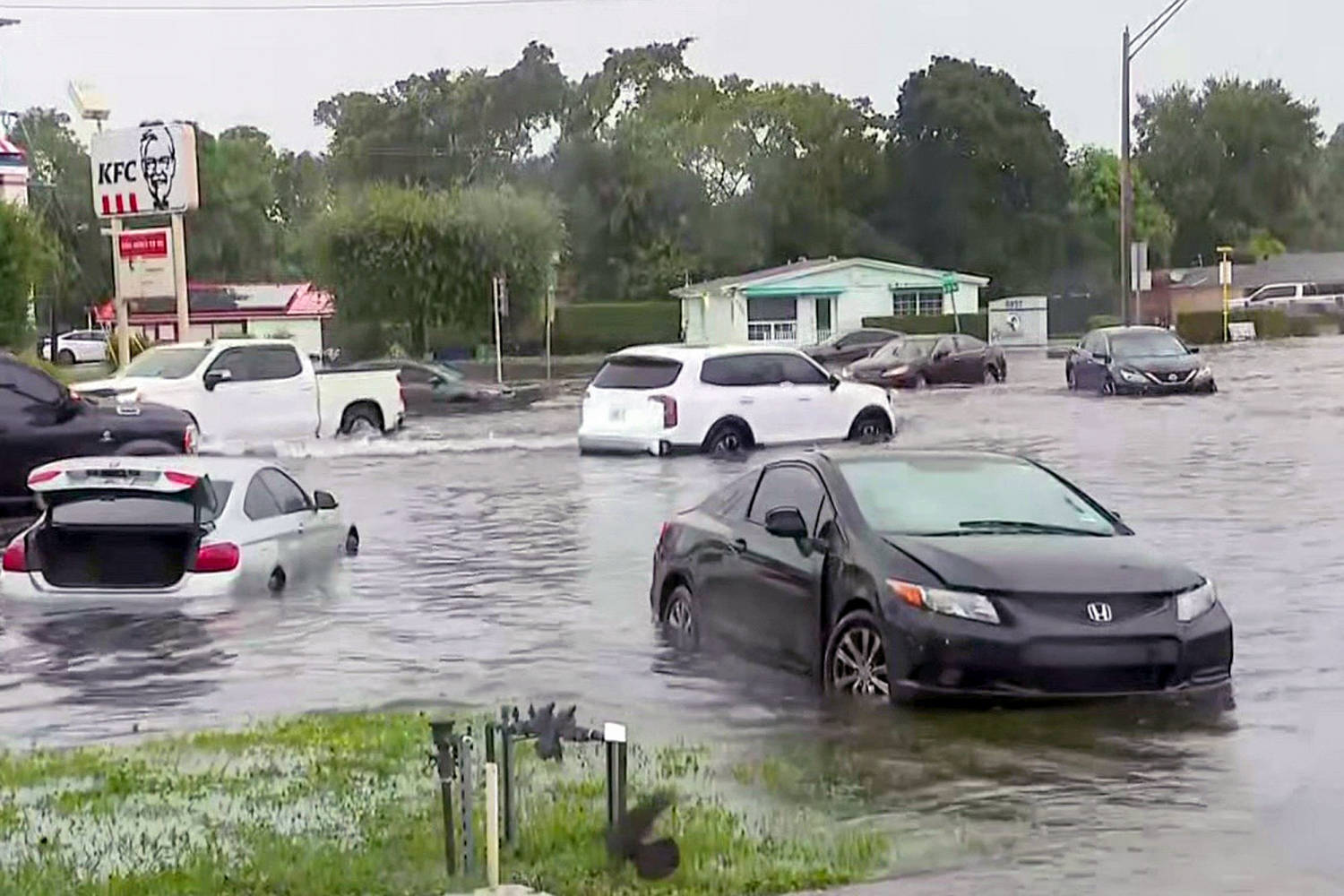
Consider what happened when the skies opened over both edges of the continent at once. On the sun-drenched coast of Florida, where the air usually hangs thick and sweet with the scent of saltwater and subtropical heat, the streets became rivers. Driveways vanished. Porches became docks.
Water has a memory. It always returns to the places it once claimed.
Meteorologists and hydrologists talk in dry numbers. They speak of atmospheric rivers, inches of precipitation per hour, and tidal anomalies. They map cones of uncertainty and draw red lines across radar screens. But numbers do not capture the weight of a soggy mattress hauled to the curb. Statistics do not convey the specific kind of silence that settles over a neighborhood when the power grid fails and the only sound left is the relentless, swelling rush of the tide.
In coastal communities, living near the water is a daily negotiation. You trade the peace of the horizon for the vulnerability of the shore. You learn to read the color of the sky not for beauty, but for threat.
When the downpours hit simultaneously on the Atlantic and Pacific shores, the geographic distance between them collapsed into a shared panic. Across the country, thousands of people found themselves staring down the same grey horizon, wondering how quickly a street can turn into a lake.
The immediate culprit is rarely just the rain. It is the infrastructure beneath our feet, built for a climate that no longer exists. Drainage systems designed decades ago under entirely different hydrological assumptions now find themselves overwhelmed in minutes. A city street is engineered to shed water, not to swallow an ocean falling from the clouds. When the storm drains back up, the street becomes a basin.
And then comes the aftermath. The water recedes, leaving behind a thick, mineral-scented silt that coats everything it touched. Walls warp. Floors buckle. The invisible cost begins to mount—not just in dollars and insurance deductibles, but in the quiet exhaustion of starting over.
We build our lives along the edges of continents because we are drawn to the meeting place of land and sea. We accept the bargain. But as the weather grows more erratic, the terms of that contract are changing. Every time the water rises to the third step of the porch, the question returns, more urgent than before: How long can we hold the line?
For now, the cleanup begins with a broom and a shovel. The pumps hum in the dark. And somewhere out over the dark water, the clouds are gathering again.