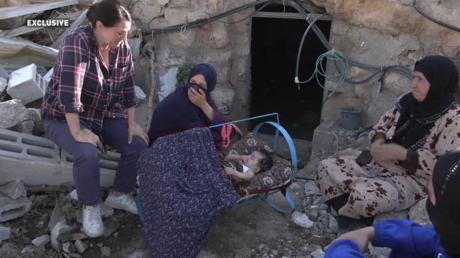
The earth does not remember the lines we draw upon it. It only knows the weight of the stone, the pull of the roots, and the slow, heavy breathing of the families who sleep beneath its corrugated tin roofs.
Dawn in the Jordan Valley does not arrive with a gentle whisper. It breaks like a cracked pane of glass, sharp and blinding, spilling across the arid plains of the West Bank before the dust has even settled from the night before. On a Tuesday that began like every other, the air was torn apart not by birds or wind, but by the low, mechanical growl of heavy machinery.
Bulldozers do not negotiate. They do not pause to consider the hand-stitched blankets folded neatly on a mattress, or the school uniforms hanging from a nail, or the rows of potted mint thriving against the odds in rusted oil drums. They simply push.
By nightfall, one hundred and eighty human beings—children with wide, uncomprehending eyes, elders whose skin maps the geography of decades spent tending the same stony earth—found themselves standing in an expanding expanse of rubble. No formal warning delivered months in advance could soften the suddenness of it. No administrative decree stamped by distant bureaucrats could make the loss of a kitchen floor feel abstract.
To understand what happened in the village of Humsa al-Baqia, you have to look past the bureaucratic language of zoning laws, military orders, and administrative zones labeled Area C. You have to look at a pair of green plastic sandals lying half-buried in crushed concrete.
Consider the arithmetic of displacement. It is easy to write off 180 homeless people as a statistic in a quarterly humanitarian report. It is another thing entirely to watch a father sift through the pulverized remains of his living room looking for a tin box containing his children's birth certificates.
The paperwork is always missing. The concrete is always pulverized.
For generations, families in these vulnerable rural pockets have lived a life dictated by the rhythms of seasonal grazing and small-scale farming. Their structures—mostly tents, animal pens, and temporary shelters—are not built out of a lack of permanence, but out of necessity. In these arid expanses, permission to build a permanent stone home is almost impossible to secure. When the state denies building permits while simultaneously expanding nearby settlements, it creates an impossible trap. Build without a permit, and you are illegal. Apply for a permit, and you are rejected. Stay, and you face the blade of the bulldozer. Leave, and you surrender ancestral land.
There is a quiet cruelty to the process. First comes the surveyor with a tripod and a cold mathematical gaze. Then comes the slip of paper fluttering against a fence post, fluttering in the desert wind like a fallen leaf. Finally, the iron treads arrive.
Listen closely to the silence that follows. It is not peaceful. It is the hollow silence of a community unstitched.
Children do not understand geopolitics. A seven-year-old child understands only that the wall with the blue polka-dot wallpaper is gone, and with it, the hook where the school bag hung. When you ask a child where they live tonight, and they point to the open sky above a pile of jagged corrugated iron, the abstract debate over sovereignty dissolves into something elemental and raw. Human beings require shelter. They require a threshold to cross at the end of the day, a place where the wind cannot reach their children's faces as they sleep.
International bodies issue statements. Condemnations are typed, filed, and archived. Legal briefs are prepared by tireless human rights workers who trace the boundaries of the Fourth Geneva Convention with the exhausted precision of surgeons operating in the dark. But the statements do not rebuild a collapsed wall. They do not put a roof over the heads of ninety children who went to school in the morning and returned to a vacant lot by afternoon.
The sun dips below the hills now, casting long, bruised shadows across the valley. The dust, kicked up by the iron tracks of the tractors, finally settles back onto the ground, coating the broken toys, the spilled grain, and the overturned tea kettles in a fine, gray shroud. Out in the open air, wrapped in blankets borrowed from neighbors who live just beyond the demolition zone, a family sits in the dark. They do not talk about international law. They talk about tomorrow, and where they will find water for the sheep.