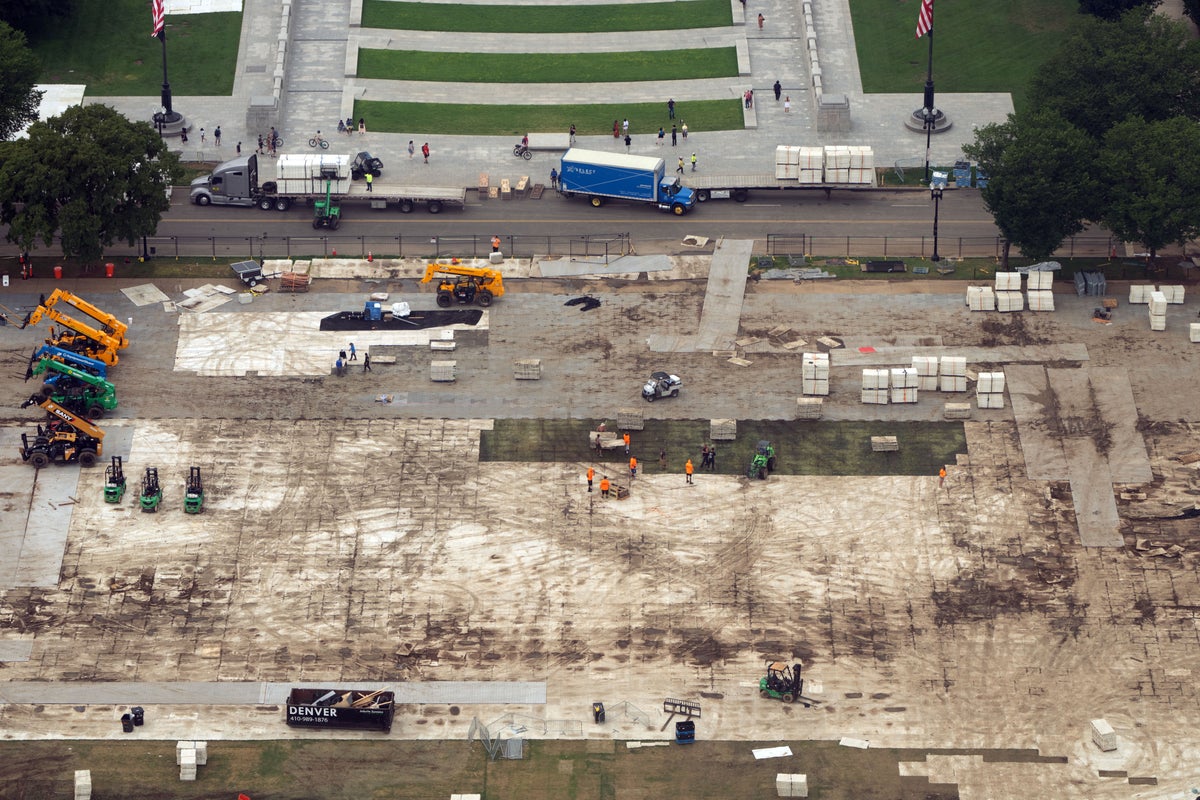
The grass remembers.
Long after the crowds have dispersed, after the final strains of brass instruments fade into the humid summer dusk, and after the last piece of staging is hauled onto flatbed trucks, the earth keeps a ledger. Every heel turn, every heavy boot, and every steel-framed barricade leaves a signature in the sod.
Consider a single square foot of lawn beneath the national gaze. For months, groundskeepers tend to it with meticulous devotion. They aerate the soil, balance the nitrogen, water it in the quiet hours before dawn, and coax a carpet of vibrant green into existence. It is a living canvas meant to frame history.
Then comes the spectacle.
When thousands of people converge on a single green expanse for a high-profile celebration, physics takes over. The human cost to a landscape is immediate and unyielding. Compacted soil suffocates root systems. Weight crushes blades. What was once a resilient, springy turf transforms under pressure into something weary and bruised.
When Donald Trump pointed to the damaged grass in the aftermath of a massive Independence Day celebration, attributing the wear and tear to vandals, he touched on a familiar American impulse: the search for a villain where friction meets reality.
We prefer malice to mechanics. It is easier to imagine a shadowy figure with a spade or a malicious intent under the cover of night than it is to accept the mundane, grinding mechanics of foot traffic, heavy equipment, and logistical gravity. Blaming vandals personalizes an impersonal catastrophe. It turns a botanical casualty into a personal affront.
Think about how we react when our own carefully curated spaces are disrupted. A child tracks mud across a freshly mopped floor. A sudden summer storm flattens a garden just days before bloom. Our immediate instinct is often frustration, a search for who broke the unwritten contract of care.
Yet, large-scale public events carry an inevitable toll. Thousands of attendees do not float across a lawn; they press down upon it with a collective weight measured in tons. Security fencing sinks into damp earth. Heavy sound towers leave circular depressions that hold rainwater like tiny ponds. Portable stages compress the underlying clay until it resembles concrete.
The paradox of public celebration is that the very act of gathering to honor a shared ideal often requires trampling the literal ground we share.
In the days following the event, the cleanup crews arrive. They do not look for culprits. They look for rakes, seed, and topsoil. Their work is unglamorous, silent, and essential. They understand that lawns, much like political divides, require constant, patient rehabilitation rather than perpetual accusation.
The real story of a bruised landscape is not found in the rhetoric of blame, but in the quiet resilience of the soil beneath our feet. Given water, time, and sunlight, grass has a remarkable memory, though not the kind that holds grudges. It simply heals, growing back around the scars, reminding us that every heavy footprint eventually fades into something green again.


