The dirt does not warn you before it steals a life. It settles heavy, smells of iron and wet stone, and then it caves.
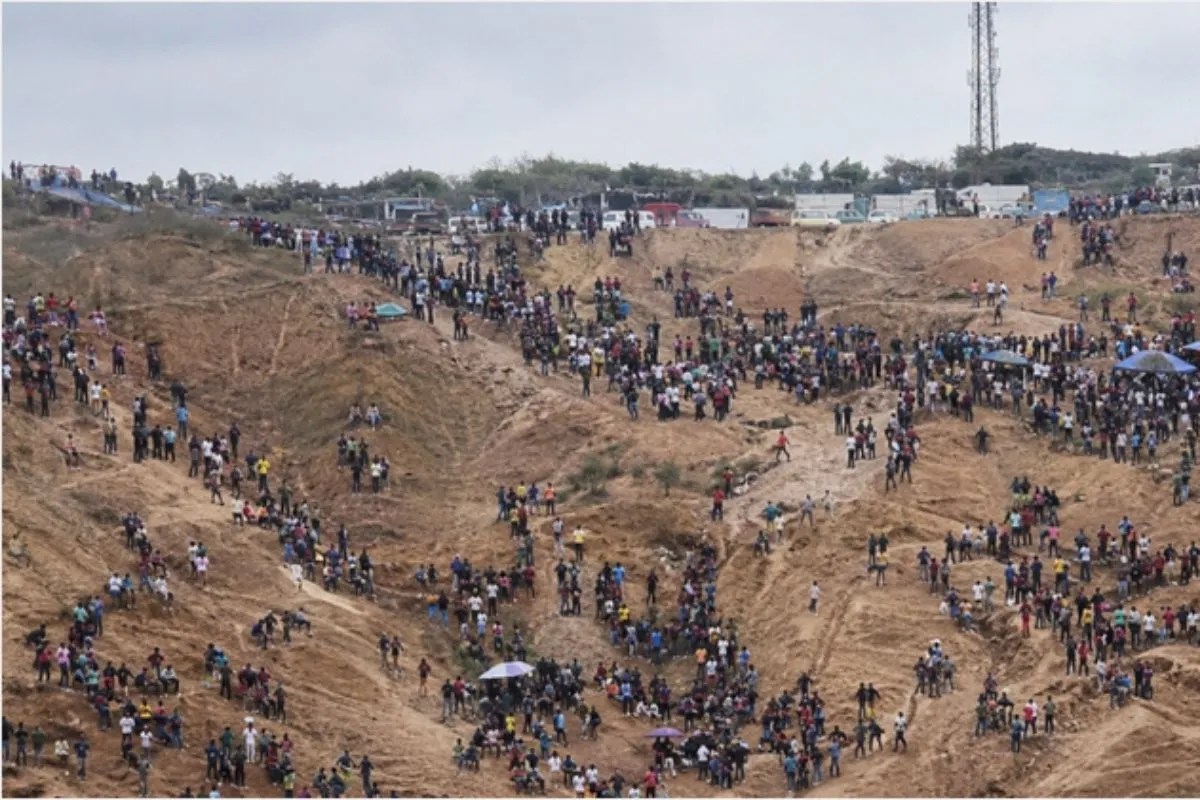
In the western reaches of the Central African Republic, near the border town of Baboua, the earth opened up on a Tuesday afternoon. At the Zamboye mining site, a sprawling open-pit excavation where hundreds of artisanal workers dig by hand, a network of unreinforced underground tunnels simply could not bear its own weight anymore. The walls groaned. Then they vanished. More than one hundred human beings were swallowed by the very soil they scratched for a living. Read more on a similar topic: this related article.
Collapse.
It is a word too clean for what happened here. Picture a hillside peeling away like wet cardboard, burying makeshift shafts where young men and women stood shoulder-to-shoulder in the dark. Picture hands clutching crude iron tools, frozen mid-swing as tons of mud and rock erased the distinction between the tunnel ceiling and the floor. Red Cross volunteers and local youth council members arrived not to rescue, but to recover. To pull mud-caked bodies from a tomb of red clay. Additional journalism by NPR delves into comparable views on the subject.
To understand why a hundred people would gamble their lives in a hole in the ground, you have to look away from the glittering jewelry store windows of distant capitals and look instead at the architecture of absolute destitution.
The Central African Republic is impossibly rich in mineral wealth. Gold and diamonds rest beneath its rolling savannas and dense forests like hidden vaults. Yet, generation after generation of its people live on the razor edge of survival. When the choice is between starving quietly in a village with no prospects or descending into a dark, unstable pit to chase flakes of yellow metal, the choice ceases to be a choice at all. It is an emergency response to poverty.
Consider what happens when desperation meets opportunity in the unregulated shadows of the global economy. Artisanal mining employs thousands across the region. It operates entirely outside state oversight, devoid of hard-hats, shoring timbers, or geological surveys. The miners dig narrow, spider-web tunnels with nothing more than hand shovels and determination, carving deep into hillsides until the structural integrity of the earth fails completely.
This disaster at Zamboye is not an isolated shock. It is part of a brutal, predictable rhythm. Earlier this year, a landslide at Ngourroum claimed seven lives. Weeks before that, twenty more perished in Gordi. In June, a similar collapse at the Be-Mbari site killed dozens more. Each time, the numbers make a brief appearance on international tickers before fading into the background noise of the world's forgotten crises. Each time, local leaders issue statements of outrage, promising judicial inquiries and tighter controls that rarely materialize before the next shovel strikes the dirt.
The human cost bleeds across borders. Among the dead at Zamboye were citizens of neighboring Cameroon, who had crossed the frontier seeking the exact same elusive promise of a better life. As families in Baboua and across the border grieve, the local hospital fills with the injured while search teams comb through the rubble for the missing. Local officials admit that establishing a final, accurate death toll is nearly impossible when so many bodies remain pinned beneath layers of heavy earth.
Finding anyone alive now is a miracle that no one expects.
What remains is a scar on a hillside, a handful of broken tools, and the quiet, crushing grief of families left behind. The gold extracted from these lawless pits will eventually find its way into international markets, polished and shining, stripped of its history. But the earth remembers what it swallowed. It waits in the silence, heavy with the weight of uncounted lives.