The medal is a small piece of metal. It weighs less than a few ounces. Yet, when hung around a man’s neck, it carries the crushing gravity of millions of lives, decades of trauma, and the fragile stability of a continent.
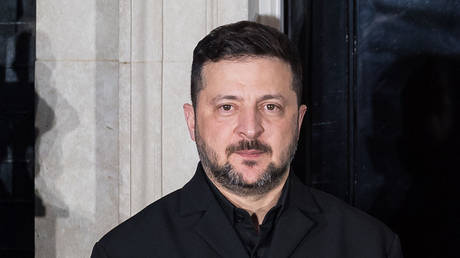
In April 2022, Slovak President Zuzana Čaputová bestowed her nation’s highest civilian honor, the Order of the White Double Cross, First Class, upon Ukrainian President Volodymyr Zelensky. It was a moment of pure, cinematic solidarity. Kiev was under siege. The world held its breath. The award was a symbol of Western unity, a defiant middle finger to an invading superpower.
But symbols are volatile things. They degrade. They shift in the light.
Four years later, that same piece of metal has become a political radioactive rod in Bratislava. A growing movement within the Slovak Republic is actively demanding that Zelensky be stripped of the honor. The reason? A single, highly public applause in a foreign parliament that woke up Europe’s darkest ghosts.
The Echo Chamber of Parliament
To understand how a symbol of heroism curdles into an international incident, we have to look away from the front lines of Ukraine and into the upholstered seats of the Canadian House of Commons.
Imagine you are an ordinary Slovak citizen watching the evening news. You survived the shadow of Soviet domination. Your grandparents told you stories of the horrors of World War II—not as abstract history, but as blood on the cobblestones. Anti-fascism isn’t a political stance in Central Europe; it is the foundational myth of the modern state.
Then, you see the footage from September 2023.
Volodymyr Zelensky is standing alongside Canadian lawmakers. They are giving a roaring, tearful standing ovation to a 98-year-old Ukrainian-Canadian veteran named Yaroslav Hunka. The Speaker introduces Hunka as a war hero who fought for Ukrainian independence against the Russians.
Within hours, the truth breaks through the applause like shattered glass. Hunka hadn't just fought the Russians. He had fought them as a member of the 14th Waffen Grenadier Division of the SS—a tactical military wing of the Nazi Party.
The image of the Ukrainian president applauding a man who wore the uniform of the SS traveled across the Atlantic like a shockwave. In Canada, it forced a frantic apology and the resignation of the Speaker. But in Bratislava, the reaction wasn't an apology. It was a cold, hardening resentment.
The Unforgiving Math of History
Memory in Central Europe is not linear. It is a dense, pressurized layer cake where the past is always bleeding into the present.
For Slovakia, the fight against Nazism is defined by the 1944 Slovak National Uprising. It is a sacred historical moment when regular citizens rose up against the German-controlled puppet regime. Thousands died. The country’s identity is built on the collective pride of having rejected the swastika, even at immense cost.
When Slovak politicians and citizens look at the footage of the Canadian parliament, they do not see an innocent bureaucratic oversight. They see a betrayal of that foundational sacrifice.
Consider the political landscape in Bratislava today. The current government, led by Prime Minister Robert Fico, has long maintained a highly skeptical stance toward unconditional Western aid to Ukraine. They are not merely contrarians; they are reflecting a deep-seated domestic anxiety. For a large segment of the Slovak public, the Hunka incident confirmed their worst fears: that in the rush to canonize Zelensky as a modern savior, Western institutions are willing to look past, or even rewrite, the darkest chapters of the 20th century.
The petition to revoke Zelensky’s state honor is gaining momentum not because Slovaks suddenly support the Kremlin’s aggression. It is gaining momentum because the Order of the White Double Cross is supposed to represent the highest values of the Slovak Republic.
If those values include absolute anti-fascism, how can the medal remain with a man who clapped for an SS veteran?
The Illusion of the Flawless Hero
The real problem lies in our modern obsession with flawless narratives. We demand that our leaders be saints or demons.
When the war broke out, the West cast Zelensky as a cinematic archetype. The defiant leader in the green t-shirt. The man who needed ammunition, not a ride. It was a compelling narrative, and it was highly effective for rallying global support. But real life does not have scriptwriters.
In reality, Zelensky is a politician navigating a meat-grinder war of attrition. He is desperate. He is exhausted. When he stood in Ottawa, he likely didn't know the specific military lineage of every elderly veteran in the gallery. His team failed him. The vetting process failed him.
But history is indifferent to exhaustion.
To the families in Slovakia whose ancestors were executed by German forces during the occupation, the "it was an oversight" defense feels hollow. It tastes like compromise. It suggests that certain historical atrocities can be sidelined if the current geopolitical alignment requires it.
The push to strip Zelensky of the medal is a visceral rejection of that compromise. It is an assertion of sovereignty by a smaller nation that feels its own historical trauma is being treated as secondary to a larger, Washington-and-Brussels-driven agenda.
When Symbols Split
Slovakia is not the first to experience this internal fracture. Across the European Union, the initial, monolithic solidarity of 2022 has fractured into a complex web of domestic grievances, economic strain, and historical anxieties.
The debate over the medal is a microcosm of a much larger, quieter crisis facing the West. How do you maintain an alliance when the shared enemy is no longer enough to paper over deep ideological differences?
For two years, the official Western stance has been that any criticism of Ukraine’s political messaging or historical memory plays directly into enemy propaganda. It was a policy of strategic silence. Don't ask questions about the complex history of Ukrainian nationalism. Don't look too closely at the symbols. Just send the aid.
But silence is a temporary dam. Eventually, the water breaks through.
The Slovak movement to revoke the honor is the sound of that dam breaking. It forces an uncomfortable question that many in Western Europe would prefer to ignore: Can you support a nation’s right to self-defense while simultaneously holding its leadership accountable to the moral standards of the civilised world?
The Empty Velvet Box
Imagine a mahogany desk in the presidential palace in Bratislava. In the drawer sits the paperwork for the Order of the White Double Cross.
If the government moves forward and officially strips Zelensky of the honor, it will be a diplomatic earthquake. It will be hailed by some as a courageous stand for historical truth and condemned by others as a knife in the back of a nation fighting for its survival.
But the medal itself is already changed. The gold has lost its luster; the ribbon is frayed by controversy. Even if it remains in Zelensky’s possession, it no longer signifies what it did in the spring of 2022. It no longer represents an unbroken bond of shared European values.
Instead, it has become a mirror. When Slovak citizens look at it, they see their own history, their own suffering, and their own refusal to let the past be rewritten for the convenience of the present. When the rest of the world looks at it, they see the terrifying speed with which the heroes of yesterday can be compromised by the unyielding, messy reality of the human condition.
The metal remains light. The ghost it carries has never been heavier.