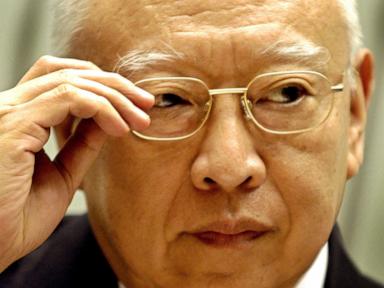
History rarely arrives with the clean, cinematic breaks that political actors prefer. When Tung Chee-hwa assumed office as Hong Kong's first Chief Executive on July 1, 1997, the transition was broadcast globally as an imperial sunset and a national homecoming rolled into one. Nearly three decades later, following his death at the age of 89 and the subsequent state funeral proceedings at the Hong Kong Funeral Home in North Point, the city is forced to look backward at the architecture of governance he left behind. The official mourning by senior Chinese and Hong Kong officials offers a portrait of a loyal statesman, yet the structural realities of his tenure continue to cast a long, complicated shadow over the special administrative region's political evolution.
To understand Tung’s tenure is to understand the impossible physics of managing a post-colonial metropolis built on capitalist velocity while navigating the political gravity of Beijing. He was not a career politician. He was a shipping magnate drafted from the boardroom to steer a territory that was suddenly untethered from British administration yet bound irrevocably to a mainland political apparatus undergoing its own rapid modernization. His early decisions reflected this corporate background. He approached public administration with the mindset of a chief executive seeking operational efficiency, frequently underestimating how deeply Hong Kong's civil society valued political expression and institutional checks and balances.
The structural crises that defined his administration—most notably the devastating impact of the 1997 Asian financial crisis and the subsequent property market crash—exposed the vulnerability of the local economy. Overnight, the myth of perpetual prosperity collided with negative equity, rising unemployment, and widespread public anxiety. When the administration attempted to introduce sweeping reforms in housing, education, and later, the controversial national security legislation under Article 23 in 2003, the friction ignited mass protests. Half a million citizens marched through the streets, signaling a profound rupture in trust between the governed and the governing.
Critics have long pointed to these years as the crucible of Hong Kong's contemporary political polarization. Yet, analyzing Tung through the narrow lens of public discontent misses the institutional constraints under which he operated. He inherited a civil service apparatus designed for colonial administration, a restless legislature, and an expectant sovereign power that viewed stability as the ultimate metric of success. His resignation in March 2005, officially cited as health-related, marked the abrupt end of an experiment in executive-led governance that struggled to bridge two fundamentally different political cultures.
In his later years, transitioning into his role as a vice-chairman of the Chinese People's Political Consultative Conference and founding the China-United States Exchange Foundation, Tung positioned himself as an elder statesman trying to keep diplomatic channels open between Beijing and Washington. He understood better than most the perils of geopolitical decoupling, utilizing his international standing to advocate for dialogue.
The state funeral accorded to him—an honor shared by only a select few post-handover figures—solidified his official status as a foundational pillar of the HKSAR. Yet, the public memory remains layered and divided. For some, he was a gentle, well-meaning patriarch who bore an impossible historical burden with quiet dignity. For others, his administration set in motion the governance templates that permanently altered the city's civic landscape. As Hong Kong continues to navigate its path in a shifting global order, the legacy of its first leader remains a study in the heavy cost of transitional politics, where good intentions routinely collide with unforgiving historical forces.


