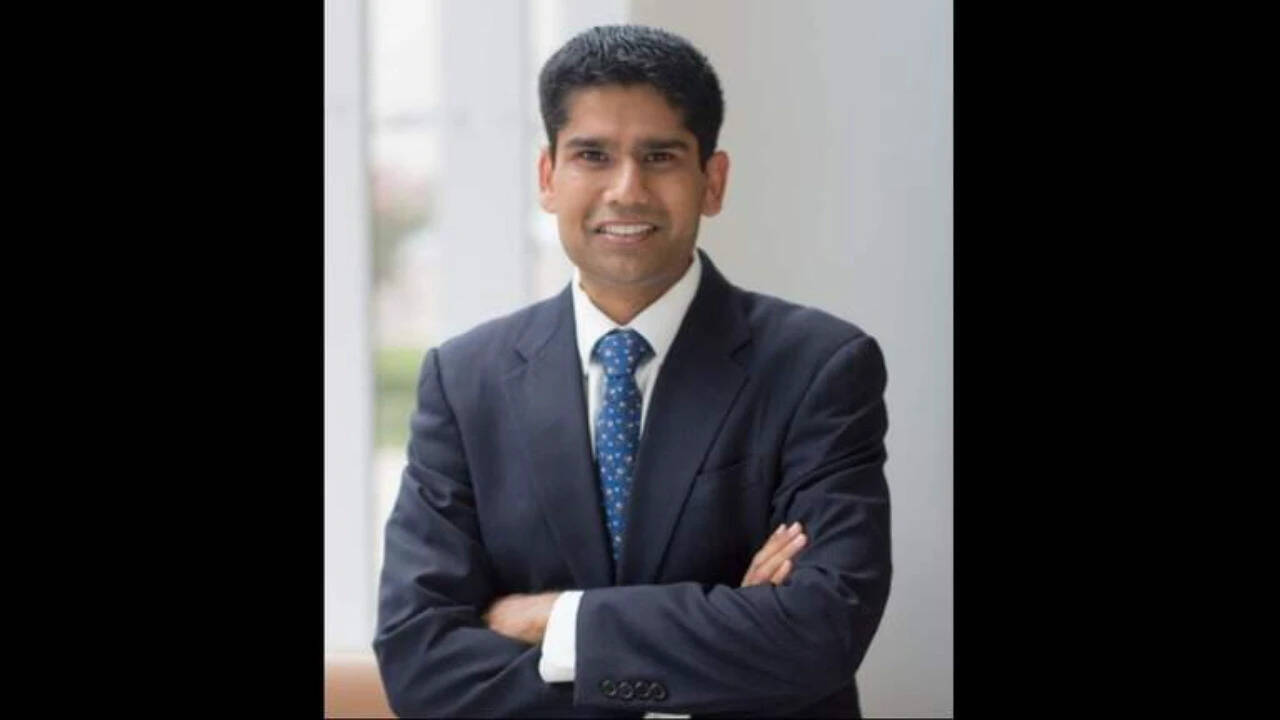
The sliding glass doors of Miami International Airport part with a heavy, mechanical sigh. Outside, the humid Florida night presses down like a hot wool blanket. Inside, fluorescent lights bounce off polished terrazzo floors, illuminating the endless choreography of travelers, luggage carts, and weary departures.
For Dr. Ranjith Ramasamy, the journey through those doors on a late August evening in 2026 carried a weight far heavier than any transatlantic flight from Dubai.
Federal agents were waiting. Handcuffs clicked shut at 10:45 PM. Just like that, a decade of academic prestige, award-winning urology research, and sterile operating rooms collided with a stark, terrifying reality: three felony counts of sexual battery.
The allegations, detailed by investigators from the University of Miami ecosystem, stretch back years. Detectives claim that Ramasamy, once a respected professor and director of male reproductive medicine, crossed the sacred boundary of the white coat. According to arrest warrants, students and trainees alleged that clinical exams—specifically prostate evaluations—were manipulated, prolonged, and stripped of medical necessity, performed behind closed doors after normal business hours.
To read the police report is to enter a chilling space where the architecture of healing is weaponized. A doctor's office is supposed to be a sanctuary of vulnerability. When that trust shatters, the shrapnel cuts deep.
Yet, truth in the modern world is rarely a quiet consensus. It is a battleground.
Hours after his arrest, standing before a judge who set a $120,000 bond, Ramasamy posted bail and prepared for house arrest in Sarasota with his family. He did not hide behind corporate legal statements. Instead, he met the noise with a single, absolute denial.
"I never performed any unnecessary medical procedure," Ramasamy told reporters, his voice cutting through the hum of legal uncertainty. "I never assaulted anyone. I never sexually assaulted anyone, never."
Consider the two parallel universes operating here.
In one universe, investigators have built a case on the chilling testimonies of young men who felt trapped within a rigid academic hierarchy, unable to question a mentor who held the keys to their professional futures. In this reality, power is an invisible current that can paralyze a victim's voice for years, explaining why these charges surfaced long after the alleged incidents between 2017 and 2022, and why the doctor relocated to Dubai in 2024 before the warrants were finalized.
In the other universe, defended fiercely by the accused, the narrative shifts entirely. Ramasamy claims the accusations are the poisonous fruit of disgruntled members within the university community, a targeted retaliation born of academic politics, where administrative records were allegedly withheld and reputations were tried in the court of public opinion long before a jury could weigh the evidence. He points to his voluntary return from overseas—stepping off a plane directly into custody—as the action of a man eager to drag the whispers into the light.
Both versions cannot be absolute truth.
The legal system now bears the heavy burden of dissecting the gray space between a patient's trauma and a professional's defense. GPS ankle monitors hum quietly in a Sarasota home, tracking the movements of a man once trusted with the most intimate complexities of human biology. Classrooms and hospital corridors at the University of Miami are left to reckon with the institutional shockwaves.
There are no easy heroes in this story. There is only the slow, grinding machinery of justice, turning over facts, examining motives, and waiting for a courtroom to decide which version of reality will ultimately stand.