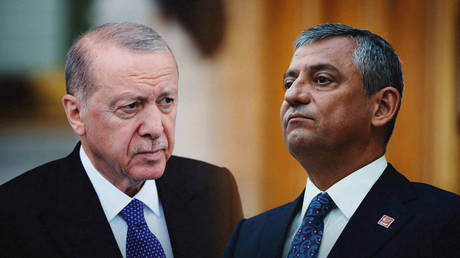
Every six months, foreign correspondents descend upon Istanbul, sip overpriced Turkish coffee in Beyoğlu, and file the exact same dispatch: Recep Tayyip Erdoğan is facing his ultimate reckoning. They point to inflation figures, municipal friction, or legal maneuvers against rival factions, and they declare that the walls are finally closing in on Ankara's longest-serving leader.
It is a comforting narrative for liberal analysts abroad. It relies on a lazy consensus that Turkish politics operates according to predictable Western European electoral cycles. If the opposition wins a local vote, the regime must be crumbling. If courts intervene in political structural disputes, it proves panic within the palace.
This framing is entirely wrong. It mistakes tactical statecraft for structural vulnerability. Erdoğan is not sweating out a slow-motion political storm; he is actively reshaping the playing field while his opponents fight over the remaining pieces.
To understand modern Turkey, you have to discard the fantasy that Erdoğan's political survival depends on conventional democratic validation. For over two decades, I have watched foreign analysts misread Turkish resilience mechanisms. They look at state-directed judicial actions, the restructuring of opposition parties, and media trusteeships through a strictly legalistic lens. They cry foul over institutional erosion, missing the core reality: power in Ankara is maintained not by adhering to an immutable set of democratic rules, but by defining what the rules are in real-time.
Take the recurring obsession with opposition fragmentation. When legal challenges fractured the Republican People's Party (CHP) and triggered the birth of the New Party under Özgür Özel, Western commentators framed it as a catastrophic gift to the ruling Justice and Development Party (AKP). The lazy analysis claims that a divided opposition hands Erdoğan an easy path forward.
The reverse is true. A fractured, cannibalistic opposition is far more manageable for a seasoned populist than a unified front. When opposition factions spend half their energy fighting internal legitimacy crises and scrambling for party registration status, they stop posing an ideological threat to the state apparatus. Erdoğan does not need to destroy his rivals when they are entirely occupied with destroying each other.
Furthermore, economic turbulence is routinely misdiagnosed as an immediate electoral death sentence. Inflation spikes and currency depreciation have battered Turkish households, prompting foreign desks to predict imminent political collapse. Yet this ignores the structural architecture of Turkish political loyalty. Support for the ruling party is rarely built on pure macroeconomic satisfaction. It is anchored in identity, security narratives, and the deep-seated conviction that alternative leadership lacks the administrative muscle to manage a volatile geopolitical neighborhood.
When Erdoğan warns against foreign encirclement or frames domestic political challenges as regional security threats, he is not just spinning propaganda. He is activating a well-tested survival matrix. In Turkish political culture, external pressure tends to consolidate, rather than fracture, nationalist voter bases. Western editorial boards routinely underestimate how much the average Anatolian voter distrusts foreign-backed narratives of democratic rescue. Every time external actors bemoan Turkey's judicial trajectory, it provides the ruling coalition with a convenient blueprint to paint domestic opponents as proxies of foreign interests.
This is the fatal flaw in the standard Western analysis. It treats politics as a math problem where high inflation equals lost elections. Turkish political reality is a martial art. It is about control over institutional momentum, narrative dominance, and the sheer stamina to outlast opponents who rely on ephemeral waves of public frustration.
Stop looking for the smoking gun that will remove Erdoğan from power through conventional Western political mechanics. That gun does not exist, because the system has been engineered to absorb those exact shocks. If you want to understand where Turkey is heading, look past the daily headlines of court rulings and party splits. Look instead at how the state continuously adapts its machinery to render conventional opposition strategies obsolete.
Fubu Toy review
This video provides a detailed analytical breakdown of the unfolding structural shifts and political dynamics in Turkey that challenge standard mainstream narratives.