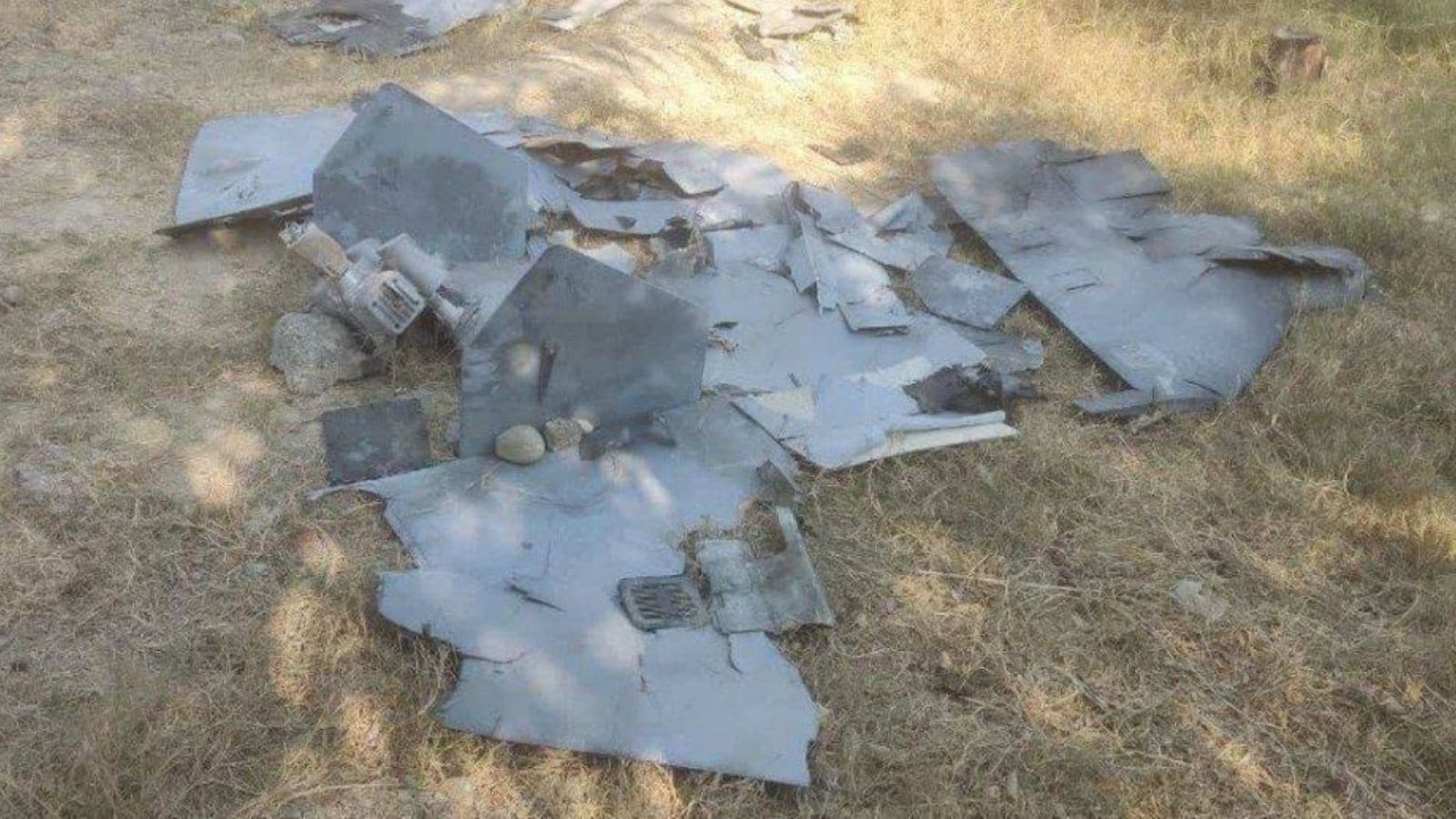
Celebratory headlines following deep-strike operations into Russian industrial territory focus on the spectacle of the explosion while ignoring the math of the supply chain. Media narratives framing the use of British Storm Shadow cruise missiles alongside restored Starlink satellite terminals as a turning point rely on a fundamental misunderstanding of modern industrial warfare. A single strike on a manufacturing facility makes for compelling footage, yet it rarely alters the trajectory of a conflict defined by mass production and decentralized logistics.
Defense analysts and military planners tracking the conflict in Eastern Europe often point out a stark divergence between tactical victories and strategic attrition. While the immediate destruction of an assembly line or a munitions depot disrupts local output, Western defense reporting frequently conflates a successful strike with systemic collapse. To understand what actually happens after the smoke clears, one has to look past the hardware used in the attack and examine the resilience of the industrial base absorbing the blow.
The Myth of the Silver Bullet Weapon System
Every phase of the conflict has produced its own media fixation. First it was anti-tank guided missiles, then mobile rocket artillery, followed by main battle tanks, and now long-range air-launched cruise missiles paired with low-Earth orbit satellite communications. The lazy consensus assumes that introducing a superior Western technical capability automatically invalidates an adversary's numerical advantage.
That assumption collapses under scrutiny. Precision-guided munitions like the Storm Shadow—a stealthy, low-altitude cruise missile developed jointly by the United Kingdom and France, known in French service as SCALP-EG—are engineered to penetrate integrated air defenses and destroy hardened, high-value targets. They execute that mission reliably. However, they are expensive, finite assets produced in small batches by Western defense contractors struggling with their own bottlenecked supply chains.
When Ukrainian forces expend a multi-million-dollar cruise missile to hit a factory, the operational calculus depends entirely on what is inside that building and how quickly it can be replaced. In many instances, Western commentators treat a damaged roof or a burned-out warehouse as the permanent erasure of a production line. Military engineers and industrial logistics experts view it differently. Heavy machine tools, stamped metal presses, and chemical mixing facilities are either dispersed across multiple Soviet-era industrial parks or backed up by redundant facilities deep in the Urals, well beyond the roughly 250-kilometer to 500-kilometer range of export-variant cruise missiles.
Why Satellite Connectivity Is a Vulnerability, Not Just an Edge
The second pillar of the standard narrative celebrates the restoration or expansion of Starlink terminals on the battlefield. SpaceX's low-Earth orbit constellation undeniably transformed tactical communications, allowing small unit commanders to stream drone feeds, coordinate artillery fire, and transmit targeting data in real time. When connectivity flickers or returns, observers treat it as a binary switch between paralysis and dominance.
Relying on a commercial satellite network operated by a single private entity introduces profound operational risks that cheerleading coverage routinely glosses over. From a signals intelligence perspective, every active terminal is a radio-frequency emitter. Electronic warfare units on both sides have spent years refining direction-finding capabilities to triangulate uplink signals and direct artillery or loitering munitions onto command posts.
Furthermore, treating commercial satellite internet as an unbreakable tactical backbone ignores the reality of electronic countermeasures. Russian electronic warfare brigades—operating systems like Tobol and Tirada-2—have continuously adapted to jam, spoof, or degrade Ku-band and Ka-band satellite links along the front lines. When terminals go offline and later reconnect, it is rarely a simple technical glitch being resolved; it is an ongoing, invisible tug-of-war over the electromagnetic spectrum. Celebrating a temporary reconnection misses the broader truth: total reliance on commercial space infrastructure leaves military operations tethered to corporate terms of service, geopolitical whims, and vulnerable radio frequencies.
What Actually Disrupts a War Economy
If long-range precision strikes and satellite links are not the decisive blows they are made out to be, what actually degrades a state's capacity to wage war? Defense economists and military historians who study industrial mobilization point to three unglamorous factors that rarely make front-page news.
1. Sub-Tier Component Bottlenecks
Blowing up a final assembly plant rarely stops production if the components are still flowing. Conversely, strangling the supply of specialized ball bearings, high-grade nitrocellulose, or specific microcontrollers halts output across dozens of factories simultaneously without a single missile being fired. Russia's defense sector has adapted by routing dual-use electronics through third-party intermediaries in Central Asia and East Asia. Disrupting those financial and customs networks yields far greater long-term paralysis than cratering a single building.
2. Skilled Labor Attrition
You can rebuild a concrete warehouse in three months. You cannot train a master machinist, a chemical engineer, or a CNC programmer in three months. Russia's war economy is currently running up against severe demographic and labor shortages, cannibalizing its civilian workforce and driving up wages to keep defense plants operating on three shifts. The true ceiling on Russian munitions output is not the number of factories standing, but the number of qualified technicians available to run the machines.
3. Energy and Rail Infrastructure
A war factory is useless without consistent electrical power and heavy rail transport. The Soviet-built industrial model relies almost entirely on an extensive rail network to move raw materials, steel, and finished shells across vast distances. Targeting the electrical substations feeding industrial zones or the specialized locomotives and railway switching yards required to move heavy freight creates systemic friction that cascades across the entire logistics chain.
Answering the Questions Nobody Asks
When readers search for updates on missile strikes and battlefield communications, they are usually looking for signs of an imminent breakthrough. The questions surrounding these events reveal how deeply the public has been conditioned to expect a sudden, dramatic collapse.
Does hitting a Russian factory significantly reduce frontline artillery or drone attacks?
Not in the short term. Modern militaries operate off deep stockpiles and buffered supply chains. A strike today might affect deliveries six months from now, provided the targeted facility was a genuine single point of failure—which few Russian defense plants actually are. Frontline units draw from forward depots that are constantly replenished from multiple directions.
Can Western long-range missiles win a war of attrition?
No. Precision weapons are designed to paralyze a nervous system, not bludgeon a massive industrial apparatus into submission. NATO doctrine relies on air superiority and systemic suppression of enemy air defenses to deliver thousands of cheaper, heavy munitions. Handing a partner nation a limited supply of standoff cruise missiles without an accompanying air force forces them to use precision scalpels for a job that requires a sledgehammer.
Is Starlink irreplaceable on the modern battlefield?
It is currently unmatched in bandwidth and portability, which is precisely why it is a single point of failure. Militaries are actively racing to build mesh networks, tethered drones, and fiber-optic control systems—evidenced by the widespread adoption of fiber-optic-guided FPV drones that are completely immune to radio jamming—specifically because space-based communications cannot be guaranteed in a high-intensity electronic warfare environment.
The Downside of the Industrial Attrition Reality
Admitting that high-profile missile strikes have limited strategic impact is an uncomfortable pill to swallow, and this perspective carries its own analytical blind spots. Dismissing tactical strikes entirely ignores their psychological and political utility. High-visibility hits deep inside adversary territory force the defending military to pull scarce air defense systems—such as S-300 and S-400 batteries—away from the front lines to protect domestic infrastructure. That redeployment creates localized gaps that frontline aviation and drone operators can exploit.
Moreover, sustained, repetitive strikes on specific sectors—such as oil refineries rather than hardened munitions plants—have demonstrated measurable economic pain, forcing export bans and driving up domestic fuel costs. The mistake is not in conducting deep strikes; the mistake is in applying the logic of vulnerable petrochemical infrastructure to decentralized, hardened heavy manufacturing.
Stop Confusing Spectacle with Strategy
Evaluating military operations requires stripping away political messaging and media sensationalism. A leader celebrating a successful strike is doing their job: maintaining domestic morale and demonstrating to foreign backers that donated weapons yield visible results. Journalists repeating that framing as strategic analysis are failing at theirs.
If you want to know who is winning the industrial war, stop counting burning buildings on satellite imagery. Look at artillery shell firing rates, the price of black-market microchips, industrial electricity consumption, and the age of the workers clocking into defense plants. Spectacle wins headlines, but logistics wins wars.