History rarely arrives with the theatrical crash of falling masonry. More often, it slips through a side door in a pair of quiet shoes, carrying a leather briefcase and an expression carved from gray granite.
Imagine sitting in a high-backed chair inside a government office in Moscow, the air thick with the faint scent of old wool and floor wax. Outside, the snow falls in heavy, silent sheets over asphalt that has known too many centuries of cold ambition. Across the table sits a man whose business is not diplomacy, but the terrifying architecture of human miscalculation.
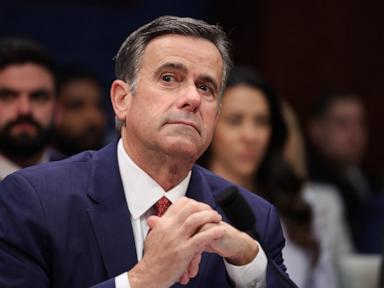
That man is the Director of the Central Intelligence Agency.
He did not fly to Russia to negotiate grain tariffs or trade concessions. He came because the distance between a localized conflict and a continental conflagration had shrunk to the width of a single, poorly calibrated trigger pull.
When the news broke that the CIA director had traveled to Moscow to deliver a direct, unvarnished warning to the Kremlin regarding NATO territory, the headlines treated it as a bureaucratic data point. A meeting took place. Messages were conveyed. Sources confirmed.
Dry. Sterile. False.
Behind those wire-service bulletins lay a raw, pulsing reality about the invisible tripwires of the modern world. Let us talk about tripwires.
Think of a perimeter fence rigged with bells in a pitch-black forest. You cannot see who is pacing in the brush. You cannot measure their exact intent. You only know that if the wire snaps, the sound will wake a sleeping beast that cannot be coaxed back into its den. For decades, the boundary line of the North Atlantic Treaty Organization has functioned as that exact fence. An attack on one is an attack on all. It is a simple sentence, yet within its thirty-six words lies a deterrent so immense that entire generations have grown old forgetting how fragile peace actually is.
(Note: When I speak of the alliance as a physical fence, I am using a spatial metaphor to describe a legal and military pact that spans continents, binding disparate nations into a single defensive shield.)
The journey to Moscow was born of a singular fear: catastrophic miscalculation.
Wars of annihilation rarely start because both sides wake up hungry for mutual ruin. They start because one side misreads the silence of the other. They start because a commander in a bunker mistakes a training exercise for a first strike, or because a politician assumes a red line is merely a suggestion written in fading ink.
During the Cold War, hotlines hummed with the nervous energy of men who understood that one crossed border meant the end of everything. Those hotlines rusted, but the underlying arithmetic of fear never changed.
Consider the mechanics of escalation. It begins with a stray artillery shell landing fifty yards across an international boundary. It continues with an emergency meeting in a Brussels basement. It accelerates with a mobilization order signed at three in the morning. By the time the public realizes the precipice is near, the momentum has already taken the wheel.
The CIA director's clandestine trip was an attempt to wrench that wheel hard to the left before the gravity of momentum took over.
Why send a spymaster instead of a diplomat? Because diplomats deal in the currency of plausible deniability and polite communiqués. Spies deal in the hard, cold currency of capability and consequence. To send the head of American intelligence to the heart of the adversary's capital is to strip away the theater of international relations and leave only raw reality on the mahogany table.
It is the equivalent of a veteran poker player leaning across the green felt, setting aside the chips, and looking the other player dead in the eye to say: Look at the cards. Look at the pot. If you push this further, nobody walks away with anything.
The message delivered in Moscow was not complicated, but its delivery required a rare kind of spine. It was a precise demarcation of reality. Moscow was told, in terms that left no room for creative translation, what the cost of expanding the battlefield would be. Not a threat born of hotheaded bravado, but a calm, clinical mapping of cause and effect.
We live in an era that worships complexity. We build algorithmic models to forecast market crashes, climate shifts, and geopolitical micro-trends. Yet, at the sharpest edge of human survival, everything reduces to something primitive.
Eye to eye. Voice to voice.
I remember sitting in a command room years ago during a different crisis, watching analysts stare at satellite feeds of armored columns moving through the pre-dawn mist. The room was deathly quiet, save for the hum of cooling fans on server racks and the clicking of a wall clock. Someone dropped a plastic coffee stirrer, and the sound made three men flinch.
That is what high-stakes strategy feels like from the inside. It is not about grand speeches or waving flags. It is about the profound, suffocating weight of knowing that a single wrong assumption can turn a capital city into a quiet ruin.
When the director boarded his plane to return west, he left behind a city of stone, steel, and recalculating minds.
Did the warning work? History does not offer receipts the day after the transaction. Deterrence is a negative art; its greatest victories are the catastrophes that never make the morning paper. You cannot photograph a war that was canceled. You cannot count the casualties of a battle that was aborted in a smoke-filled room because one man looked at another and realized the cost was absolute.
What remains is the echo of those closed-door conversations. A reminder that beneath the grand theater of geopolitics, the world is held together by fragile threads of communication, maintained by weary professionals who walk into the dark so the rest of us can sleep in the light.
The snow continues to fall over Moscow. The border posts stand silent in the freezing wind. Somewhere along the line, the wire remains untripped, vibrating softly in the dark.