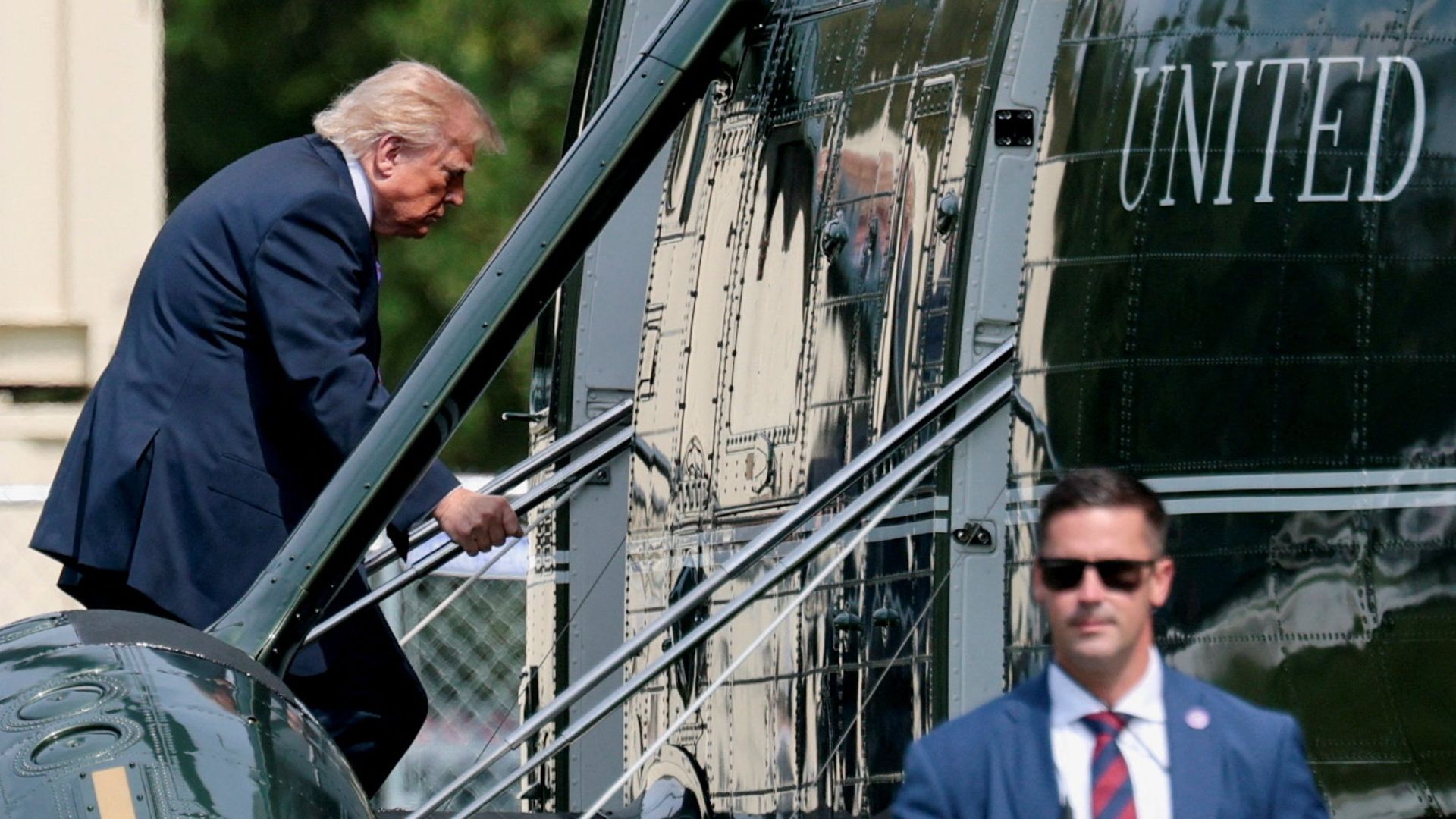
A construction zone on executive grounds nearly triggered a major aviation disaster. When Donald Trump's presidential helicopter almost crossed paths with an Envoy Air passenger jet near Ronald Reagan Washington National Airport, everyone wanted to know how the two aircraft got so close.
Federal investigators revealed that a blind spot created by active building work on the White House grounds knocked out vital radio signals. Air traffic controllers never heard the required warning call before takeoff. They cleared the commercial jet to leave at the exact moment Marine One lifted off from a temporary site. Recently making waves in this space: The Structural Mechanics of Sovereign Oil Accords Why Majority Control Does Not Equal Immediate Production.
Here is what actually happened in the airspace above Washington, and why aviation safety experts are still shaking their heads over the breakdown.
The Disappearing Three-Minute Warning
Under standard safety protocols, Marine One pilots must give air traffic controllers a three-minute warning before departure. This buffer allows the tower to freeze civilian departures and carve out an empty corridor. Further insights into this topic are detailed by NBC News.
On August 4, that critical protocol failed. The National Transportation Safety Board found that the official tower recordings contained zero trace of the warning call.
Yet, external audio recordings proved the helicopter pilots did their job. They transmitted the required notice clearly. The signal simply vanished before reaching the tower.
The two aircraft ended up drifting dangerously close together. At their closest point, the helicopter and the regional jet sat just over 0.8 miles apart horizontally and roughly 700 feet vertically.
The Envoy Air crew received an automated collision-avoidance alert. They never physically spotted the presidential aircraft. Marine One pilots saw the commercial jet, paused their climb, and let the airliner clear the area. Officials stressed that the president was never genuinely harmed, but the margin for error was razor-thin.
How White House Building Work Broke the Radios
The root cause came down to a physical obstruction miles away from the airport.
Since mid-July, ongoing construction for a new helipad behind the White House forced Marine One to shift its takeoff zone to the Ellipse, the open park directly to the south. That seemingly minor relocation changed everything.
The Federal Aviation Administration used a specific radio receiver located in a nearby residential neighborhood to field calls from the presidential helicopter. Once Marine One moved to the Ellipse, buildings and terrain blocked the direct line of sight to that antenna.
Communication glitches were already surfacing weeks before the August incident. Controllers and military pilots met just days prior to patch the flaw. They hatched a backup plan to relay messages through a third party if the direct frequency dropped out again.
That human backup plan failed on August 4 as well.
Aviation safety veteran Jeff Guzzetti pointed out that authorities knew about the spotty communication channels beforehand. They treated the symptoms instead of hunting down the root cause. Controllers handled the chaotic moments correctly based on the data they had. They simply operated in the dark because the technology failed them.
Fixing the Skies Over Washington
The near miss revived intense anxieties about airspace congestion around the capital.
Just over a year prior, a fatal midair collision between an airliner and an Army Black Hawk near Reagan National killed 67 people. That tragedy prompted strict new rules requiring all local takeoffs and landings to freeze whenever a military helicopter traverses a conflicting route.
Those safety mandates only work if the communication links remain unbroken.
Immediately following the close call, FAA technicians scrambled to fix the hardware failure. They relocated the airport's radio receiver straight to the top of the Reagan National air traffic control tower. Direct line-of-sight tests confirmed the fix worked. Subsequent tests showed normal operations returning to the flight path.
Check your local airport authority updates if you want to track how regional airspace modifications impact commercial schedules. Expect tighter oversight on military-civilian aviation handoffs across major metropolitan corridors moving forward.