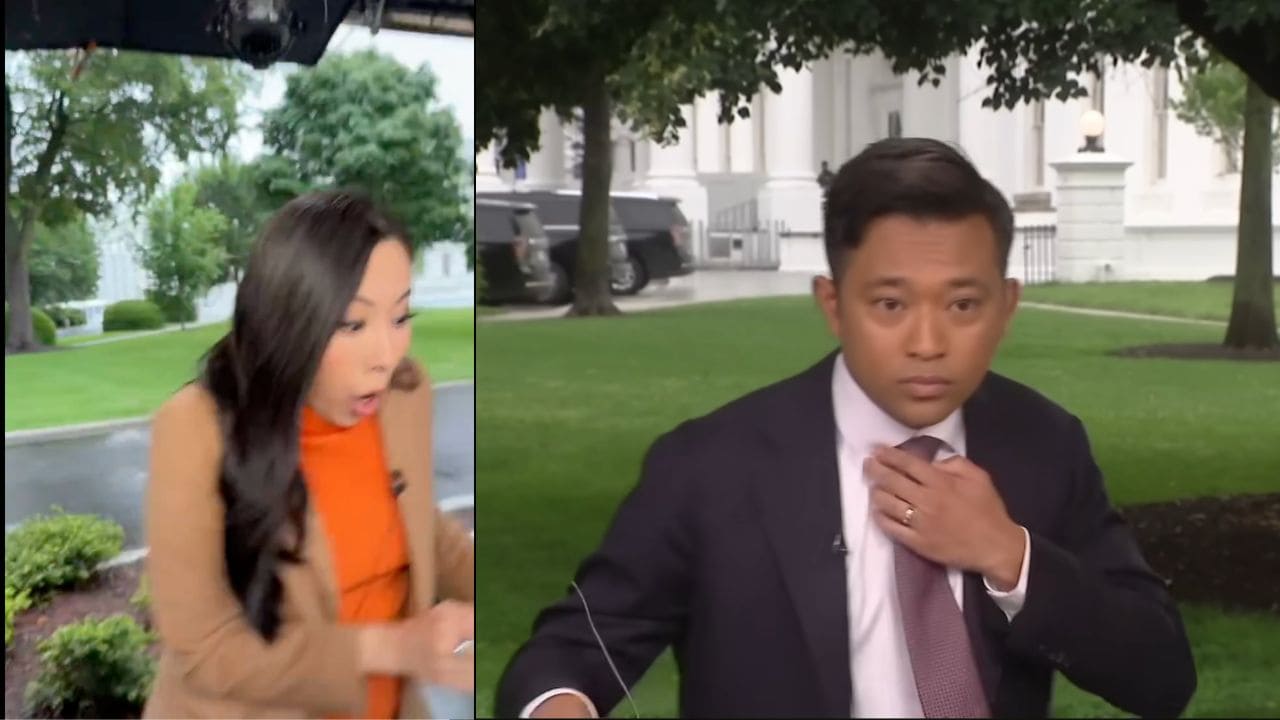
A heavy, rhythmic volley of gunfire shattered the early evening routine on the White House North Lawn on Saturday, forcing dozens of broadcast journalists to abandon their camera equipment and sprint for the press briefing room. The incident, which unfolded around 6:04 p.m., resulted in the death of a 21-year-old gunman and left an innocent bystander critically wounded. While early media dispatches painted the scene as a sudden, isolated burst of chaos, the reality points to a deeper crisis: an unprecedented, compounding breakdown in perimeter deterrence at the heart of American political power.
The suspect, identified by law enforcement sources as Nasire Best, approached a primary U.S. Secret Service Uniformed Division checkpoint at 17th Street and Pennsylvania Avenue NW, just paces from the Eisenhower Executive Office Building. Carrying a revolver concealed inside a bag, Best drew the weapon and opened fire directly on officers stationed at the security booth. Secret Service personnel reacted immediately, returning fire and mortally wounding the gunman, who later died at George Washington University Hospital.
The exchange was violent and remarkably prolonged for a checkpoint engagement. Witnesses and journalists reported hearing anywhere between 15 and 30 rapid-fire shots. Amid the crossfire, an uninvolved bystander was struck and remains in grave condition. Federal authorities have not yet confirmed whether the civilian was hit by Best’s initial rounds or the subsequent barrage from responding officers.
For the veteran press corps stationed along Pebble Beach—the outdoor broadcast location facing the executive mansion—the threat was visceral. ABC News correspondent Selina Wang was in the middle of recording a video segment on her phone when the air filled with the sharp, unmistakable cracks of a multi-weapon firefight. Her camera captured the precise moment the calm dissolved into terror. Reporters, producers, and technicians dove into the grass or scrambled beneath the media tents before being ordered by heavily armed agents to run for shelter inside the building. Behind them, the North Lawn was instantly swarmed by tactical units carrying rifles, while National Guard troops and Metropolitan Police officers cordoned off downtown Washington.
Inside the West Wing, a different kind of tension took hold. President Donald Trump was in the residence at the time of the shooting, unaffected by the danger outside but deeply insulated within a complex that is increasingly resembling a high-stakes fortress under siege. Minutes before the gunfire erupted, the president had been active on social media, trumpeting significant progress toward a multinational "memorandum of understanding" involving complex diplomatic negotiations linked to Iran. FBI Director Kash Patel quickly announced that the bureau's Washington Field Office had taken the lead on the investigation, working alongside the Secret Service to determine how a known individual managed to launch a direct assault on the perimeter.
This is not an isolated breach. It is part of a systemic, escalating pattern of violence targeting the immediate vicinity of the presidency over the last several weeks. To view this simply as a dramatic backdrop for a television news report is to miss the far more critical structural failure taking place in the nation's capital.
The Secret Service was already reeling from a series of high-profile, armed incursions. On April 25, the annual White House Correspondents' Association Dinner was upended when a California man armed with a shotgun breached a security checkpoint at a Washington hotel in an apparent assassination attempt. Less than two weeks later, on May 4, another gunman engaged in a shootout with federal officers near the Washington Monument, wounding a teenage bystander. Just three weeks ago, a civilian witness was shot in the leg when a man pulled a firearm near the route of Vice President JD Vance's motorcade outside the White House.
The suspect in Saturday's attack was a known quantity to federal law enforcement. Best had a documented history of mental health struggles and had been arrested the previous year after trying to force his way through a different White House security gate without authorization. At the time of the shooting, he was under an active federal "Stay Away Order" specifically designating the White House complex.
The standard administrative response to these perimeter crises has been to harden the physical infrastructure. Concrete barriers have been expanded, the height of the outer iron fences has been raised, and the immediate blocks surrounding Lafayette Square have been progressively locked down to the public. Yet, these measures are failing to address the fundamental vulnerability: the persistence of determined, armed individuals who are no longer deterred by the physical presence of security booths.
The checkpoint at 17th Street and Pennsylvania Avenue is one of the most heavily trafficked access points for staff, officials, and credentialed visitors. By approaching this specific node with a weapon hidden in a bag, the gunman exploited the reality that security personnel at these gates must balance intense surveillance with the daily flow of thousands of individuals. The fact that an individual with an active federal stay-away order could walk directly up to a security booth and pull a revolver reveals a critical gap in proactive threat mitigation and real-time monitoring.
The political ramifications of this latest perimeter failure will likely accelerate a controversial push to radically reshape the geography of the executive branch. Discussions have already intensified regarding the creation of an entirely new, deeply isolated presidential compound—a permanent, ultra-secure space far removed from the historic core of Washington, D.C. While proponents argue that modern ballistic threats and the frequency of lone-wolf attacks make the current White House unsustainable, critics view the potential abandonment of the historic executive mansion as a capitulation to domestic instability.
The immediate investigation will focus on the ballistics of the exchange and the tragic wounding of the bystander. But for the institutional framework of presidential security, the clock is running out on incremental fixes. The recurring sound of gunfire echoing across the North Lawn is no longer an anomaly; it has become the defining baseline of a capital under constant, direct friction.