The headlines are screaming bloody murder about an eight-person syndicate allegedly plotting a synchronized drone and sniper assault on a hypothetical outdoor UFC event at the White House. The media is serving up a terrifying cocktail of high-tech asymmetric warfare and political assassination. They want you to believe we narrowly escaped a techno-thriller catastrophe.
They are wrong. They are falling for the oldest trick in the bureaucratic playbook.
When you strip away the sensationalist DOJ press release language, this indictment does not reveal a terrifying new vanguard of high-tech terrorism. It reveals a classic case of security theater feeding off amateur delusion. The mainstream media consumes these indictments raw, regurgitating terms like "coordinated drone swarm" without pausing to ask a fundamental operational question.
Could these people actually pull this off?
The answer, based on physics, logistics, and the realities of modern electronic warfare, is a resounding no. We are over-indexing on the intent of idiots while ignoring the absolute impossibility of their execution.
The Myth of the Backyard Drone Armada
Let us dismantle the central panic piece of this indictment: the weaponized commercial drone.
The public sees videos of FPV drones carrying shaped charges in active conflict zones and assumes the same tactics translate perfectly to Pennsylvania Avenue. This assumption ignores the massive, invisible wall of electronic countermeasures protecting the capital region.
I have spent over a decade analyzing security perimeters and electronic counter-measures. The National Capital Region is covered by the Joint Air Defense Operations Center (JADOC). It is arguably the most aggressively jammed, monitored, and restricted airspace on the planet.
- The Geofencing Reality: Off-the-shelf consumer drones from major manufacturers have hard-coded GPS restrictions. They will not even start their rotors within the Washington, D.C. No-Fly Zone.
- The Signal Jamming Wall: Even if a bad actor builds a custom DIY quadcopter from scratch to bypass commercial firmware restrictions, they have to fight the RF spectrum. The area surrounding the Executive Mansion is saturated with high-power directional jammers, protocol spoofers, and kinetic interception systems.
- The Payload Problem: To mount an attack that causes more than localized panic, a drone needs payload capacity. Weight requires battery power. Battery power increases size. Size increases the radar and visual signature.
An amateur cell assembling hobbyist parts in a basement does not have the engineering capability to overcome military-grade electronic warfare suites. They are not hacking their way through localized GPS spoofing. The moment their custom rigs enter the airspace, they drop like stones or return to home. The media treats these consumer plastics as if they are Predator missiles. They are toys flying into a brick wall of state-level electronic defense.
The Logistics of the Fantasy Sniper Nest
If the drone narrative is a technical fantasy, the sniper plot is a logistical joke.
The indictment implies a synchronized element where long-range marksmen would coordinate with an aerial bombardment. Anyone who has ever pulled a trigger or managed an executive protection detail knows that urban sniping is not like the movies. It is an excruciatingly difficult exercise in ballistics, windage, and line-of-sight availability.
The White House grounds are surrounded by a carefully curated zone of denial. Rooftops are monitored, structural sightlines are deliberately broken by architecture and landscaping, and counter-sniper teams from the Secret Service Secret Service Counter Sniper Team (CS) routinely monitor every viable nest within a mile radius with advanced optics and laser detection systems.
To position a shooter capable of hitting a target inside a crowded, chaotic sporting event on the lawn requires one of two things:
- Incredible, state-sponsored institutional access that can bypass perimeter security.
- A level of marksmanship and equipment that defeats passive acoustic gunfire detection arrays like ShotSpotter, which would pinpoint the origin of the first round within milliseconds.
The suspects indicted were not elite tier-one operators. They were internet-radicalized hobbyists trading messages on encrypted apps, mistaking enthusiasm for operational capability. Planning an attack on paper is easy. Managing cold bore deviations, thermal drift, and a hyper-vigilant Secret Service counter-sniper element while setting up a rifle in an urban core is a suicide mission with a zero percent success rate.
Why the Feds Love Sensationally Flawed Plots
To understand why this indictment looks so terrifying, you have to understand the symbiotic relationship between law enforcement PR and federal funding structures.
The Department of Justice needs these plots to sound like Master Chief levels of coordination. If they announce they arrested eight guys who bought two DJIs from Best Buy and a hunting rifle from a pawn shop while talking big on Discord, the public shrugs. The budget requests do not get approved. The counter-terrorism task forces do not get their victory laps.
By elevating a fundamentally flawed, incompetent plan into a "highly sophisticated multi-pronged threat," law enforcement achieves two goals:
- It validates the massive expenditures on domestic surveillance and drone interception tech.
- It creates a deterrent effect based on perceived omnipresence rather than actual vulnerability.
This is classic security theater. We are being asked to panic over a threat that was structurally impossible to execute, simply because the intent was malicious.
The Real Vulnerability is the Circus Itself
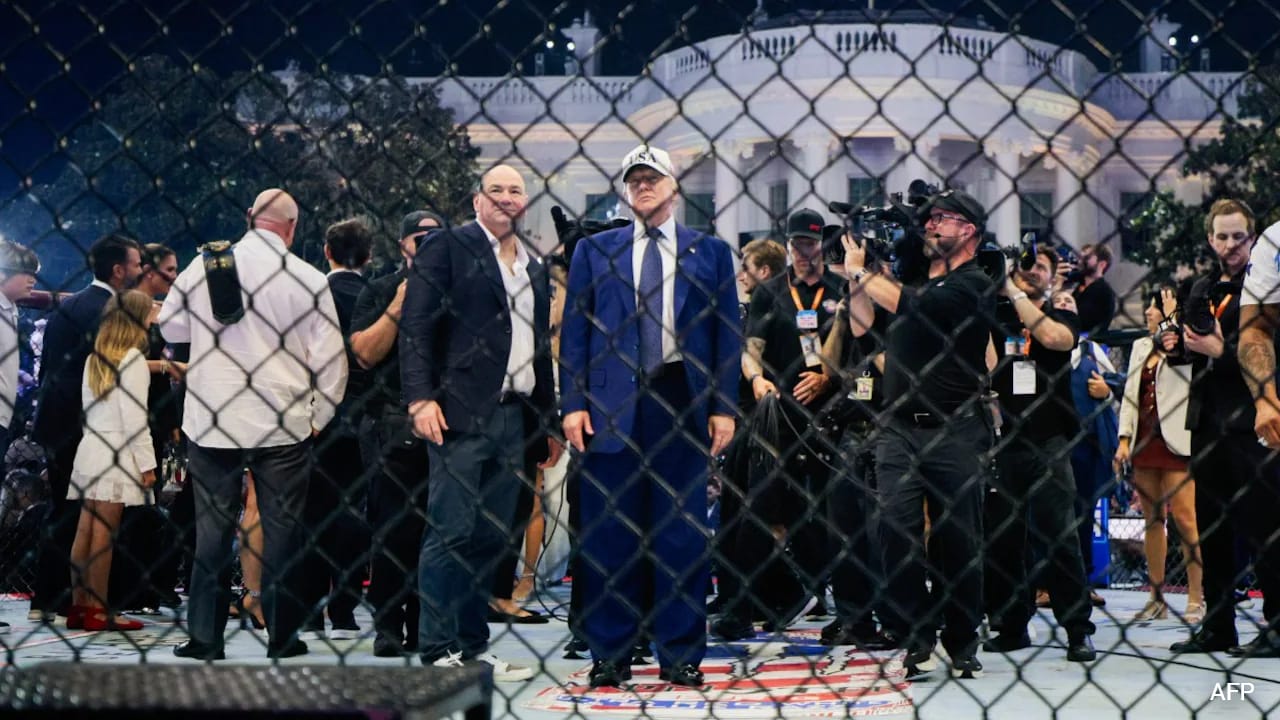
The underlying absurdity of this entire news cycle is the premise of the event itself: a UFC fight on the White House lawn.
While the promotion of such an event makes for fantastic political theater and populist PR, the actual execution of a massive, public, ticketed sporting event inside the most secure civilian perimeter in the world is a logistical nightmare. The Secret Service does not adapt to the circus; the circus adapts to the Secret Service.
If such an event were to occur, the temporary infrastructure required—bleachers, lighting rigs, broadcast trucks, and thousands of civilian spectators—would undergo a screening process that rivals international border crossings. The idea that an eight-person cell could just show up with drones and long guns and catch the entire apparatus off guard is an insult to the thousands of professionals who manage high-profile political events daily.
The threat was never the drones. The threat was never the snipers. The threat is our collective inability to distinguish between a genuine national security crisis and a group of radicalized LARPers playing out an action-movie script in their heads before being easily scooped up by federal informants.
Stop treating every internet-hatched plot like it was designed by a foreign intelligence agency. The systems held. The barriers to entry for this kind of advanced urban warfare remain incredibly high. The bad guys are not getting smarter; they are just getting louder on the internet.