Imagine a tense five-set thriller on Centre Court. The crowd is hushed. The server tosses the ball. Suddenly, a fat pigeon waddles right onto the baseline, looking for a snack. It sounds ridiculous, but this used to happen all the time. In fact, back in the 1999 men's semi-finals, a rogue pigeon repeatedly disrupted play between Pete Sampras and Tim Henman, forcing ball boys to chase it around the grass and throwing off the entire flow of a critical match.
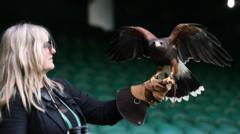
That single match changed how the All England Lawn Tennis and Croquet Club handles pest control. Netting looks ugly and spikes don't work on a sprawling 42-acre estate. Instead, the club turned to nature. Enter Rufus, a Harris's hawk who has spent nearly two decades ruling the skies over SW19. He isn't a pet or a novelty mascot. He is a highly trained working raptor, and he is Wimbledon's ultimate security guard against avian intruders. In related developments, read about: The Brutal Truth About Football Tourism and the Commercialization of Global Fandom.
The Secret Battle for Wimbledon's Grass
Pigeons are a nightmare for tennis clubs, but they absolutely love Wimbledon. The reason comes down to the tournament's obsession with perfection. The club uses premium perennial ryegrass, and the birds can smell the fresh grass seed from miles away when courts are being repaired or re-sown. To a pigeon, Centre Court isn't a historic sporting venue. It's a giant, five-star buffet.
Left unchecked, flocks of pigeons would roost in the complex roof structures, destroy the pristine turf, and leave droppings all over expensive spectator seating. Mechanical scarers, fake plastic owls, and noise machines don't fool urban pigeons for long. They adapt. But they can never adapt to the sight of a real predator. Yahoo Sports has analyzed this critical issue in great detail.
Falconer Wayne Davis and his family, who run Avian Environmental UK, realized that the threat of force is much more effective than actual violence. Rufus doesn't hunt the pigeons. He doesn't need to. His job is simply to fly around the grounds, making his presence known. The moment a pigeon sees those sharp eyes and a three-foot wingspan, its instinct kicks in. It flees. By keeping the local bird population in a constant state of mild anxiety, the club ensures that local pigeons decide to live somewhere else entirely.
A Day in the Life of a Working Raptor
The real work happens long before wealthy fans start sipping Pimm's and eating strawberries. Rufus and his handlers, including Donna Davis and Imogen Davis, arrive at the All England Club at dawn, usually between 4:00 AM and 5:00 AM. This is when urban pest birds are most active and looking to feed.
Rufus is released to patrol Centre Court, Court No. 1, and Henman Hill for about four hours every morning during the championships. His handler removes his flying jesses, and the small bells attached to his legs ring out through the empty stadium as he flies up into the rafters. He checks the dark corners of the roofs, scares away any early risers, and returns to the handler's glove for a small meat reward.
- Precision Weight Management: The most technical part of falconry isn't the flying; it's the weight. A working hawk's weight must be monitored down to the single ounce. Rufus flies best at an optimum weight of 1 pound 6 ounces (around 700 grams). If he's too heavy, he gets lazy and won't bother flying. If he's too light, he gets overly hungry and might actually hunt and kill a pigeon on the court, which would be a public relations disaster during a live broadcast. He needs to be just hungry enough to work for his handler's treats, but content enough to ignore his wild hunting instincts.
- Year-Round Vigilance: Many people assume Rufus only works during the famous two weeks of the summer tournament. That's a major misconception. Pigeons are stubborn creatures. If you leave them alone for eleven months of the year, they will establish permanent nests. Rufus patrols the London grounds year-round, including weekends and evenings, ensuring the birds never get comfortable enough to call Wimbledon home.
The Global Outcry and Cult Status
Over the years, this dark brown hawk has become a genuine celebrity. He has his own Wimbledon security pass, complete with his photo and the official job title of "Bird Scarer." He has amassed thousands of social media followers and routinely features in international news broadcasts.
But fame brings risks. In June 2012, Rufus was stolen from the back of his owner's car while it was parked overnight on a private drive. The theft caused an immediate global media storm. Fans panicked, and the news even overshadowed some of the early-round tennis matches. Thankfully, the pressure worked. Three days later, someone dropped Rufus off at an RSPCA rescue center in South London. He was found healthy, save for a slightly sore leg, and made the front page of British newspapers the next morning with the headline "Rufus is back."
When he isn't busy protecting the most famous tennis grass in the world, Rufus takes his talents elsewhere. He's used his intimidating presence to clear out pigeons at Westminster Abbey, Lord's Cricket Ground, and various hospitals and airfields across the UK.
Moving Pigeons Without Harsh Chemicals
What makes this method so brilliant is that it's entirely sustainable and non-lethal. Many commercial venues rely on netting that traps wild animals, poisons that leak into the local ecosystem, or ugly spikes that ruin historical architecture. Falconry offers a clean alternative that respects the environment.
If you want to keep nuisance birds away from your own property, you probably can't hire a professional hawk handler, but you can learn from how Wimbledon handles the issue.
First, cut off the food supply. Pigeons gather where there is easy grain, grass seed, or discarded food waste. Keep outdoor trash bins tightly sealed and avoid leaving pet food outside. Second, disrupt their habits early. Don't wait until a flock of birds has built nests in your gutters or roof line to take action. Use visual deterrents or physical barriers the moment you notice them scouting out your property. Consistency is everything. Just like Rufus, you have to make your space feel unsafe for them before they decide to settle down.