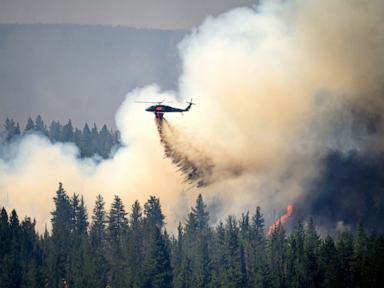
The air does not smell like smoke yet. It smells like dry pine, baked earth, and the flat, chemical tang of high-pressure heat that has baked the valley for three days straight.
Out on the ridgeline, the wind does not blow in a steady stream. It stutters. It drops to a breathless silence, heavy and suffocating, then punches through the canyons with a sudden, violent torque that sends gray needles spinning off the branches.
Every firefighter standing at the edge of the timberline knows what that stutter means. It is the signature of a weather system that has stopped negotiating.
Oregon is holding its breath.
Across the state, dozens of active blazes are chewing through timber, brush, and the dry duff of a summer that refused to yield a drop of moisture. To read the dispatch logs is to read a geography of exhaustion. Names of creeks, ridges, and valleys that sound like poetry—Cedar, Pine Creek, Quartz—are reduced to grid coordinates, containment percentages, and acreage counts.
Numbers. Columns of data.
But behind every coordinate is a crew of tired men and women staring down a wall of orange light that refuses to obey the math.
Consider what happens when the wind shifts.
To understand why a red flag warning changes everything, you have to picture a living room fifty miles away from the nearest active flame. You have to imagine waking up at three in the morning not to an alarm, but to the orange smear of dawn hitting your ceiling hours too early.
The heat we talk about on the evening news isn't just a comfort issue. It is a drying agent. When temperatures spike and relative humidity plunges into the single digits, the forest stops being a living ecosystem and becomes an industrial-grade kiln. Every branch, every needle, every blade of grass turns into tinder waiting for a spark.
And then the wind arrives.
Wind is the oxygen pump for a wildfire. It bends the flames forward, preheating the unburned timber ahead of the front until the wood literally gasps for air and bursts into spontaneous ignition. A fire driven by twenty-mile-per-hour gusts does not crawl. It leaps. It skips across canyons, vaulting rivers and firebreaks as if they were chalk lines drawn in the dust.
Down in the valleys, crews are digging line.
Let me tell you what it feels like to swing a Pulaski when the air temperature is one hundred degrees and the smoke is so thick you can taste the charcoal on the back of your tongue. Your throat feels like it's lined with sandpaper. Your skin is coated in a sticky film of sweat and ash. Every breath feels like inhaling through a wool blanket.
You dig. You scrape down to mineral soil, stripping away the organic mattress of the forest floor so the creeping embers have nothing left to eat. You work in pairs, usually in silence, because breath is too precious to waste on conversation.
(Note: While the characters and specific sensory dialogues here are narrative reconstructions to illustrate the human cost, they are anchored in the verified tactical reality reported by emergency management agencies across the Pacific Northwest.)
"Keep your eyes on the crowns," a crew boss shouts over the roar.
That is the nightmare scenario. Ground fire is brutal, exhausting work, but it can be met, fought, and turned. Crown fire is a different beast entirely. When the flames climb into the tops of the old-growth firs and ponderosas, the fire generates its own weather. It creates a firestorm—a roaring column of superheated air that sucks oxygen toward its center with the force of a hurricane, hurling burning embers a mile ahead of the front.
When that happens, you don't fight the fire anymore. You run, or you find a safety zone and pray the shift holds.
The statistics tell one story. They tell us about tens of thousands of acres scorched, hundreds of lightning strikes recorded in a single twenty-four-hour window, and mutual aid pacts strained to their breaking point.
The human story is entirely different.
It lives in the driveway of a ranch house outside of Bend, where a retired carpenter is loading three generations of photo albums into the back of a Ford pickup while his wife holds a shivering, wide-eyed golden retriever. They have lived through bad seasons before. Every local knows the rhythm of the dry months. But there is a distinct terror in watching the sky turn the color of a bruised plum at noon.
It lives in the Incident Command Post three counties away, where logistics chiefs stare at whiteboards covered in color-coded magnets, trying to solve a brutal arithmetic problem: how to protect forty different communities with twenty crews when every resource is already stretched to the breaking point.
There is no cavalry coming over the hill. The cavalry is already here, and they are bone-tired.
Yet, work continues.
Bulldozers grind up steep shale slopes, their steel treads throwing sparks against the dark rock. Water tenders rumble down narrow logging roads, their drivers navigating blind through banks of acrid fog. Hand crews fall back to strategic ridgelines, cutting lines by flashlight as the red glow inches closer through the dark.
This is the hidden cost of our changing summers. It is measured not just in timber values or insurance claims, but in the slow-burning erosion of peace of mind. Every resident in the fire-prone zones of the West now lives with a low-grade hum of anxiety from July through October, watching the windsock, checking the weather app, wondering if today is the day the smoke crests the ridge behind the house.
The wind continues to gust. The red flag warnings remain in effect.
Out on the fire line, a rookie packer pauses for a second to wipe the grit from his eyes, taking a long pull from a canteen that is already lukewarm. He looks up at the ridge, where a fresh tower of white and amber smoke is punching through the atmospheric inversion, climbing straight up into the stratosphere before flattening out into a massive, brooding anvil.
He slings his pack back over his aching shoulders, grips his tool, and takes another step into the heat.