You can't fight a virus you can't see, and right now, health workers in the Democratic Republic of the Congo are practically wearing blindfolds. An outbreak of a rare variant of Ebola is gaining ground across the eastern provinces, exposing a critical flaw in global health security. The problem isn't just a shortage of staff or money. It is a fundamental mismatch in technology. The local clinics are using diagnostic tests designed for a completely different strain of the virus, yielding false negatives while the pathogen spreads silently through vulnerable communities.
When people think of Ebola, they usually picture the Zaire strain. It is the most common, the most lethal, and the one that received billions of dollars in research money over the last decade. That investment yielded highly effective vaccines and targeted therapies. But the virus hitting Ituri and North Kivu provinces right now is the Bundibugyo strain. It is a rare variant, marking only its third appearance in history since its discovery in 2007. Because local diagnostic labs initially relied on standard Zaire-specific tests, early cases came back negative. Weeks of response time vanished. Now, the region faces a widening epidemic with zero approved vaccines and zero licensed treatments.
Fixing this mess requires more than just shipping generic medical supplies. It demands an immediate, targeted overhaul of the diagnostic supply chain directly at the community level.
The High Cost of the Wrong Ebola Diagnostic Tests
The current crisis traces back to late April in the city of Bunia. A patient died of a mysterious hemorrhagic illness, and the body was moved to a densely populated mining area in Mongbwalu. When subsequent patients fell ill with telltale signs like vomiting, intense weakness, and bleeding, health officials did exactly what they were trained to do. They took blood samples and ran standard polymerase chain reaction tests.
But those tests looked specifically for Ebola Zaire. They missed the Bundibugyo virus entirely.
By the time health authorities realized they were dealing with a rare variant and confirmed it via genomic sequencing, the virus had already established deep roots. Over 50 people died in Mongbwalu alone before the true culprit was identified. Doctors Without Borders reports that the suspected case count has surged past 900, with infections spreading across more than 20 health zones and jumping the border into Uganda.
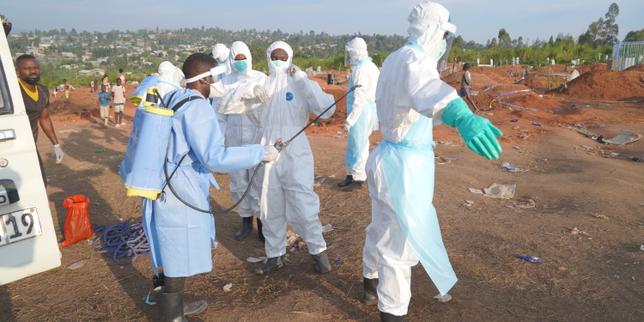
This diagnostic failure triggered a cascading catastrophe. In an Ebola response, speed is everything. When a test says "negative," health workers drop their guard. They stop tracing contacts. They manage patients in regular hospital wards without strict isolation protocols. Four healthcare workers died in the initial weeks because they treated infected patients without knowing the extreme danger.
Standard rapid diagnostic kits used in remote clinics are great for field utility, but they are totally blind to Bundibugyo. If you rely on tools calibrated for the wrong pathogen, you end up funding the spread of the disease instead of stopping it.
Why the Eastern Congo Is a Diagnostic Nightmare
Northeastern Congo is one of the toughest places on earth to manage an epidemic. Decades of armed conflict have left the region fractured, with millions of displaced people living in crowded camps around Goma and Bunia. People move constantly to escape violence or seek work in informal gold mines. This high mobility means a single undiagnosed patient can seed five new transmission chains in a weekend.
Compounding this is a severe breakdown in community trust. Because early cases received false negatives, community members grew deeply suspicious when patients went into clinics and never came out alive. Today, contact tracers are tracking fewer than half of known exposures. Families are actively refusing post-mortem swab testing on deceased relatives, hiding bodies to conduct traditional burials that involve washing the corpse. Since the viral load is highest at the time of death, these secret funerals act as super-spreader events.
When patients don't trust the diagnostic process, they flee. Multiple suspected Ebola patients recently escaped from isolation facilities in Bambu and local health zones because they lacked food and clarity about their status. A diagnostic test isn't just a piece of lab plastic. It is the entry point for trust. If a test takes days to return from a central lab in Kinshasa, or if it yields a garbage result because it is the wrong kit, the community walks away.
The Zero Vaccine Reality Check
The lack of accurate diagnostic tests is terrifying because there is no safety net. When the Zaire strain flared up in recent years, health teams deployed the Ervebo vaccine using a ring vaccination strategy, immunizing everyone around a confirmed case to block the transmission chain. It worked beautifully.
With the Bundibugyo strain, that playbook is useless. There is no approved vaccine. There are no monoclonal antibody cocktails like Inmazeb or Ebanga to save patients in advanced stages of the disease.
Right now, clinical management relies entirely on aggressive supportive care. That means maintaining blood pressure, managing pain, and replacing lost fluids through IVs. While some experimental treatments like the MBP134 antibody cocktail have shown promise in animal models, they are not widely available in the field.
When you don't have a cure, containment is your only shield. And you cannot contain what you fail to diagnose on day one.
Shifting Focus to Local Field Diagnostics
Stopping this outbreak means changing how field clinics operate. Waiting for samples to travel from remote mining villages to sophisticated reference labs takes too long. The international community needs to pour resources into decentralized, multiplex diagnostic testing.
Instead of shipping single-target tests, agencies must supply assays capable of identifying multiple hemorrhagic threats simultaneously. These systems can differentiate between Zaire, Bundibugyo, Sudan strains, and even malaria or typhoid, which mirror early Ebola symptoms like fever and joint pain.
Public health organizations must execute a coordinated pivot:
- Deploy Multiplex Platforms Immediately: Field clinics require automated, enclosed testing platforms that can identify the Bundibugyo genome within hours, avoiding the cross-reactivity errors of old testing methods.
- Establish Aggressive Triage Protocols: Clinicians must treat every febrile patient with a travel history to Ituri as a suspected case, regardless of initial rapid tests, until a strain-specific molecular test confirms a negative result.
- Fund Direct Community Incentives: Isolation centers must be stocked with adequate food, clean water, and basic comforts. Patients won't submit to testing if a positive result means being locked in a barren room to starve.
- Prioritize Safe Burials via Local Leadership: Engage traditional elders and religious leaders to oversee modified, safe burial practices. Testing a corpse must be presented as a way to protect the surviving family, not as a bureaucratic desecration of the dead.
The World Health Organization has designated this outbreak a public health emergency of international concern. The designation means nothing if the actual clinics on the ground are left empty-handed. The virus is moving faster than the response logistics, and the only way to get ahead of it is to ensure that the very first test administered to a sick patient is the one that actually looks for the killer in the room.
Contracting Ebola was 'the worst 19 days' of this doctor's life | The Current
This video features firsthand insights from an emergency physician who survived Ebola, illustrating the severe physical toll of the virus and the immense difficulty healthcare workers face when treating patients during an active outbreak.