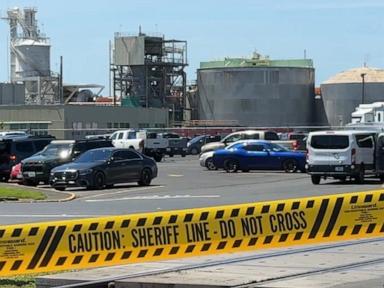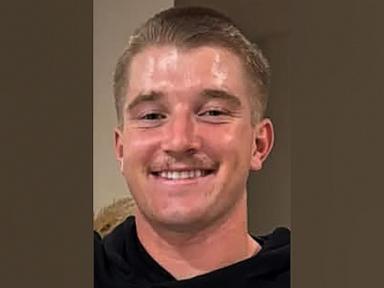
When a 19-year-old Marine goes missing in the California desert, the immediate public narrative relies on standard press releases from local sheriff departments and base public affairs offices. A young service member fails to report for formation, a vehicle turns up abandoned near Joshua Tree or Twentynine Palms, and search teams deploy across hundreds of square miles of Mojave scrubland. Yet behind these routine bulletins lies a systemic friction between military command structures, civilian law enforcement jurisdictions, and the unforgiving physics of arid environments.
Understanding what actually happens during a desert disappearance requires stripping away the sanitized language of official alerts. The Mojave Desert—home to Marine Corps Air Ground Combat Center Twentynine Palms, the largest Marine base in the world—is not merely a hot backdrop. It is a vast, fractured terrain of volcanic rock, deep washes, abandoned mining shafts, and extreme thermal swings that actively work against human survival and forensic recovery.
The Jurisdictional Bottleneck in the High Desert
The first twenty-four hours of any missing person investigation dictate the odds of a live recovery. When the missing individual is an active-duty Marine stationed in Southern California, those critical hours are frequently consumed by administrative verification rather than immediate ground deployment.
Military installations operate under strict accountability protocols. If a junior Marine does not appear for morning formation, unit leadership must first determine whether the absence is an unauthorized absence—commonly known as UA—or a genuine emergency. Commanders check barracks rooms, contact known associates, and ping unit rosters. That internal vetting process is designed to prevent false alarms over a sleeping private or an extended weekend trip to Los Angeles or San Diego.
In the desert, however, administrative caution carries a steep biological cost. By the time a unit formally classifies a Marine as missing and notifies the Provost Marshal’s Office, hours have elapsed. If the Marine left the installation boundaries—heading into the surrounding San Bernardino County unincorporated areas or Joshua Tree National Park—the military loses primary jurisdiction.
Local sheriff departments and National Park Service rangers must then be briefed, integrate into a unified command, and mobilize volunteer search-and-rescue units. Each handoff between federal military police, county deputies, and park rangers introduces communication lag. Radio frequencies do not automatically sync. Cell tower data requests require legal sign-offs that bounce between military investigators and civilian judges.
The Brutal Math of Mojave Survival
To grasp the urgency, you have to look at the environment itself. Covering roughly 47,877 square miles across southeastern California and neighboring states, the Mojave is a rain-shadow desert defined by elevation extremes and severe aridity.
During summer months, daytime ground temperatures routinely exceed 120 degrees Fahrenheit, while winter nights plunge below freezing. A 19-year-old Marine is typically in peak physical condition, conditioned by rigorous training at Camp Pendleton or Twentynine Palms. Paradoxically, high physical fitness can accelerate danger in the desert.
Fit young adults often overestimate their endurance. They push further on foot after a vehicle breaks down or gets stuck in deep sand, burning through internal water reserves at an unsustainable rate. Under severe heat stress, the human body can lose over a liter of sweat per hour. Without rapid fluid replacement, blood volume drops, core temperature spikes, and cognitive impairment sets in long before physical collapse.
Heat-induced delirium is the silent killer in desert disappearances. Once dehydration crosses a critical threshold, rational decision-making evaporates. Search-and-rescue veterans consistently document cases where missing individuals discard clothing, bypass visible trails, or crawl into tight, shaded rock crevices that render them invisible to aerial thermal imaging.
Consider a hypothetical scenario common to high-desert SAR operations. A young service member drives onto an unmaintained dirt road off Highway 62 to camp or clear their head. The tires sink into loose alluvial sand. Instead of staying with the vehicle—which acts as both shelter and a massive reflective target for search aircraft—the driver grabs a single bottle of water and walks toward what looks like a nearby ridge. Two miles in, distorted depth perception in the dry air reveals the ridge is actually eight miles away. By afternoon, disorientation sets in, and the person seeks shade beneath an overhanging boulder, effectively vanishing from both ground grid searches and helicopter spotters.
Why Modern Tracking Technology Hits a Dead Zone
The public assumes that locating a missing person in the modern era is a simple matter of pinging a smartphone or pulling GPS telemetry from a late-model car. Out in the California desert, those assumptions collapse.
Cell tower infrastructure along the borders of military training ranges and national parks is notoriously sparse. Vast stretches of the Mojave sit in complete cellular dead zones. When a phone loses signal, two things happen:
- No live location pings: Carriers cannot provide real-time triangulation if the device is not communicating with at least one tower, and ideally three for accurate distance calculation.
- Accelerated battery drain: A smartphone continuously searching for a nonexistent signal operates at maximum transmitter power, depleting a full battery in a fraction of its normal standby time.
Even when law enforcement obtains emergency exigent-circumstances disclosures from wireless providers, the resulting data often shows only the last known tower connection—a sector that can span twenty miles in rural San Bernardino or Riverside counties.
Satellite SOS features built into newer smartphones and dedicated personal locator beacons offer a lifeline, yet most young service members do not carry standalone satellite messengers for routine off-base drives. Furthermore, military operational security rules frequently discourage or restrict certain location-sharing apps on installations, meaning a Marine’s digital footprint is often intentionally minimized before they ever step off base.
The Invisible Weight on Junior Enlisted Marines
Reporting on a missing 19-year-old Marine almost always focuses on the physical search, leaving the underlying human factors unexamined. At nineteen, a Marine is often living away from home for the first time, navigating intense operational tempos, financial pressures, and the psychological transition into military life.
Twentynine Palms, in particular, is an isolating duty station. Located hours from major coastal cities, the base demands constant readiness for large-scale combined-arms exercises. When personal crises hit—relationship breakdowns, financial strain, or acute mental health struggles—the desert offers immediate, unfiltered solitude just minutes outside the main gate.
Commanders and civilian investigators have to treat every disappearance simultaneously as a potential accident, a medical emergency, or a self-harm incident. That dual-track approach complicates search strategy. Someone suffering a mechanical breakdown stays near roads and high ground hoping to be found. Someone in acute emotional distress actively avoids detection, moving at night and hiding during daylight hours.
How Search Operations Actually Work on the Ground
When a full-scale search finally launches, it is a grueling, methodical grid exercise rather than a dramatic cinematic sweep. Search managers divide the terrain into probability sectors based on behavioral profiling—analyzing the missing Marine’s known habits, vehicle fuel levels, outdoor experience, and last confirmed communications.
Aerial assets deploy first. Sheriff aviation units and military helicopters use forward-looking infrared cameras to scan for heat signatures. Yet thermal cameras struggle in the desert during daylight hours because rocks, sand, and scrub brush absorb solar radiation and radiate heat at levels identical to human body temperature. Aerial thermal sweeps are therefore most effective in the narrow window just before dawn, when the desert floor has cooled enough for a living body to stand out against the background.
On the ground, specialized tracking teams—often volunteers from county sheriff search-and-rescue units—look for subtle sign:
- Boot tread impressions in wind-blown sand
- Disturbed cryptobiotic soil crusts
- Broken creosote branches or overturned stones showing moisture underneath
- Discarded wrappers or water bottles caught in desert scrub
Canine units bring unmatched scent detection, though dry desert winds rapidly scatter human scent particles, and hot ground temperatures burn out working dogs within short shifts. Every hour that passes degrades physical tracks under shifting Mojave winds.
The Structural Reforms Needed to Close the Gap
Reducing the fatality rate of desert disappearances requires addressing the delays that occur before the first search dog hits the dirt. Several concrete shifts in protocol would directly improve recovery timelines:
- Automated Cross-Jurisdictional Alerts: Military provost marshals and surrounding county sheriff dispatch centers need standardized, pre-authorized digital data-sharing agreements. When a service member’s vehicle is flagged off-base under concerning circumstances, license plate reader networks across Southern California highways should trigger automated alerts without waiting for multi-agency paperwork.
- Mandatory Off-Base Desert Briefings: Just as installations require vehicle safety inspections before holiday weekends, commands stationed in arid regions need practical, mandatory survival training focused specifically on vehicle breakdown protocols—drilling the non-negotiable rule that staying with the vehicle multiplies rescue probability tenfold.
- Streamlined Exigent Telecom Requests: Establishing a dedicated joint liaison desk between military criminal investigators and county detectives eliminates duplicate legal requests to telecom carriers, shaving critical hours off cell-record retrieval.
A missing person bulletin for a 19-year-old Marine is rarely a complete story; it is the opening chapter of a race against geography, bureaucracy, and human physiology. Until military accountability systems and civilian search networks operate on the exact same clock from the very first minute an absence is noticed, the California desert will continue to hold every tactical advantage.