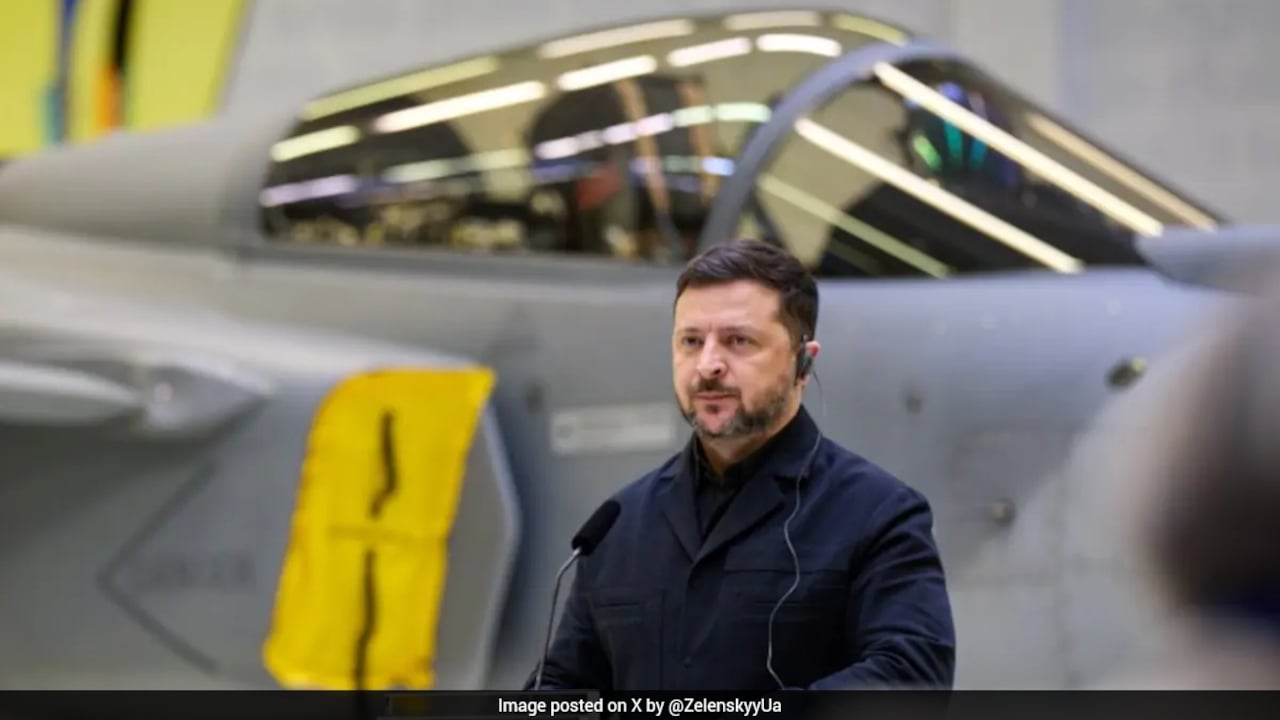
Ukrainian President Volodymyr Zelensky is signalling a narrow timeframe to force Russia to the negotiating table before 2027. Kyiv's strategy rests on a harsh reality: Western military aid, domestic manpower limits, and shifting political cycles in Washington and European capitals will not sustain the current intensity of attrition indefinitely. By framing the next two years as a critical window of opportunity, Ukrainian leadership is trying to synchronize battlefield leverage with diplomatic pressure before economic and political fatigue permanently hardens line positions across Western coalitions.
The Calculus Behind the Timeline
Military conflicts rarely end simply because both sides grow tired. They end when one or both participants realize that further expenditure of life and equipment will yield diminishing returns. Meanwhile, you can explore related stories here: Inside the Vatican Clash Over Argentina's Economic Shock Therapy.
Kyiv's strategic planners know that 2027 represents a dangerous threshold. By that point, defense procurement budgets across Europe will face severe political tests, while American electoral politics could once again reset Washington's foreign policy priorities. At the same time, Russia’s defense sector—despite facing Western sanctions—has restructured around a wartime economy, converting state reserves into heavy artillery shells, drones, and armored vehicles.
Zelensky’s explicit mention of a limited window serves two distinct audiences. Internally, it offers a war-weary population a sense of direction rather than an open-ended promise of perpetual war. Externally, it serves as an ultimatum to Western backers: provide the heavy weaponry and long-range strike permissions required to shift the frontlines now, or risk facing a locked-in stalemate where Ukraine’s bargaining power erodes. To explore the complete picture, check out the detailed analysis by TIME.
The Attrition Trap and Manpower Scarcity
The math of modern industrial warfare is unyielding. Ukraine entered this conflict with a significantly smaller demographic base than Russia, and years of brutal frontline engagements have drained veteran brigades.
Mobilization inside Ukraine has become a fraught political topic. Draft age adjustments, recruitment office overhauls, and draft evasion have highlighted the limits of domestic manpower reserves. Equipment can be replaced by international partners; combat-experienced infantry cannot.
Across the trench lines, Russian commanders have demonstrated a willingness to absorb staggering casualties for minor territorial gains. Moscow relies on mass over finesse, deploying waves of infantry backed by glide bombs to wear down Ukrainian positions. While Russian equipment stores are not infinite, defense intelligence estimates indicate that Moscow can maintain its current operational pace through at least late 2026 before facing severe shortages of refurbished armor.
This convergence creates a critical intersection. If Ukraine cannot achieve significant tactical breakthroughs or inflict unsustainable logistical costs on Russian forces within the next 18 to 24 months, the structural imbalance in raw power will heavily favor Moscow in any subsequent peace talks.
The Economic Strain on the Coalition
Western support for Ukraine has never been static. It fluctuates based on domestic economic performance, inflation rates, and competing geopolitical crises.
Financial backing from the European Union and the United States has transitioned from emergency drawdowns to long-term budgetary support. Yet political opposition is rising in several key nations. Budget deadlocks in European parliaments demonstrate how fragile multi-billion-dollar annual commitments can become when local voters face cost-of-living pressures.
+-----------------------------------------------------------------------+
|                       THE 2025-2026 PRESSURE POINT                    |
+-----------------------------------------------------------------------+
|  UKRAINE'S CHALLENGES                 |  RUSSIA'S CHALLENGES          |
|  * Manpower & mobilization exhaustion |  * Sanctions friction         |
|  * Dependence on foreign budget support|  * Equipment stock depletion  |
|  * Vulnerable energy grid infrastructure|  * Inflation & labor shortages|
+-----------------------------------------------------------------------+
|                                INTERSECTION                           |
|      Both sides face operational limits before the end of 2026.       |
|      The party that optimizes its leverage during this period         |
|      dictates the terms of eventual negotiation.                      |
+-----------------------------------------------------------------------+
Moreover, the global security environment is increasingly fragmented. Escalations in the Middle East and rising tensions in the Indo-Pacific drain diplomatic bandwidth and defense industrial output. Standard air defense interceptors, artillery rounds, and precision missiles are in high demand globally. Kyiv is not just competing against time; it is competing against rival security demands for finite defense manufacturing output.
Russia's War Economy and Internal Crises
Moscow is not operating without severe internal friction. The perception that Russia holds an endless reservoir of strength is a core component of Kremlin propaganda, but economic realities tell a more complicated story.
The Russian economy is displaying signs of severe overheating. The central bank has repeatedly raised interest rates to combat inflation driven by massive state spending on defense contracts. Factories outside the military-industrial complex face acute labor shortages because hundreds of thousands of working-age men have either been mobilized or fled the country.
Deep Structural Vulnerabilities
- Inflationary Pressures: Military wages and state compensation for fallen soldiers have driven up consumer prices, eroding real income for citizens outside the defense production bubble.
- Capital Depletion: Sovereign wealth funds have been heavily drawn down to subsidize state spending and shield domestic markets from sanctions impact.
- Dependency on Foreign Components: Despite import substitution programs, Russian missile and drone production remains reliant on smuggled microelectronics and third-party intermediaries.
Vladimir Putin’s strategy relies on outlasting Western political will. If the Kremlin believes that waiting until 2027 will yield a total collapse of Western assistance, it has zero incentive to engage in genuine diplomacy today. For Zelensky, forcing a breakthrough requires making the cost of continuing the war higher for Moscow than the cost of stopping it.
Long-Range Strikes and Security Guarantees
Negotiation leverage is built on capabilities, not intentions. For Kyiv, opening a genuine path toward war talks requires disrupting the rear logistics that enable Russian frontline operations.
This is why Ukrainian officials have consistently pushed for unrestricted use of long-range Western missiles against airfields, ammunition depots, and command centers deep inside Russian territory. By degrading Russian logistics, Ukraine aims to render offensive operations prohibitively expensive for Moscow, creating battlefield conditions where ceasefire talks become attractive to Russian generals.
Simultaneously, any peace framework hinges on durable security guarantees. Previous diplomatic arrangements, such as the 1994 Budapest Memorandum, failed because they lacked enforcement mechanisms. Kyiv has made it clear that a mere freeze along current contact lines without binding Western security commitments—or explicit NATO membership pathways—is simply a intermission before Russia reorganizes for a future offensive.
Western leaders remain divided on what these guarantees should look like. Some advocate for a "pcupine strategy," arming Ukraine to such a degree that future invasion becomes unviable. Others argue that without formal mutual defense treaties backed by Western troop commitments, no peace deal will hold over the long term.
The Risks of a Frozen Conflict
If the window for a breakthrough closes without a negotiated settlement or a decisive military shift, the most likely outcome is a frozen conflict.
A frozen conflict along a thousand-kilometer frontline would leave large swathes of Ukrainian territory under Russian occupation while leaving the rest of the country in perpetual economic limbo. Foreign investment would struggle to enter a nation where missile strikes could resume at any moment. Rebuilding destroyed cities and critical energy infrastructure would become exponentially harder with war risk premiums eating away at development funds.
Zelensky’s urgency is driven by a clear understanding of this potential outcome. A prolonged, low-intensity war does not favor Ukraine's long-term survival as a sovereign, economically viable state. The push for a breakthrough before 2027 is a calculated attempt to avoid a dynamic where temporary lines of control solidify into permanent borders.
The window is open, but the margins for error are non-existent. Success depends entirely on whether Western powers decide to equip Ukraine to win the conflict now, or continue supplying just enough support to prevent immediate defeat while allowing the clock to run out.