The headlines are screaming again. You’ve seen them. "Russia launches massive wave," "Spring offensive begins," "Ukraine under siege." The lazy consensus among defense analysts—the kind who spend more time looking at maps than logistics manifests—is that a surge in drone volume equals a surge in strategic power. They see 400 Geran-2 (Shahed) drones and see a tidal wave. I see 400 drones and see a desperate attempt to mask a decaying artillery advantage.
Quantity has a quality of its own, but only if that quantity is sustainable and hits something that matters. If you think 400 drones hitting electrical substations and apartment blocks constitutes the "start" of a spring offensive, you don't understand how modern combined arms warfare works. You are falling for a parlor trick designed to make a stagnant front look like a kinetic masterpiece.
The Mathematical Fallacy of the Drone Swarm
Let’s dismantle the biggest myth first: that high-volume drone strikes are a precursor to a ground breakthrough. In traditional military doctrine, a preparatory barrage is designed to suppress defenses so armor and infantry can move. But these long-range one-way attack (OWA) drones are not tactical suppressors. They are strategic irritants.
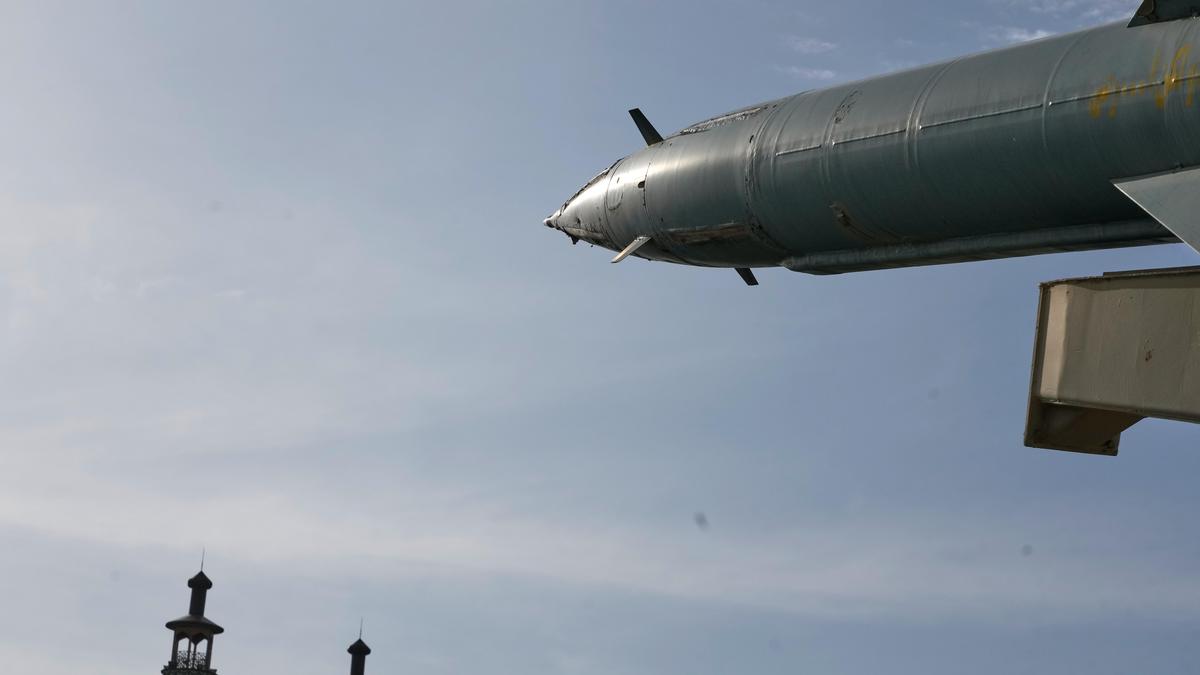
A Geran-2 carries a warhead of roughly 40-50kg. Compare that to a single 152mm artillery shell, which carries about 6-8kg of explosives but arrives with supersonic velocity and high fragmentation. To match the destructive output of a standard Russian battery firing for an hour, you would need thousands of drones launched simultaneously at the same grid square.
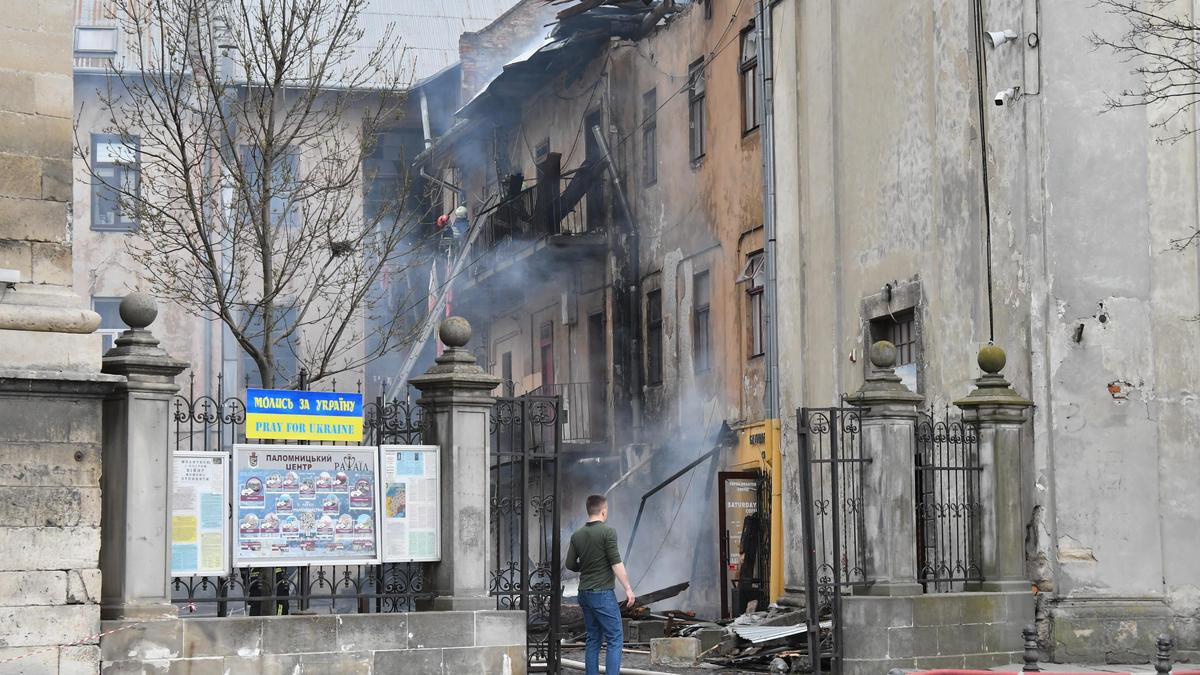
Russia is firing 400 drones across the entire country. That isn't an offensive. That is a distribution of weakness. By spreading these strikes across Kyiv, Kharkiv, and Odesa, Russia is failing to achieve mass at any single point of failure. They are trying to force Ukraine to move its Western-supplied air defense systems—like the IRIS-T and Patriot—away from the front lines. It’s a shell game. If you’re watching the drones, you’re looking at the wrong shell.
The Industrial Reality Nobody Wants to Admit
We are told Russia’s "war economy" is an unstoppable juggernaut. It’s a convenient narrative for politicians looking for funding and for Moscow’s propaganda wing. But look at the composition of these "400 drones."
An increasing percentage of these "swarms" are now decoys. These are plywood-and-plastic "Gerbera" drones, often equipped with nothing more than a cheap foam-core body and a Lüneburg lens to make them look like a real threat on radar.
- The Goal: Deplete Ukraine’s stockpile of $2 million interceptor missiles with $10,000 kites.
- The Reality: This is an admission that Russia cannot produce enough high-spec guidance kits to maintain a 100% lethal strike rate.
I’ve seen this pattern in industrial manufacturing cycles before. When a factory can’t hit its precision targets, it floods the market with "B-grade" substitutes to maintain the appearance of scale. Russia is currently "B-grading" its air war. They are substituting high-explosive impact for psychological volume. If they had the capacity for a true offensive, these drones would be hitting bridges over the Dnieper and rail junctions in the West, not random grain silos.
Why the Spring Offensive is a Ghost
The term "Spring Offensive" is the most overused, least understood phrase in modern conflict reporting. It implies a clean start date, a grand strategy, and a surge of new energy. In reality, the ground in the Donbas doesn't care about your calendar.
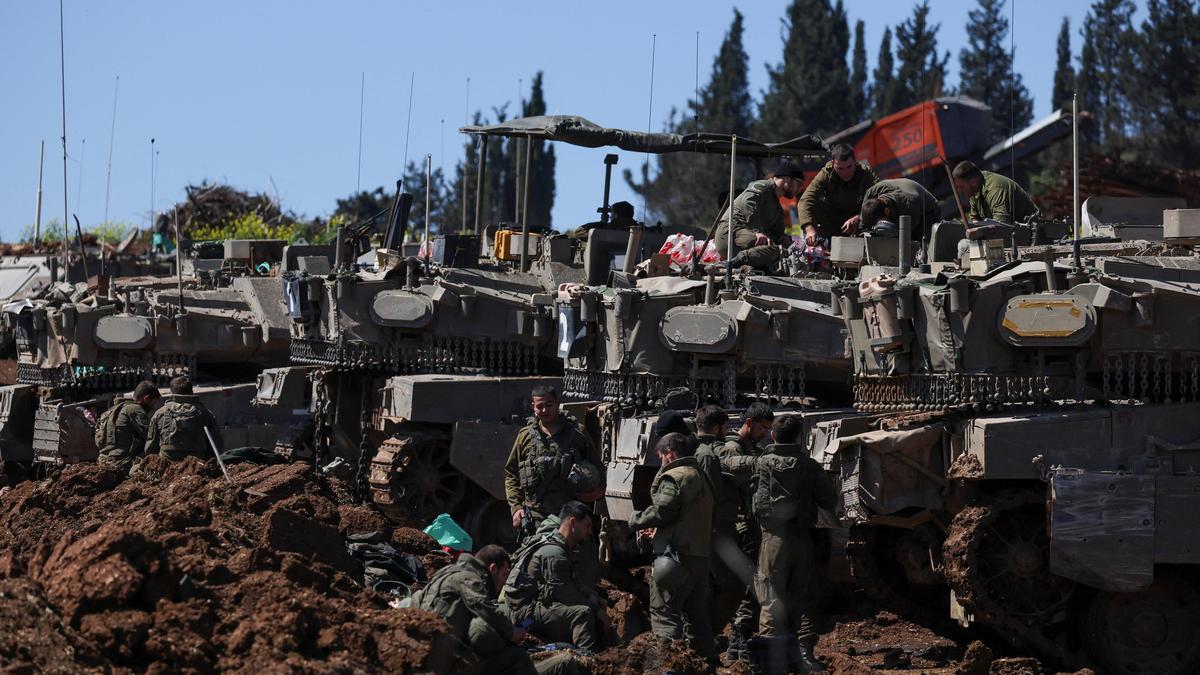
The Rasputitsa—the mud season—is the ultimate arbiter. Attempting a massive mechanized push while launching 400 drones in early spring is a recipe for a graveyard of T-90s.
The Logistics of the Lie
A real offensive requires:
- Fuel parity: Russia’s refineries are currently being picked apart by Ukrainian long-range strikes. You can't run a spring offensive on hope and "patriotic fervor."
- Officer density: Russia has lost a staggering number of mid-level commanders. You can’t coordinate 400,000 men and 400 drones from a bunker in Moscow.
- Surprise: 400 drones are the loudest "we are here" signal in history.
True offensives are quiet until they are deafening. They involve radio silence, troop concentrations in forests, and subtle shifts in electronic warfare signatures. Launching a massive, loud, slow-moving drone swarm is the military equivalent of a flare. It says, "Please look at the sky while we try to figure out how to fix our logistics on the ground."
The Counter-Intuitive Truth About Air Defense
Everyone asks: "How many drones did Ukraine shoot down?"
The wrong question.
The right question: "What did it cost Ukraine not to shoot them down?"
The "lazy consensus" says that a 90% shoot-down rate is a victory for Ukraine. It isn't. If Ukraine uses its best missiles to down cheap drones, they lose. If Ukraine lets the drones hit non-essential targets to save missiles, they lose the PR war.
However, we are seeing a shift that the "Spring Offensive" alarmists are missing. Ukraine is increasingly using electronic warfare (EW) "spoofing" and cheap FPV (First Person View) interceptors to kill these $20,000 drones.
When Russia fires 400 drones and 350 are brought down by GPS jamming or 12.7mm machine guns, the "offensive" isn't just failing—it’s becoming an economic liability for the aggressor. Russia is spending its Iranian-provided credit line on a tactic that has a diminishing ROI.
Stop Looking for the Big Bang
The media wants a movie-style invasion. They want a "Big Bang" moment that signals the next phase of the war. They are using these drone strikes as the opening credits.
They’re wrong. This war has moved into a period of hyper-attrition. The "400 drones" aren't the start of something new; they are the continuation of a failed strategy of terror that hasn't yielded a single strategic city in over a year.
Imagine a scenario where a boxer is losing a fight. He’s tired, his ribs are cracked, and he knows he can’t land a knockout. So, he starts throwing hundreds of light, rapid jabs. They don’t hurt, but they look busy to the judges. That is Russia’s drone strategy. It’s "busy work" for a military that has lost its ability to maneuver.
The Actionable Reality
If you are tracking this conflict for business, investment, or geopolitical risk, ignore the drone counts.
- Watch the rail lines: If Russia starts moving massive amounts of rolling stock toward the northern border, worry.
- Watch the EW envelopes: If Ukrainian GPS signals start blacking out across entire sectors, that’s the real prelude to an attack.
- Ignore the sky: The war is still won and lost in the dirt.
The "Spring Offensive" isn't 400 drones. 400 drones is a smoke machine at a concert for a band that forgot how to play their instruments. Russia is loud because it is weak, not because it is ready.
Stop reading the headlines and start looking at the math. The math says Russia is burning through its strategic reserves to maintain an illusion of momentum. The 400 drones aren't a sign of a beginning; they are the desperate maintenance of a status quo that is slowly, surely, breaking.
Stop expecting a breakthrough that logistics cannot support.