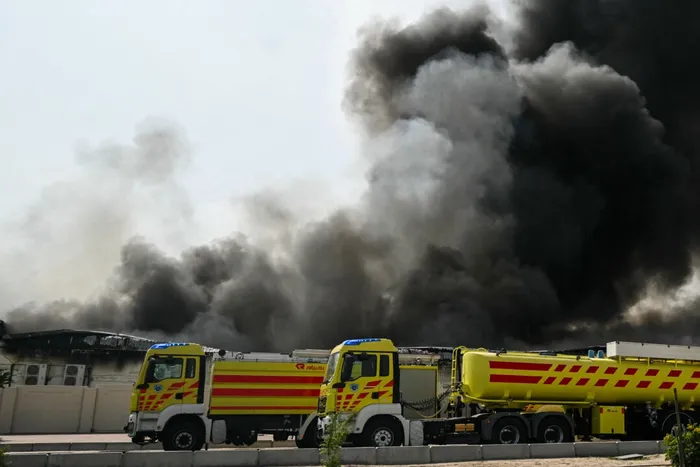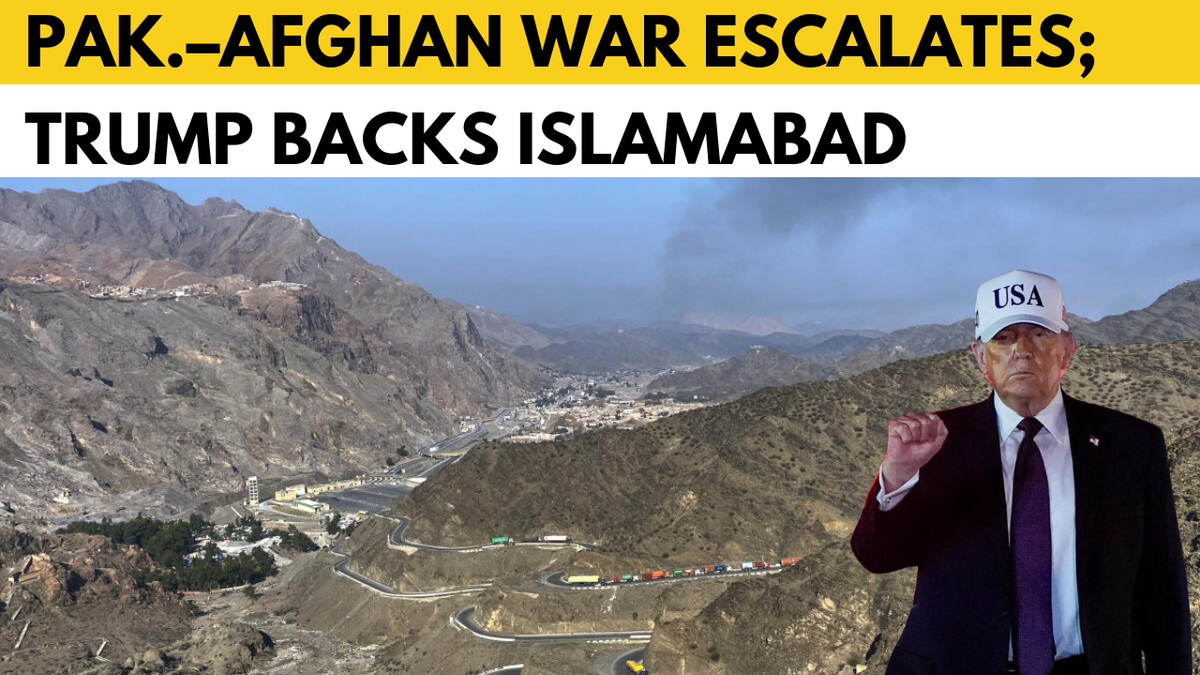
The long-simmering friction along the Durand Line has finally ignited into what Islamabad’s defense ministry now calls a state of "open war." On February 27, 2026, the world woke to a terrifying reality: Pakistan and the Afghan Taliban are no longer trading barbs through proxies, but are engaged in direct, high-kinetic combat. This escalation follows a week of relentless Pakistani airstrikes under Operation Ghazab-Lil-Haqq, targeting alleged militant sanctuaries in Nangarhar and Paktika, and a massive Afghan ground counter-offensive that claimed to overrun nearly twenty Pakistani border posts.
At the center of this firestorm sits a second-term Donald Trump, whose "Peace Through Strength" doctrine is being tested by a region that historically swallows such slogans whole. While the administration boasts of de-escalating a nuclear brush-fire between India and Pakistan in 2025, the western frontier is disintegrating. The fundamental tension isn't just about border lines or terrorist havens; it is about a radical shift in American strategy toward Resource Realism, where the hunt for lithium and rare earth elements in Balochistan has replaced the old "War on Terror" framework.
The Myth of the Controlled Border
For decades, the 2,640-kilometer Durand Line has been a cartographic fiction. Pakistan views it as an international boundary; the Taliban, like every Afghan government before them, reject it as a colonial relic that carves through the Pashtun heartland.
The current explosion was triggered by the Tehrik-i-Taliban Pakistan (TTP). Emboldened by their ideological cousins in Kabul, the TTP has killed over 2,400 Pakistani security personnel in 2025 alone. Islamabad’s patience didn't just wear thin; it evaporated. By launching strikes deep into Afghan territory—specifically targeting Kabul and Kandahar—Pakistan has signaled that the era of "strategic depth" is dead. They are no longer trying to influence the Taliban; they are trying to coerce them into submission.
Trump’s Transactional Diplomacy
The White House’s response to this chaos is uniquely "Trumpian." There is no talk of "fostering democracy" or "nation-building." Instead, the administration has adopted a Service-for-Support model. Pakistan is being treated as a regional subcontractor. In exchange for intelligence on ISIS-K and maintaining a buffer against Iranian influence, Washington has handed Islamabad a 19% tariff rate—the lowest in South Asia—and designated the Balochistan Liberation Army (BLA) as a foreign terrorist organization.
However, this support comes with a heavy price. The Trump administration is aggressively pursuing access to Pakistan’s estimated $6 trillion in critical minerals. The $1.25 billion Exim Bank financing for the Reko Diq project in Balochistan is the true anchor of the current US-Pakistan relationship. Washington isn't backing Islamabad because they like the generals in Rawalpindi; they are backing them because they need the lithium to win the global AI and battery race against China.
The India Factor and Strategic Encirclement
Islamabad is currently gripped by a fear of "strategic encirclement." Afghan Foreign Minister Amir Khan Muttaqi’s recent high-profile visits to New Delhi have sent shockwaves through the Pakistani establishment. The nightmare scenario for Pakistan—a pro-India government in Kabul—is becoming a reality, even under the Taliban.
Trump has exploited this anxiety. By imposing 50% tariffs on Indian imports and publicly claiming credit for stopping an Indo-Pak nuclear exchange in May 2025, he has created a vacuum that he is now filling with a pro-Pakistan tilt. This isn't based on shared values, but on a desire to keep every regional player off-balance.
The Economic Death Spiral
While the military trades mortar fire, the economies on both sides are cratering.
- Transit Trade: Afghanistan remains utterly dependent on Pakistani ports. Every day the Torkham border remains closed, the Taliban loses millions in revenue they cannot afford to miss.
- Debt Burdens: Pakistan’s external debt exceeds $130 billion, with a debt-to-GDP ratio of 81%. Every sortie flown by a Pakistani F-16 is paid for with money the country doesn't have.
- Infrastructure: Recent floods and high inflation (4.5% even after a modest recovery) have left the Pakistani populace exhausted. The "open war" is a luxury the state cannot sustain.
The Technological Frontier of Modern Warfare
This isn't the mountain warfare of the 1980s. The 2026 conflict is defined by AI-driven surveillance and drone technology. Pakistan has reported defeating waves of "armed quadcopters" launched by Afghan forces—a sign that the Taliban has successfully integrated commercial technology into its military apparatus.
Furthermore, the US interest in the region is now tied to the securitization of the deal. The Trump administration has secured pledges from tech giants to build massive AI data centers, provided they generate their own power. To fuel this, the lithium from the volatile border regions of Pakistan is no longer just a commodity; it is a national security requirement for the United States.
The danger is that this "Resource Realism" ignores the human and ideological powder keg of the frontier. If the conflict escalates into a full-scale invasion, the US-funded mineral projects in Balochistan will be the first targets for both the TTP and BLA.
The End of the Proxy Era
We are witnessing the final collapse of the "proxy" system. For thirty years, Islamabad believed they could manage the Taliban to keep Afghanistan "stable" but subservient. That calculation has failed spectacularly. The Taliban are now a sovereign power with their own nationalist agenda, and they are willing to fight a conventional war to prove it.
The Trump administration's gamble is that they can use economic incentives and "America First" leverage to keep the lid on this pressure cooker long enough to extract what they need. But in a region defined by historical grievances and ideological fervor, a transactional approach is often a house of cards. When the shelling stops, the Durand Line will still be there, the TTP will still be in the mountains, and the quest for lithium will likely have only added more fuel to the fire.
Would you like me to analyze the specific impact of the US-Pakistan mineral deals on the China-Pakistan Economic Corridor (CPEC)?