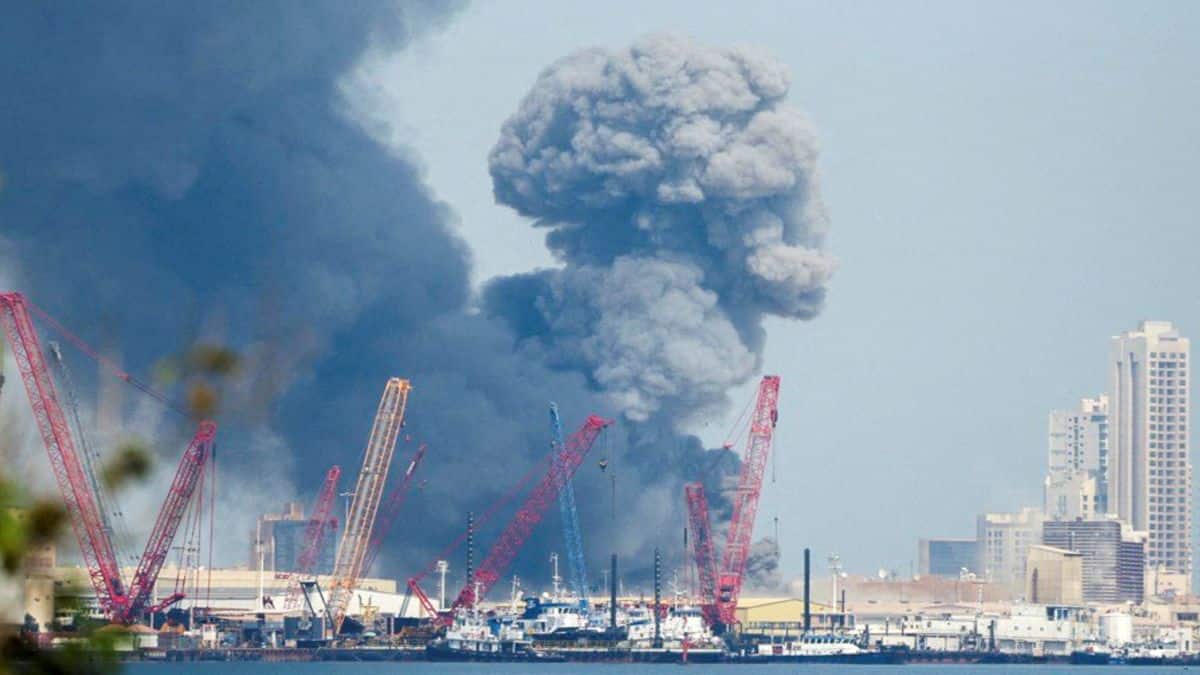
The sky over Bagram Air Base didn't stay quiet for long after the Americans left. Early Sunday morning, around 5 a.m., the Taliban’s air defense systems reportedly lit up the Parwan province to intercept Pakistani military jets. This wasn't just another border skirmish or a stray shell hitting a mud hut. It was a direct attempt to strike one of the most strategic pieces of real estate in Central Asia.
If you’ve been following the deteriorating relationship between Islamabad and Kabul, you know we've moved past "tense." We're now four days into what Pakistan’s Defense Minister Khawaja Mohammad Asif is calling "open war." This isn't a phrase politicians throw around lightly in a region packed with nuclear weapons and a half-dozen different insurgent groups. You might also find this similar coverage insightful: The $2 Billion Pause and the High Stakes of Silence.
Why Bagram matters in this new war
Bagram Air Base used to be the beating heart of the U.S. occupation. Today, it’s a symbol of Taliban control—and apparently, a target for the Pakistani Air Force. According to the Parwan police headquarters, several Pakistani jets entered Afghan airspace with the intent to bomb the base. The Taliban claims they used "anti-aircraft and missile defense systems" to beat back the attack.
Pakistan hasn't officially confirmed the Bagram strike yet, but they aren't exactly hiding their aggression. They’ve already struck targets in Kabul, Kandahar, and Paktia. This shift is massive. For years, Pakistan only targeted the TTP (Tehreek-e-Taliban Pakistan) hideouts. Now, they’re going after the Afghan Taliban government’s actual infrastructure. As highlighted in recent coverage by NBC News, the effects are worth noting.
The numbers are getting ugly
The fog of war is thick right now, and both sides are padding their stats. You’ve got to take the "official" death tolls with a massive grain of salt.
- The Taliban claim: They say they’ve killed dozens of Pakistani soldiers, shot down two drones, and even downed a fighter jet near Jalalabad.
- The Pakistan claim: Information Minister Attaullah Tarar recently stated they’ve killed over 350 Taliban personnel and destroyed 130 military posts.
- The Reality: We know for sure that civilians are caught in the middle. Reports from Nangarhar and Paktia confirm that drone strikes and mortar fire have hit homes, killing women and children.
The TTP problem that won't go away
At the core of this "open war" is the Pakistani Taliban, or TTP. Islamabad is convinced the Afghan Taliban is giving the TTP a safe place to sleep, eat, and plan attacks. Kabul denies it, but the TTP has definitely ramped up its violence inside Pakistan over the last year.
It’s a classic case of the "snake in the backyard" analogy. Pakistan spent decades supporting the Taliban during the U.S. war, hoping for a friendly neighbor. Instead, they got a neighbor that won’t—or can’t—stop militants from crossing the border to kill Pakistani cops and soldiers.
Modern tech on an ancient battlefield
The way this is being fought isn't what you'd expect. Pakistan has the traditional edge—jets, tanks, and a professional army. But the Taliban are using the lessons they learned fighting NATO. They’re deploying cheap drones to hit Pakistani military camps. It’s an asymmetrical nightmare for Islamabad.
What this means for the region
The international community is sweating, and for good reason. When two neighbors with this much history start trading airstrikes, it creates a vacuum. Groups like ISIS-K and al-Qaida are watching from the sidelines, waiting for both sides to exhaust themselves.
Even Donald Trump entered the conversation recently, suggesting he’d want to re-establish a U.S. presence at Bagram if he gets the chance. That’s a wild card nobody in Kabul or Islamabad wants to deal with right now.
Practical realities on the ground
If you're trying to make sense of the chaos, look at the geography. Pakistan claims it's holding about 32 square kilometers of Afghan territory in the Zhob sector. The Taliban calls this a total lie. If Pakistan actually moves ground troops across the Durand Line to hold territory, this conflict won't end with a simple ceasefire.
Your next steps for staying informed
Don't rely on a single government’s press release. In this conflict, "truth" is the first casualty. To get a clearer picture of what’s happening at Bagram and the border, follow these steps:
- Monitor independent satellite imagery: Analysts on platforms like X (formerly Twitter) often post open-source intel (OSINT) showing the actual damage at Bagram or border posts.
- Watch the Qatari and Turkish mediators: They’ve successfully brokered ceasefires before. If they go silent, it means the "open war" is likely to escalate further.
- Check regional casualty reports: Local hospitals in Nangarhar and the Khyber Pakhtunkhwa province usually give a more honest count of the human cost than the defense ministries.
The "open war" declaration has changed the rules. We're no longer looking at border scuffles; we're looking at a fundamental shift in South Asian security that could last for years.