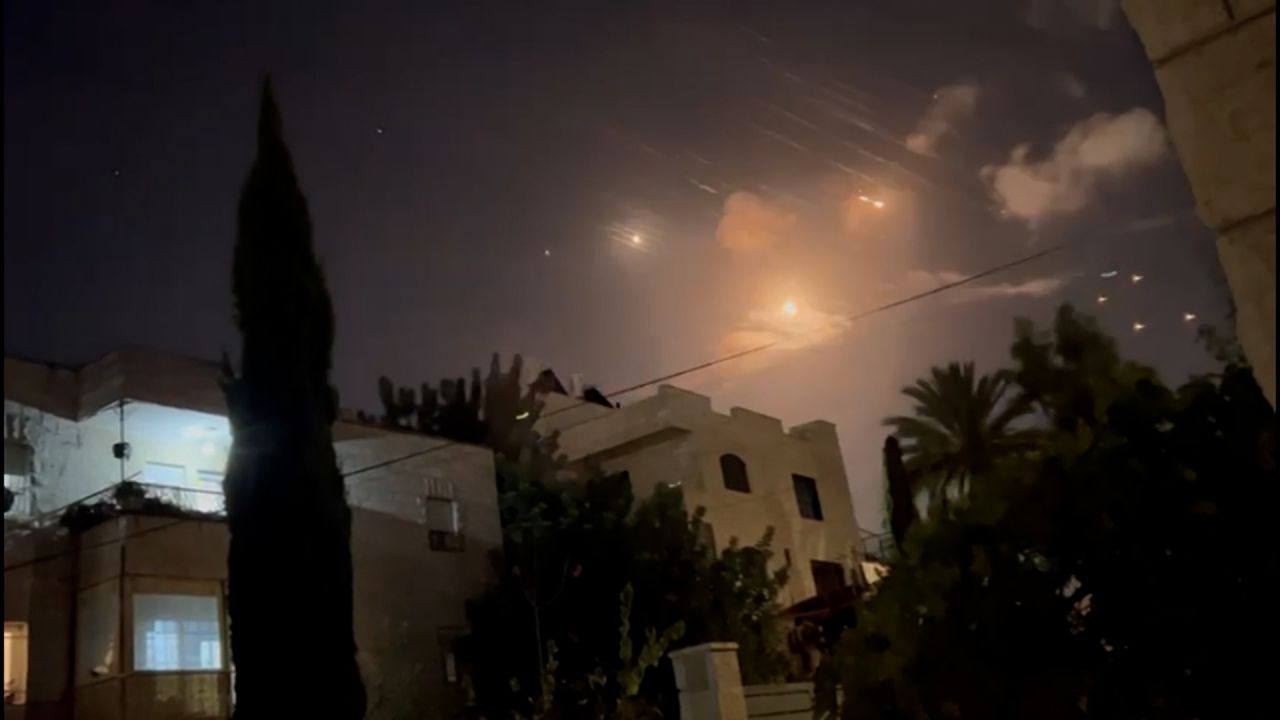
The British press loves a "dilemma." Every time a piece of hardware—be it a drone or a budget-friendly rocket—flies near a UK Sovereign Base Area (SBA), the headlines scream about Keir Starmer’s impossible choice. They paint RAF Akrotiri as a colonial relic, a target, or a geopolitical headache that London is desperate to manage.
They are wrong.
The drone "attack" on a British base in Cyprus isn't a sign of weakness or a strategic quagmire. It is a loud, kinetic confirmation that Akrotiri is the most valuable piece of real estate in the Eastern Mediterranean. While the consensus suggests Starmer is "caught between a rock and a hard place," the reality is that the rock is made of strategic granite and the hard place is exactly where the UK needs to be.
The Myth of the Vulnerable Outpost
The lazy narrative suggests that because a base can be reached by a loitering munition, it has become a liability. This logic is flawed. It’s the equivalent of saying a bank is a failure because people keep trying to rob it. You don't close the bank; you upgrade the vault.
RAF Akrotiri and Dhekelia aren't just runways. They are the "Unsinkable Aircraft Carrier" that provides the UK—and by extension, NATO—with a permanent, non-negotiable footprint at the crossroads of Europe, Africa, and the Middle East. If it weren't valuable, nobody would be flying drones at it.
Critics point to the tension with the Republic of Cyprus and the local population. They argue that Starmer must "balance" regional stability with military utility. This is a misunderstanding of power. Stability in the Levant doesn't come from British absence; it comes from the projection of capability that Akrotiri allows. When the UK launched Typhoons to intercept Iranian drones headed for Israel, they didn't do it from a "dilemma." They did it from a position of unique geographic advantage that no other European power possesses.
Weaponizing Geography
The "dilemma" crowd focuses on the risk of escalation. They worry that using Cyprus as a launchpad for regional operations makes the UK a target.
Newsflash: The UK is already a target.
The difference is whether you choose to be a target with a massive radar array and a squadron of fighter jets, or a target with nothing but a strongly worded letter from the Foreign Office. Akrotiri allows the UK to act as a "Force Multiplexer."
Consider the technical reality of modern warfare. We are moving toward a reality defined by $D = \sqrt{h^2 + r^2}$, where the distance $D$ to a target is negated by the height $h$ and range $r$ of loitering assets. If the UK retreats from its forward positions, its reaction time to regional crises increases exponentially. You cannot "pivot" to a crisis from Brize Norton. You are either there, or you are irrelevant.
The Sovereignty Fallacy
People ask: "Why does Britain still own pieces of Cyprus?"
The question itself is flawed because it assumes the SBAs are an affront to Cypriot sovereignty. In reality, the 1960 Treaty of Establishment created a symbiotic, if occasionally prickly, relationship. The bases provide thousands of jobs and millions in local spending. But more importantly, they provide a security umbrella that the Republic of Cyprus, with its limited military budget, could never afford on its own.
I’ve spent years watching bureaucrats try to "streamline" overseas footprints. Every time they shave off a few acres or hand back a minor installation, they realize two years later that they’ve lost a critical node in the global intelligence grid. Akrotiri houses the signals intelligence (SIGINT) capabilities that make the UK a Tier 1 partner in the Five Eyes alliance.
Starmer isn't facing a dilemma about whether to keep the base or scale it back. He’s facing a decision on how much more to invest in its defense. The "threat" of drones should be met with the deployment of directed-energy weapons (DEW) and advanced electronic warfare (EW) suites, not a retreat into diplomatic hand-wringing.
Dismantling the De-escalation Trap
The most dangerous argument circulating in Whitehall is that the UK should "de-escalate" by limiting its use of the Cyprus bases for offensive operations. This is the "strategic crouch" maneuver. It never works.
If you have a base but refuse to use it for fear of upsetting the neighbors, you don't have a base; you have a very expensive museum. The adversary—whether state-sponsored or a proxy militia—sees restraint not as a gesture of peace, but as a lack of resolve.
When a drone hits the perimeter, the response shouldn't be a review of the base's status. The response should be an increase in the sortie rate. Show that the facility is functional, resilient, and unapologetic.
The Real Cost of Withdrawal
Let's do a thought experiment. Imagine a scenario where the UK bows to "regional pressure" and begins a phased withdrawal from Akrotiri.
- The Intelligence Vacuum: The Eastern Mediterranean becomes a blind spot. Russia, already entrenched in Tartus, Syria, moves to fill the void.
- The NATO Fracture: The US, which relies on Akrotiri for its own regional logistics and intelligence, views the UK as an unreliable partner. The "Special Relationship" takes a hit it might not recover from.
- The Proxy Invitation: Hezbollah and other regional actors see the withdrawal as a victory for asymmetric warfare. They learn that a few cheap drones can displace a nuclear power.
The cost of staying is a few million pounds in extra security and some diplomatic friction. The cost of leaving is a total collapse of British influence in the most volatile region on Earth.
Stop Asking the Wrong Question
The media keeps asking: "How will Starmer handle the backlash?"
The real question is: "How will the UK modernize its most important asset for the 21st century?"
We need to stop treating Akrotiri as a legacy of the 1950s and start treating it as the command center for the 2050s. This means:
- Integrating AI-driven autonomous defense grids to neutralize drone swarms.
- Expanding the runway capabilities to handle the next generation of unmanned combat aerial vehicles (UCAVs).
- Ignoring the "consensus" that says forward-basing is an outdated concept.
The drone strike isn't a dilemma. It’s a wake-up call to stop being embarrassed about having power and start using it.
Stop apologizing for the geography. Start fortifying it.