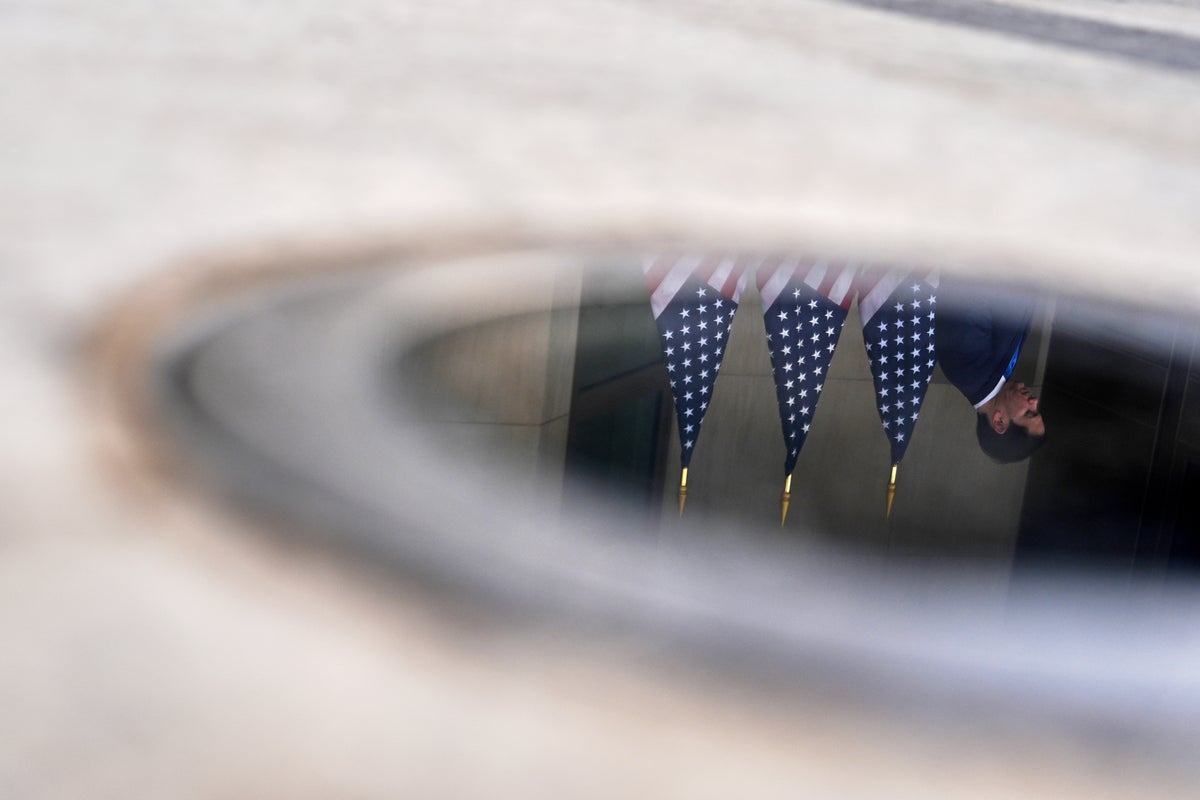
The United States is currently trying to manage major global conflicts with more than half of its embassy leadership seats completely empty.
Data from the American Foreign Service Association reveals that 109 out of 195 U.S. ambassadorial positions worldwide are vacant. That is more than double the vacancy rate seen during the exact same period of Donald Trump's first term. We aren't just talking about tiny island nations or cozy European postings where nothing ever happens. The empty desks are sitting in conflict zones and strategic hotspots, including Russia, Ukraine, Saudi Arabia, and the United Arab Emirates. Five out of the seven countries bordering Iran have no confirmed U.S. ambassador.
This isn't an accident. It is a deliberate feature of a completely hollowed-out diplomatic strategy.
The Anatomy of the Great Diplomatic Purge
To understand how the State Department ended up this bare, you have to look back at the radical structural changes that rolled out over the last year. This hollowed-out look was heavily foreshadowed by Project 2025, the Heritage Foundation blueprint that detailed a massive downscaling of the federal career apparatus. The administration took those ideas and ran with them.
Roughly 3,000 State Department employees left the agency over the last year alone. Close to half of those individuals were fired outright, while the rest accepted buyouts. That amounted to a sudden 15% staffing cut for domestic personnel.
Then came the winter reckoning. Just before Christmas, Secretary of State Marco Rubio issued an unprecedented recall ordering about 30 career ambassadors to pack their bags and vacate their overseas posts by mid-January. These weren't Biden political donors; they were career diplomats, many of whom had served under previous Republican administrations, including Trump's first term. Inside the department, shell-shocked staff started calling it the "Saturday Night Massacre."
When you look at who is actually getting appointed now, the shift in philosophy is undeniable. Only about 9% of Trump's second-term ambassadorial appointees are career diplomats. The rest are political allies, donors, or unconventional public figures like former Arizona Senate candidate Kari Lake, who was nominated to represent U.S. interests in Jamaica.
Ruling Through Gatekeepers and Shadow Envoys
When you pull the plug on standard embassy leadership, power doesn't just vanish. It centralizes. Instead of relying on traditional, Senate-confirmed diplomats who know the local actors and speak the language, foreign policy is now flowing through an incredibly tight circle of personal loyalists.
Jared Kushner and real estate developer Steve Witkoff have effectively become the primary channels for global influence. They are leading high-stakes peace negotiations for the wars in Ukraine and Iran. Meanwhile, unconventional setups have replaced standard operations elsewhere. Tom Barrack, for instance, serves as a combined envoy for Syria and ambassador to Turkey.
The White House argues this approach cuts through bureaucratic red tape. A State Department spokesperson defended the strategy, noting that the president has every right to choose who represents American interests and that experienced chargé d'affaires are perfectly capable of leading missions in the interim.
But foreign governments are struggling to adapt to this new reality. They go to their usual embassy channels in moments of crisis and find a ghost town. When Trump made waves by threatening the total destruction of Iranian civilization, terrified foreign officials found that local U.S. embassies couldn't give them a straight answer on what the threat actually meant. The lines were effectively dead.
The Massive Geopolitical Gamble
Operating without ambassadors is a dangerous gamble in an unstable world. While the administration views the traditional State Department as an obstacle to an "America First" agenda, the vacuum creates massive opportunities for America's rivals.
Consider how this looks on the global stage:
- Diminished Priority: In diplomatic circles, refusing to send a full ambassador is viewed as a deliberate downgrade of a relationship. It signals to host countries that Washington doesn't value them.
- The Chinese Counter-Strategy: While the U.S. leaves 109 vacancies across the globe, China maintains only about 20 empty posts worldwide. Beijing consistently fills its vacancies with highly trained, internally promoted career diplomats who are actively building deep ties in the exact same regions the U.S. is neglecting.
- The Threat to Embassy Security: The breakdown in communication isn't just a political headache; it puts lives at risk. Former U.S. Ambassador to Kyiv Bridget Brink highlighted that abrupt cuts to military and intelligence aid left hundreds of civilian embassy personnel exposed in active war zones without standard defensive cover.
How to Navigate a Borderless Foreign Policy
If you run an international business, manage a global supply chain, or analyze geopolitical risk, you cannot rely on the old state-to-state rulebook anymore. Traditional diplomatic channels are broken, and they aren't getting fixed anytime soon.
Stop looking to local embassies for stability or predictable policy guidance. They don't have the answers because they are being bypassed by Washington.
Map out the direct lines of executive influence instead. If you need to understand where U.S. policy is going in a specific region, ignore the official press releases from regional desks. Focus your tracking entirely on the actions of the core special envoys and inner-circle players who hold the actual decision-making power.
Diversify your regional risk immediately. With fewer American diplomats on the ground to smooth over disputes, sudden trade disruptions, visa bottlenecks, and unexpected regulatory shifts will happen with zero advance warning. Build localized legal and political redundancies so your operations don't collapse when an embassy goes quiet.