Canada is actively courting AI data centres with federal subsidies, streamlined permitting, and abundant hydroelectric power, while local governments and utilities across the United States are slapping moratoriums on new server farms to protect strained electrical grids and residential water supplies. This divergence comes down to basic physics and regional politics. America already hosts the bulk of the world's hyperscale computing infrastructure, leaving its aging power grids near breaking point in key hubs. Canada, sitting on massive clean energy reserves and looking to close a stubborn productivity gap, sees an open door to capture billions in foreign capital before the window closes.
The numbers tell the story before any politician takes the podium. Training and running large language models requires staggering amounts of continuous, uninterrupted electricity. A single hyperscale campus can easily draw 100 to 500 megawatts of power—enough to supply a mid-sized city. In the United States, where electricity demand remained relatively flat for nearly two decades, utilities were caught flat-footed by the sudden arrival of generative AI.
The American Grid Hits a Wall
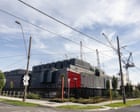
Drive through Loudoun County, Virginia, known globally as Data Center Alley, and you will see the physical reality of the cloud. Windowless concrete fortresses stretch for miles along the highway, humming day and night. For years, local officials welcomed the tax revenue these facilities generated without requiring new schools or extra policing. That honeymoon is over.
Power transmission lines in Northern Virginia are maxed out. Dominion Energy, the regional utility, has struggled to build high-voltage transmission corridors fast enough to keep pace with developer requests, leading to multi-year connection delays. Residents have begun organizing against the constant low-frequency hum of cooling fans, the diesel backup generators testing during peak hours, and the massive clearing of forested land.
The pushback extends far beyond Virginia. Municipalities in Georgia, Texas, and Oregon have introduced zoning restrictions, temporary moratoriums, or strict new environmental reviews. The core complaints center on three finite resources:
- Grid reliability and rate hikes: Regional grid operators like PJM Interconnection and ERCOT have warned that rapid data centre additions threaten reserve margins during extreme heatwaves or winter freezes. Residential ratepayers fear they will be stuck footing the bill for billions of dollars in transmission upgrades built primarily to serve trillion-dollar tech conglomerates.
- Water consumption: Evaporative cooling systems used to keep high-density AI chips from melting require millions of gallons of water per day. In drought-prone regions like Arizona and parts of Texas, agricultural interests and city planners are drawing a hard line against handing scarce municipal water over to server racks.
- Minimal long-term employment: Once the construction crews pack up and leave, a massive data centre might employ only 30 to 50 full-time technicians and security guards. Local politicians are increasingly questioning whether handing out massive tax abatements makes economic sense for so few permanent jobs.
When tech giants realized they could not plug into the American grid on their own timelines, their site selection teams started looking north.
Canada Makes Its Pitch
While American county commissioners are fielding angry phone calls about transformer stations, Canadian provincial premiers and federal ministers are actively pitching their jurisdictions as the premier destination for sovereign and commercial AI infrastructure.
The federal government in Ottawa committed billions of dollars through its Canadian Sovereign AI Compute Strategy, specifically designed to co-invest in domestic data centre capacity and subsidize access for Canadian researchers and startups. Officials view compute capacity the same way previous generations viewed railways or telecommunications networks. Without domestic infrastructure, Canadian talent and intellectual property inevitably drain south to Silicon Valley and Seattle.
Canada's natural advantages align almost too well with what hyperscalers desperately need. Approximately 80 percent of Canada's electricity already comes from non-emitting sources, anchored by massive hydroelectric installations in Quebec, British Columbia, and Manitoba. For tech companies bound by strict corporate net-zero commitments, plugging directly into a hydro-dominated grid eliminates the headache of buying complex carbon offsets or waiting a decade for small modular nuclear reactors to come online.
Then there is the weather. Cooling servers accounts for roughly 30 to 40 percent of a traditional data centre's total energy consumption. In cities like Montreal, Calgary, or Winnipeg, ambient outside air can be used for "free cooling" for most of the year, slashing operational expenses and reducing the need for water-intensive evaporative chillers.
The Provincial Scramble for Tech Capital
Canada is not a monolith, and its provinces are taking distinct approaches to capture this wave of capital investment.
Alberta has emerged as an aggressive contender, pitching an unusual value proposition: deregulated power markets and abundant natural gas. Unlike Quebec or British Columbia, where crown corporations control electricity generation and distribution, Alberta allows developers to build "behind-the-meter" power plants. A data centre operator can partner directly with a natural gas producer, generate its own electricity on-site, and bypass the main provincial grid entirely. Combined with Alberta's cold winters and lack of a provincial sales tax, Calgary and Edmonton have attracted serious attention from operators looking for speed to market.
Quebec, long a favorite for traditional cloud providers and cryptocurrency miners due to some of the lowest industrial electricity rates in North America, has had to adopt a more selective stance. Hydro-Québec realized its massive surplus of cheap power was rapidly disappearing. Rather than handing out power blocks on a first-come, first-served basis, the province now screens industrial projects based on their economic value, job creation, and alignment with broader decarbonization goals. High-value AI research facilities still get a warm welcome, while low-value crypto operations have been shown the door.
Ontario is leaning on its nuclear fleet and proximity to major financial and academic hubs in Toronto and Waterloo. With refurbishments underway at the Bruce and Darlington nuclear generating stations, the province is betting on reliable, baseload zero-carbon power to anchor corporate AI deployments across the Great Lakes region.
The Overlooked Friction North of the Border
To read the press releases coming out of Ottawa and provincial capitals, you would think Canada has solved every bottleneck plaguing the American market. The reality on the ground is far messier.
Canada's electricity surplus is shrinking fast. The electrification of transportation, home heating, and heavy industry—such as electric vehicle battery plants and green steel manufacturing—is competing for the exact same megawatts that AI data centres want. Hydro-Québec and BC Hydro have both warned that without massive new generation projects, their grids will move from surplus to deficit before the end of the decade. Building new hydroelectric dams or wind farms in Canada involves lengthy environmental assessments and mandatory, complex consultations with Indigenous nations, processes that regularly take ten years or more.
Supply chain bottlenecks do not stop at the 49th parallel either. High-voltage transformers, switchgear, and backup diesel generators face global backlogs stretching two to four years. A Canadian utility can approve a power connection tomorrow, and the developer might still sit on an empty plot of dirt waiting for a step-down transformer to arrive from a factory in Europe or Asia.
There is also a quiet debate brewing among Canadian economists about whether subsidizing foreign-owned data centres actually solves the country's notorious productivity crisis. If an American tech giant builds a facility in Alberta using American-designed GPUs, imports the construction equipment, and pipes the computing power back to customers in New York and London, Canada risks becoming a digital resource colony. The country exports cheap, clean electrons and cold air, while the high-margin software revenues and intellectual property remain south of the border.
What Actually Drives Site Selection
If you strip away the political rhetoric from both countries, data centre site selection comes down to three cold calculations: time to power, latency, and regulatory certainty.
- Time to power: In the AI arms race, waiting five years for a utility interconnect is equivalent to conceding the market. Companies will gladly pay a premium for electricity if it means they can energize a 200-megawatt facility in 18 months instead of 60. Right now, pockets of Canada offer faster timelines than congested US hubs.
- Latency: Training an AI model does not require ultra-low latency. You can ship massive datasets to a remote facility in northern Manitoba, let the GPUs crunch the numbers for three months, and send the finished model weights back over fiber optic cables. Inference—the act of a user querying a chatbot and expecting an instant answer—must happen close to major population centers. Canada's major cities sit close to the US border, putting them within milliseconds of major American metropolitan areas along the East Coast and Midwest.
- Regulatory certainty: Tech executives hate surprises. When a US county changes zoning laws mid-construction or a state regulator alters utility rate structures after capital is committed, developers pull back. Canadian federal and provincial governments have signaled strong institutional alignment, reducing the risk of sudden local ambushes.
The divergence between the two nations is less about ideological differences over artificial intelligence and more about infrastructure maturity. The United States built the first wave of the cloud, absorbing its spare grid capacity in the process. Now, American communities are forcing tech companies to confront the physical limits of aging infrastructure and local resource scarcity.
Canada is stepping into the breach with spare electrons, cold air, and an urgent desire to stay relevant in the global tech economy. Yet as those gigawatts get spoken for, Canadian municipalities and utilities will inevitably face the exact same trade-offs between industrial growth, residential power bills, and environmental strain that are currently stalling projects across the United States.