You tap a glass screen in the dark, ask a chatbot to rewrite an awkward email, and watch the text bloom across your phone in three seconds flat. It feels effortless. Weightless. Like magic pulled straight out of thin air.
It is not thin air. If you liked this piece, you should look at: this related article.
Four hundred miles away, or perhaps just down a rural highway in northern Louisiana, that three-second miracle just demanded a gulp of fresh water, a roar of industrial cooling fans, and a pulse of electricity drawn from a grid straining at its seams. For years, Silicon Valley sold us a comforting bedtime story: that the digital revolution was inherently green, that bits and bytes would replace steel and smoke, and that the biggest tech giants on earth would erase their carbon footprints by the end of this decade.
That story just hit a concrete wall. For another look on this story, refer to the latest update from MIT Technology Review.
On November 19, 2026, Meta released its annual sustainability report, and buried beneath the corporate polish was an admission that sent shockwaves through energy markets and environmental circles alike. The company is officially reconsidering its flagship pledge to reach net-zero greenhouse gas emissions by 2030. No new target date was offered. Just a quiet, unmistakable retreat from a promise made when the world looked very different.
The culprit is sitting in your pocket. The relentless race to build, train, and run artificial intelligence has sent Meta’s carbon emissions surging by 45 percent in a single year, reaching 11.82 million metric tons of carbon dioxide equivalent. At the exact same time, its electricity consumption jumped 35 percent to 24.8 terawatt-hours—enough power to keep millions of homes lit through the dead of winter.
The Myth of the Cloud
To understand why a company with nearly infinite cash suddenly cannot meet its own climate deadline, you have to stop thinking of the internet as a cloud. "The cloud" is one of the most successful branding sleights-of-hand in modern history. Clouds float. Clouds are clean. Clouds do not pour millions of tons of concrete or burn natural gas in the middle of the night.
Let us step outside the abstractions for a moment and picture a hypothetical character named Marcus. Marcus is a thirty-four-year-old electrical grid engineer working in the American South, a region experiencing an unprecedented construction boom. Five years ago, Marcus spent his shifts balancing predictable seasonal rhythms—air conditioners humming in July, space heaters clicking on in January. Today, he stares at load forecasts that look like vertical cliffs.
When an AI data center breaks ground in Marcus’s territory, it does not show up like a normal factory. It arrives like a small, ravenous city that never sleeps, never takes a holiday, and demands uninterrupted power twenty-four hours a day. In Louisiana, Meta’s massive Hyperion data center project has become the ultimate symbol of this collision between digital ambition and physical reality. To keep those servers running without blacking out surrounding towns, plans have been drawn up for brand-new natural gas power plants.
Think about the sheer cognitive dissonance of that image. We are burning fossil fuels—ancient, compressed sunlight dug from deep underground—to generate electricity so that silicon chips can predict the next word in a sentence or render a synthetic video of a golden retriever surfing.
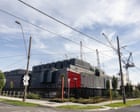
I remember the first time I walked past a hyperscale data center on a humid August evening. You expect a tech facility to be silent, sleek, almost sterile. Instead, you feel it in your ribs before you even reach the perimeter fence. It is a low, relentless mechanical thrum, like standing next to a fleet of idling jet engines. The air radiating off the cooling towers smells faintly of warm metal and evaporated mineral water. Watching those massive vents pump heat into the night sky cures you instantly of the illusion that software lives outside the physical world.
Why Green Promises Are Buckling Under AI
If you look closely at Meta’s numbers, a puzzling contradiction emerges. The company points out—accurately—that it has assembled a clean energy portfolio exceeding 30 gigawatts of contracted capacity, including major nuclear power deals and massive solar and wind agreements. On paper, Meta matches its electricity usage with renewable and low-carbon contracts.
So why did its net emissions skyrocket by nearly half?
The answer reveals the hidden anatomy of modern tech infrastructure, and it comes down to two stubborn realities: embodied carbon and grid bottlenecks.
First, consider how an AI empire is actually built. Before a single chatbot answers a prompt, someone has to mine the rare earth minerals, smelt the steel, pour the foundations, manufacture millions of specialized graphics processors, and ship them across oceans. In carbon accounting, these are known as Scope 3 emissions—the pollution baked into a company's supply chain. When you are racing rivals like Google, Microsoft, and OpenAI to construct data centers the size of small cities, you cannot wait five years for green steel or zero-emission cement factories to scale up. You buy what exists right now. You build fast. And every ton of conventional concrete poured for a server hall carries a heavy carbon receipt that renewable energy credits cannot easily erase.
Second, there is the problem of physics versus paperwork. Think of a renewable energy contract like buying a gift card for organic groceries while eating fast food because the organic market is still under construction. Of the 30 gigawatts of clean power Meta has signed contracts for, fewer than 12 gigawatts are actually operational and feeding electrons into the grid today. The rest is stuck in a bureaucratic and physical traffic jam. Permitting delays, transformer shortages, and clogged interconnection queues mean that new wind and solar farms take years to hook up to power lines.
AI timelines do not wait for permitting queues. Server racks are installed in months. Power plants take years. When those two clocks fall out of sync, utilities turn to the only thing they can spin up quickly to keep the lights on: natural gas.
The Invisible Thirst
Carbon is only half the ledger. While emissions dominate headlines, an equally urgent drama plays out beneath the floorboards of these facilities, where millions of processors run hot enough to fry an egg in seconds.
Heat is the mortal enemy of computing. To keep trillions of calculations from melting the delicate silicon architecture, data centers rely heavily on evaporative cooling. In 2025 alone, the indirect water consumption tied to the electricity powering Meta’s operations reached 26.1 billion gallons.
To make that number concrete, imagine a hypothetical family—let us call them the Alvarez household—living in a drought-prone county where a new server farm just opened. Every time the summer sun beats down on the concrete roof of that facility, millions of gallons of clean, treated water are drawn from local aquifers and evaporated into the sky to cool machines training the next generation of large language models. The Alvarez family is asked to shorten their showers and let their lawn turn brown. Meanwhile, three miles away, servers are consuming lakes' worth of water so users across the globe can generate synthetic memes.
This is the quiet tension reshaping local politics across the United States and Europe. Communities that once welcomed tech giants with open arms and generous tax breaks are suddenly showing up to zoning board meetings with hard questions. They are asking who pays for the new substations. They are asking whether their utility bills will climb to subsidize grid upgrades. And they are asking what happens to their water table when the hottest summers on record collide with the thirstiest machines ever built.
A Familiar Crossroads
History rarely repeats itself verbatim, though it loves a good rhyme. In the late nineteenth century, as cities electrified and factories mechanized, industrialists celebrated progress while thick coal smoke choked urban skies. We told ourselves the smoke was the unavoidable price of modernity. It took decades—and severe ecological scars—before we engineered cleaner ways to power human ambition.
We stand at a remarkably similar crossroads, except the smoke is invisible and the timeline is compressed.
I will admit something that anyone following this space closely feels, even if few say it out loud: it is deeply unsettling to watch these numbers move in the wrong direction. For the past decade, we grew accustomed to a comforting trajectory. Tech companies were supposed to be the easy part of the climate equation—asset-light businesses that could slap solar panels on a roof, buy some wind power, and declare victory while harder industries like aviation and agriculture struggled to decarbonize.
Seeing one of the world’s wealthiest, most engineering-rich corporations step back from its 2030 net-zero pledge forces a sobering reckoning. If Meta—with its billions in free cash flow and aggressive clean-energy procurement—cannot square the math of AI expansion with a 2030 climate target, what does that say about the rest of the industry?
It tells us that efficiency gains are currently losing the race against sheer scale.
There is a classic economic principle called the Jevons Paradox, observed back in 1865 when an English economist noticed that making coal engines more efficient actually increased total coal consumption, because cheaper power unlocked dozens of new uses for it. We are watching the Jevons Paradox play out in silicon. Every time engineers make an AI chip twice as energy-efficient, companies do not use half the electricity. They build models ten times larger and embed them into every search bar, messaging app, and social feed on earth.
Rewriting the Bargain
Does this mean we have to pull the plug on artificial intelligence to save the climate? Hardly. That is a false choice, and a lazy one.
AI holds genuine promise for the very problems its infrastructure is currently exacerbating. Machine learning models are already helping meteorologists predict extreme weather with startling accuracy, assisting material scientists in discovering novel battery chemistries, and optimizing sprawling electrical grids to waste less renewable power. The technology itself is not the villain. Unchecked, unexamined deployment is.
What is breaking right now is not the promise of AI, but the illusion that we can have infinite computational growth without paying a physical price. Meta’s decision to rethink its 2030 deadline is, in a strange way, an act of brutal honesty. Rather than burying the truth behind clever accounting tricks or dubious carbon offsets, the company’s own report laid bare the collision between its AI ambitions and the limits of our aging power grids.
Now comes the harder part—the part that requires shifting from corporate press releases to structural discipline.
First, tech giants have to stop treating power grids like an all-you-can-eat buffet and start acting as true partners in rebuilding them. Signing power purchase agreements is no longer enough when transmission lines are full. Companies building gigawatt-scale data centers must directly finance grid modernization, long-duration battery storage, and next-generation clean baseload power—like advanced geothermal and small modular nuclear reactors—so they are adding clean electrons to the system rather than cannibalizing existing ones.
Second, we need radical transparency around computational weight. Not every digital task requires a supercomputer. Asking a massive generative model to calculate a restaurant tip or summarize a three-sentence email is like taking a private jet to pick up a carton of milk. Software designers can build smarter routing systems that send simple queries to tiny, low-power models, reserving the energy-hungry giants for problems that actually deserve them.
And what about those of us on the other side of the glass? We do not need to feel guilty every time we type a prompt, any more than we should blame ourselves for turning on a kitchen light. Individual restraint will never fix an industrial grid bottleneck. Yet awareness changes how we value the tools in our hands. When you know that generating a batch of synthetic images consumes vastly more energy and water than a standard web search, you begin to treat digital intelligence less like disposable confetti and more like the precious, resource-intensive utility it truly is.
Walk out into the cool night air tonight and look up at the sky. There are no servers floating among the constellations. Everything we build in the digital world still rests squarely on the soil, rivers, and power lines beneath our feet.
The next time you tap your screen and watch an answer materialize in the dark, remember the hum of those cooling fans four hundred miles away—and ask yourself whether the question you just asked was worth the heat.