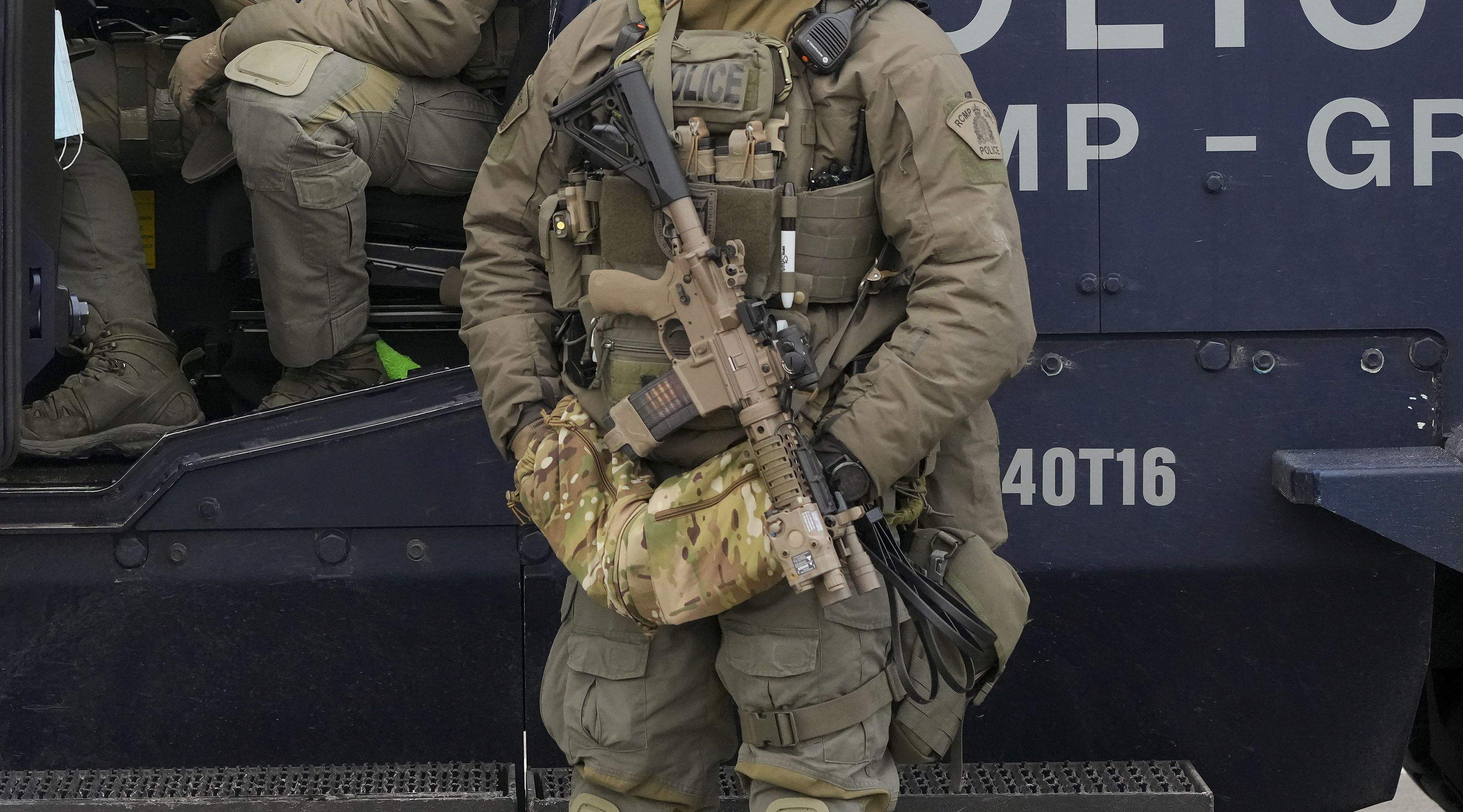
A man from India stands accused of kidnapping and sexually assaulting a woman held hostage inside an Airdrie residence, a case that lays bare how violent domestic and interpersonal abductions unfold behind closed suburban doors. The charges, filed by Alberta law enforcement following a multi-hour tactical response, center on allegations of unlawful confinement, aggravated sexual assault, and uttering threats. While initial local news reports treated the arrest as an isolated crime blotter entry, a closer examination of Canadian criminal procedure, cross-border legal realities, and the mechanics of suburban hostage incidents reveals systemic vulnerabilities that standard police blotters ignore.
Suburban crime feels impossible until the tactical trucks roll onto a quiet cul-de-sac. Airdrie, situated just north of Calgary, has spent two decades cultivating an image as a safe, fast-growing bedroom community where young families buy detached homes and commute down the Queen Elizabeth II Highway. That rapid demographic expansion—pushing the city's population past 80,000—has outpaced the municipal infrastructure designed to monitor and respond to high-risk interpersonal violence. You might also find this related story insightful: Twenty Tons of Steel on the Queen Elizabeth II Highway.
The Mechanics of Suburban Unlawful Confinement
When prosecutors lay charges of kidnapping alongside forcible confinement, they are drawing a sharp legal distinction under the Criminal Code of Canada. Kidnapping requires moving a victim from one place to another against their will. Forcible confinement occurs the moment a person is deprived of their liberty to move freely within a fixed space, even if that space is their own living room.
In cases where a suspect holds a victim hostage inside a residential property, the crime rarely begins with a dramatic street abduction. Law enforcement data across Alberta consistently shows that coercive control precedes physical barricading. The perpetrator systematically isolates the victim, confiscates communication devices, and uses psychological intimidation long before a neighbor notices drawn blinds or hears a disturbance. As extensively documented in latest coverage by TIME, the implications are widespread.
By the time a 911 call reaches the Airdrie RCMP detachment, the situation has usually escalated from a private dispute into a critical incident. Police dispatchers face an immediate information deficit. Without clear visibility into the interior layout of modern suburban homes—which often feature walkout basements, attached garages, and multiple secondary suites—responding officers must treat every entry point as a potential ambush zone.
Jurisdictional Friction and Foreign National Accused
The involvement of a foreign national from India introduces immediate legal and administrative complexities that ripple far beyond the Alberta Court of Justice. Under the Immigration and Refugee Protection Act (IRPA), serious criminality carries severe collateral consequences that run parallel to the criminal trial.
When a non-citizen—whether on a temporary work permit, student visa, or visitor status—is charged with offenses carrying a maximum sentence of ten years or more, the Canada Border Services Agency (CBSA) initiates a parallel tracking process. Aggravated sexual assault and kidnapping both carry maximum life sentences under Canadian law.
This dual-track reality creates an intense legal standoff during bail hearings. Crown prosecutors routinely argue for detention under the tertiary ground of the Criminal Code, which considers whether releasing the accused would undermine public confidence in the administration of justice, alongside the primary ground, which assesses flight risk. A defendant with deep ties to another country and zero permanent equity in Alberta faces an uphill battle securing judicial interim release. If granted bail, conditions typically involve surrendering passports, strict electronic monitoring, and substantial cash sureties from local community members.
Yet the intersection of criminal justice and immigration enforcement often produces unintended delays. Defense counsel must advise their clients not only on the criminal exposure in Calgary or Airdrie courts, but also on the certainty of a deportation order upon conviction. A sentence of six months or more for a permanent resident, or any conviction for a temporary resident, strips away the right to appeal a removal order to the Immigration Appeal Division. Consequently, accused individuals facing these charges almost never enter early guilty pleas, forcing victims to endure protracted preliminary inquiries and full-scale trials that can stretch across two years.
What Initial Police Releases Leave Out
Press releases from the RCMP follow a rigid, risk-averse template. They state the age of the accused, the town of residence, the specific sections of the Criminal Code violated, and the date of the next court appearance. They omit almost everything that helps a community understand the actual threat level.
Notice what is routinely absent from these dispatches:
- The duration of the captivity. Knowing whether a victim was held for forty minutes or four days changes the public understanding of how visible the crime was to the surrounding neighborhood.
- The mechanism of rescue. Police rarely specify whether the victim escaped on their own, alerted a third party via a hidden device, or was freed through a forced tactical breach.
- Prior police contact. Confidentiality rules and publication bans often obscure whether officers had previously visited the address for wellness checks or noise complaints.
These omissions are not accidental. Under Section 486.4 of the Criminal Code, mandatory publication bans protect the identity of sexual assault complainants. In smaller municipalities like Airdrie, releasing the specific street address or the exact relationship between the accused and the victim would instantly identify the survivor to neighbors and coworkers. Journalists and police walk a tightrope between public transparency and legal compliance, leaving the wider public with a sanitized, fragmented narrative.
The Forensic Reality of Hostage Investigations
Once tactical units secure a residence and paramedics transport the survivor to a specialized medical facility—such as the Sheldon M. Chumir Health Centre in nearby Calgary—the investigation shifts from crisis containment to meticulous forensic reconstruction.
Sexual assault and forcible confinement investigations rely heavily on corroborative physical evidence to survive the scrutiny of a defense cross-examination. Forensic nurses conduct specialized examinations to document defensive injuries, ligature marks, and biological samples. Simultaneously, RCMP forensic identification teams execute search warrants on the property to map out the physical timeline of the captivity.
Digital forensics frequently decides these cases. Investigators extract cell tower pings, router connection logs, and deleted messaging threads to establish when the victim's phone went dark or when the accused restricted outside contact. In modern suburban homes, smart home devices—doorbell cameras, smart thermostats, and voice assistants—often provide an objective, timestamped record of movement inside the house that contradicts an accused's claim of consensual interaction.
The Burden on Regional Victim Services
Airdrie's rapid growth has strained its frontline support networks. While policing is contracted to the RCMP, specialized trauma support, emergency shelter beds, and long-term legal advocacy rely heavily on non-profit organizations and regional resources centered in Calgary.
Survivors of severe interpersonal violence and abduction face immediate logistical hurdles once the police tape comes down. If the crime occurred inside their primary residence, that home becomes an active crime scene for days, and a site of profound psychological trauma permanently. Finding immediate, secure housing in a tight rental market where vacancy rates hover near historic lows leaves survivors vulnerable to financial ruin or coercion to recant their statements.
Victim services units work to bridge this gap, providing emergency financial assistance and court accompaniment. However, the sheer volume of domestic and sexual violence files across the Calgary metropolitan corridor means caseworkers carry heavy caseloads, slowing down the delivery of trauma-informed counseling during the critical weeks immediately following an arrest.
Systemic Accountability and Bail Reform
Every high-profile violent arrest in Alberta reignites the national debate over bail reform and judicial oversight. Critics of the current system point to Bill C-75, federal legislation enacted to streamline bail processes and emphasize the "ladder principle," which directs judges to impose the least onerous conditions necessary. Law enforcement associations and provincial premiers have repeatedly argued that these provisions make it too easy for violent offenders to secure release while awaiting trial.
Legal scholars push back against this characterization, noting that the Criminal Code already contains reverse-onus provisions for offenses involving violence, weapons, or breaches of prior court orders. In a reverse-onus bail hearing, the burden shifts from the Crown to the defense; the accused must prove why they should be released, rather than the prosecutor proving why they should be detained.
When a case involves kidnapping and aggravated sexual assault, the presumption of detention is already high. The real vulnerability lies in the enforcement of release conditions when bail is granted. Airdrie does not have a dedicated, round-the-clock municipal surveillance unit tracking every individual on judicial interim release. Compliance relies largely on random curfew checks by patrol officers who are simultaneously responding to highway collisions, property thefts, and mental health calls.
Reading Between the Lines of Local Crime Reporting
When a headline announces that a suspect has been charged with holding a woman hostage in a quiet Alberta city, the public tends to look for simple explanations. People want to know if it was a random attack by a stranger or a targeted crime. The reality is usually far more complex.
Random street kidnappings by total strangers are statistically rare in Canada. The vast majority of unlawful confinements involve individuals who have some prior connection, whether through family, employment, community networks, or brief social contact. Acknowledging this reality does not diminish the severity of the crime; it highlights where prevention actually works.
Community leaders, settlement agencies, and local law enforcement must look at how isolated newcomers and vulnerable residents access help before a crisis turns lethal. Cultural stigma, fear of immigration consequences, and lack of familiarity with Canadian legal protections often prevent victims from calling 911 at the first sign of escalating control. Until support systems reach directly into isolated households—and until local policing resources match the true scale of Airdrie's urban growth—these crimes will continue to surface only after a door is breached.