The envelope arrived on a Tuesday, thin as a promise and heavy as a brick.
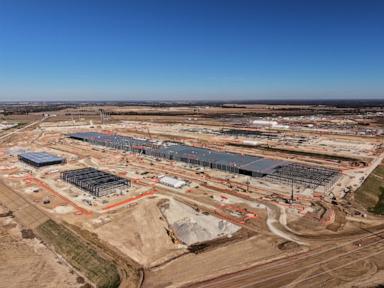
Let us call her Clara, a hypothetical retired middle-school teacher living in a modest, two-story clapboard house just outside Columbus, Ohio, though her story is currently playing out across kitchen tables from Northern Virginia to rural Oregon. Clara keeps her thermostat at sixty-six degrees in January, wears wool socks inside, and unplugs her toaster when she isn't making breakfast. She knows the exact kilowatt-hour rate printed on the back of her utility statement because, on a fixed pension, thirty dollars is the difference between fresh salmon and canned tuna. When she opened her electric bill that Tuesday, the supply charge had jumped by nearly forty percent. She hadn't bought a hot tub. She hadn't started welding in her garage. Yet somewhere five miles down the county road, behind a perimeter of chain-link fencing and hum-heavy cooling towers, a windowless concrete warehouse the size of six football fields had just flipped its breakers on, and Clara was quietly helping pay to wire it to the grid.
That invisible transfer of wealth is the beating heart of a legislative earthquake that just shook Capitol Hill. The United States Senate has officially approved a sweeping, bipartisan permitting reform bill designed to do two things that Washington rarely accomplishes in the same breath: slash the multi-year bureaucratic purgatory that stalls American energy infrastructure, and force massive data centers to pay their own way for the colossal electrical upgrades they demand.
To understand why this vote matters—and why it felt like a sudden, collective exhale for both grid engineers and everyday ratepayers—you have to look past the dry statutory language of federal permitting reform. You have to look at the physical reality of the modern internet, the aging copper wires strung across our backyards, and the quiet collision between artificial intelligence and the American middle class.
The Myth of the Weightless Cloud
We call it "the cloud" because the word sounds airy, harmless, and clean, like vapor drifting over a summer meadow. That language is a brilliant piece of misdirection.
In truth, the cloud is made of concrete, steel, diesel backup generators, and millions of gallons of chilled water. Every time you ask an artificial intelligence model to summarize a contract, generate a photorealistic image, or write a line of code, a physical server rack somewhere in the country spikes in temperature and drinks down electricity at a rate that would make an aluminum smelter blush. A single hyperscale AI data center can easily consume as much power as a mid-sized American city—anywhere from one hundred to five hundred megawatts, running twenty-four hours a day, three hundred and sixty-five days a year, without taking a Sunday off.
For the past several years, technology giants have raced to build these digital fortresses at breakneck speed. When a tech company drops a billion-dollar facility into a quiet county, the local grid—often built during the Eisenhower or Carter administrations—simply cannot handle the sudden, violent thirst for electrons. Transformers burn out. Substations hit capacity. High-voltage transmission lines run hot and sag toward the trees.
To keep the lights from flickering in nearby neighborhoods, regional utilities have had to build brand-new substations, string miles of high-capacity power lines, and fire up dormant natural gas plants. Under traditional utility rate structures, those billions of dollars in infrastructure upgrades were often socialized—pooled together and spread across every customer in the service territory.
Think of it as a metaphor of a neighborhood dinner party. Imagine six neighbors splitting the check evenly every Friday night, each ordering a modest bowl of soup and a glass of water. Then, one evening, a billionaire pulls up to the table, orders four tomahawk steaks, three bottles of vintage Bordeaux, and a tiered seafood tower, and insists the table keep splitting the bill seven ways. For years, American families have been subsidizing the seafood tower.
The Seven-Year Traffic Jam
At the exact same moment data centers were overwhelming local grids, the nation's ability to build new energy infrastructure had ground to a near-halt.
Ask anyone who has tried to permit a high-voltage transmission line or a clean energy project in the last decade, and they will tell you stories that sound like dark comedy. Under the National Environmental Policy Act and a labyrinth of overlapping federal, state, and local jurisdictions, a simple environmental review—intended in 1970 to protect rivers and forests from reckless dumping—had mutated into a procedural weapon. A single transmission line crossing three states might require sign-offs from a dozen agencies, trigger four separate environmental impact statements, and endure six years of litigation before a single shovel touched the dirt.
I remember standing in a muddy field in the Midwest a few years back, listening to a grid engineer point toward a distant ridge where wind turbines stood frozen against a gray sky. The turbines were built. The clean, cheap electricity was ready to flow. Yet the blades were locked in place because a forty-mile stretch of transmission wire needed to carry that power to a nearby city was trapped in year five of a federal permitting review. Meanwhile, thirty miles away, a utility was burning expensive coal to keep hospitals running.
That is the paradox that paralyzed American energy policy for a generation. We needed to double or triple the capacity of our electrical grid to handle electric vehicles, domestic manufacturing, and artificial intelligence, yet our legal machinery was calibrated to prevent anything from being built at all. Environmentalists wanted clean power but used permitting laws to block transmission lines; fossil fuel advocates wanted faster drilling permits but watched renewable projects stall in the same bureaucratic mud. Everyone was screaming at the traffic jam while standing in the middle of the intersection.
How the Senate Broke the Deadlock
The bill that just cleared the Senate is not a magic wand, and anyone who tells you it solves every problem in American energy is selling something. What it represents, however, is a rare, pragmatic truce born out of sheer physical necessity.
First, the legislation takes a machete to the permitting timeline. By establishing strict statutory deadlines for federal environmental reviews—capping major project evaluations at two years rather than letting them drift toward a decade—the bill forces federal agencies to coordinate through a single lead agency instead of passing files back and forth like hot potatoes. It also narrows the window for judicial challenges, requiring lawsuits against approved energy projects to be filed within months rather than years. Whether a developer is building a solar farm in Nevada, a geothermal plant in Utah, a natural gas pipeline in Appalachia, or a high-voltage transmission line across the Great Plains, the rules of the road are finally predictable. Speed is no longer treated as a crime against nature; it is recognized as a prerequisite for surviving the twenty-first century.
Second—and far more radical—is the bill's direct strike at the data center cost-shifting problem.
Under the new framework, federal energy regulators and state utility commissions are empowered and directed to establish dedicated rate classes for massive, high-load industrial users. In plain English, if a tech company wants to plug a three-hundred-megawatt AI campus into the grid, it can no longer hide behind the residential ratepayer. The data center operator must fund the dedicated substations, the upgraded transmission corridors, and the grid reinforcement costs triggered by its own arrival. Furthermore, the bill incentivizes "bring-your-own-power" arrangements, encouraging tech firms to co-locate their server farms directly alongside new power generation—such as nuclear restarts, battery storage arrays, or clean baseload plants—so they don't drain the existing neighborhood pool at all.
The Pushback and the Uncomfortable Truths
Naturally, not everyone is celebrating on the Capitol steps.
When you rewrite the rules governing trillions of dollars in steel, concrete, and silicon, every constituency finds something to fear. Some grassroots environmental groups worry that shortening judicial review windows will silence rural and Indigenous communities whose land lies in the path of new transmission corridors or pipelines. Those fears aren't fabricated; history is littered with infrastructure projects routed through neighborhoods with the least political clout. A faster clock only works if regulators actually listen during the time allotted.
Meanwhile, a chorus of tech industry lobbyists warned behind closed doors that forcing data centers to bear upfront grid costs could slow down American AI development, handing a strategic advantage to foreign competitors who build power plants without asking permission. That argument has a certain seductive urgency until you look at the balance sheets of the companies making it. The largest hyperscalers on earth generate tens of billions of dollars in quarterly profit. They can afford to buy their own transformers. Clara, the retired teacher in Ohio, cannot.
There is also an uncomfortable technical reality that no piece of legislation can wish away: permitting reform clears the paperwork, not the supply chain. Even with a green light from Washington, utilities still face a global shortage of large power transformers, high-voltage circuit breakers, and skilled linemen. You can sign a permit in six months, yet still wait three years for a custom-built transformer to arrive from a factory floor. We are trying to rebuild a mid-century machine while running it at redline, and there will be bruised knuckles along the way.
What Happens When the Wires Catch Up
Still, consider what shifts on the ground when a law like this takes hold.
Imagine a mid-sized utility planner in Virginia or Texas opening a feasibility study next spring. Six months ago, that planner had to tell a prospective factory owner or municipal water district that hooking up to the grid would take until 2032, and that local families would likely eat a double-digit rate hike to pay for the wiring. Now, the math changes. Because large-load data centers are walled off into their own financial lane, the utility can build out high-capacity infrastructure without turning residential electric bills into a stealth tax.
At the same time, clean energy projects that have been languishing in interconnection queues—thousands of gigawatts of solar, wind, and battery storage waiting purely for permission to connect to the high-voltage backbone—finally see a path out of purgatory. When transmission lines get built in two years instead of seven, cheap electrons flow from windy plains and sunny deserts straight into the cities that need them, pushing down wholesale power prices for everyone.
It is easy to look at Washington and see only gridlock, performative outrage, and bills named after hollow acronyms. Most of the time, that cynicism is well earned. Yet every so often, reality becomes so heavy that even politics has to bend to accommodate it. You cannot run an artificial intelligence revolution on nineteenth-century utility rules and twentieth-century copper wires. You cannot ask working families to pay the light bill for the richest corporations in human history and expect the social contract to hold.
Back in Columbus, the evening chill settles against the clapboard siding of Clara's house. The refrigerator hums softly in the dark kitchen. Down the county road, the cooling fans at the edge of town spin steadily through the night, processing millions of unseen questions, churning through oceans of data, burning bright in the dark. For the first time in years, the meter spinning outside her back door belongs solely to her.