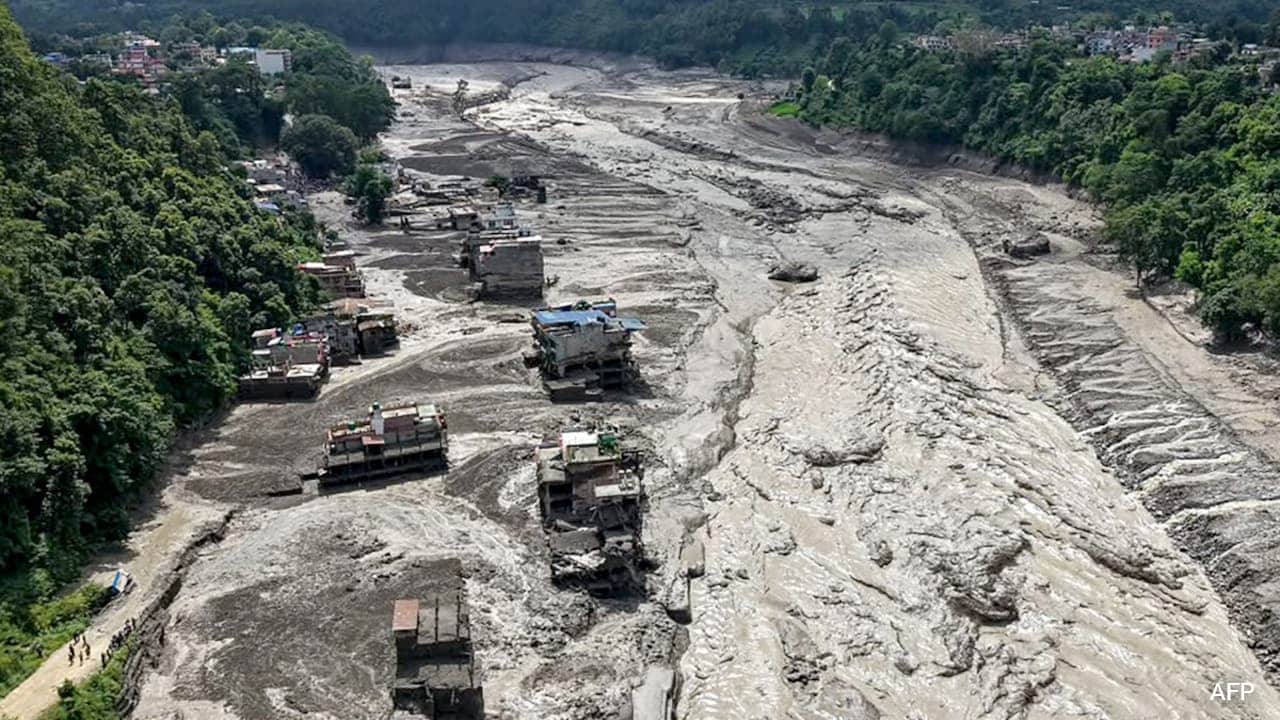
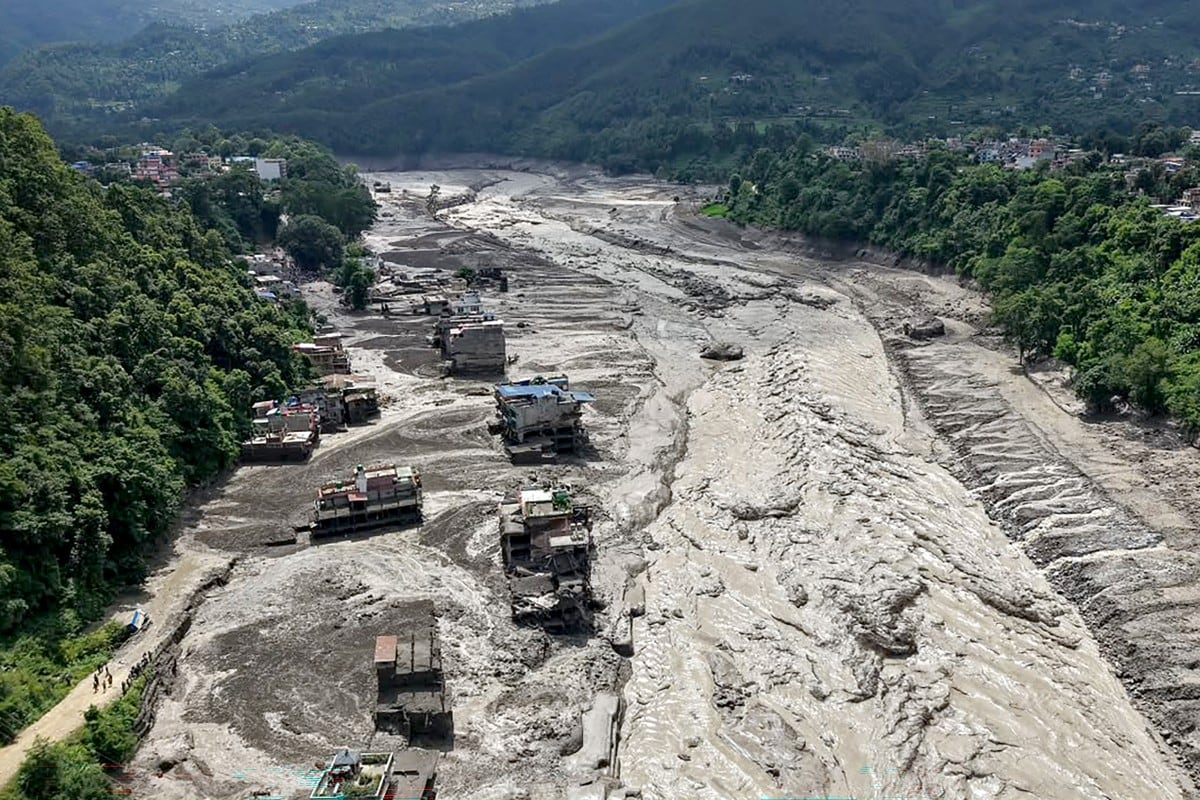
Catastrophic environmental shocks in high-altitude transboundary basins expose structural vulnerabilities in emergency response frameworks long before institutional recovery mechanisms can engage. When an ice-rock avalanche triggered by a glacial collapse in the Himalayas unleashes a multi-million-cubic-meter torrent of debris, it does not merely destroy physical infrastructure. It fundamentally alters the hydraulic geometry of the river valley, creating an unstable natural dam known as a barrier lake. The subsequent overflow of this impoundment at the Nepal-China border demonstrates a compounding crisis model where primary hazard mitigation directly impedes secondary search-and-rescue operations. Understanding this event requires stripping away descriptive journalism to examine the precise hydrodynamic mechanisms, resource allocation bottlenecks, and transboundary coordination failures that dictate survival rates in steep-gradient river systems.
The Hydrodynamic Failure Chain
The progression from a localized cryospheric event to a regional crisis follows a strict sequential logic driven by mass-wasting physics.
- Cryospheric Destabilization: Atmospheric warming and localized tectonic stress weaken glacial walls, leading to sudden structural collapse. The kinetic energy of falling ice and rock liquefies superficial soil matrices, transforming a rockfall into a high-density debris flow.
- Channel Impoundment: As the debris surge funnels through narrow gorge bottlenecks, heavy sediment loads drop out of suspension, forming a natural earthen dam across the Bhotekoshi-Trishuli river corridor.
- Volumetric Threshold Exceedance: Inflow rates from upstream snowmelt rapidly outpace the natural seepage capacity of the debris dam. When volume surpasses critical thresholds—expanding from an initial 1.5 million cubic meters to over 2.5 million cubic meters within 24 hours—hydrostatic pressure breaches the crest.
- Secondary Surge Generation: The sudden breach converts stored potential energy into kinetic discharge, sending an unmonitored wave downstream that obliterates remaining access roads, traps subterranean workers in hydropower tunnels, and forces the immediate cessation of field operations.
This chain reveals why standard disaster response protocols fail. Emergency management agencies are typically structured to respond to static damage, whereas barrier lake overflows represent dynamic, escalating threats that require continuous hydraulic forecasting rather than fixed search grids.
The Cost Function of Transboundary Logistics
Managing a disaster across the Himalayan border requires navigating severe geographical and bureaucratic friction. The cost function of relief operations in this terrain is dictated by three primary variables: elevation profiles, infrastructure degradation, and jurisdictional division.
Elevation and Access Deficits
Ground teams operating at altitudes exceeding 2,800 meters must traverse steep, unstable terrain on foot because debris flows routinely scour away foundational highways and bridges. Mechanized earthmovers cannot clear blocked arterial routes when active overflow threats require the immediate withdrawal of engineering personnel. Consequently, logistics shift entirely to aerial assets, which face their own operational ceilings, weather dependencies, and payload limitations.
Information Asymmetry
Downstream administrative centers rely on upstream telemetry to predict flood arrivals. When communication lines are severed and monitoring stations are buried, local authorities experience extreme information latency. Warnings such as those issued in the Rasuwa district—where bureaucrats received unverified reports of a bank breach without precise volumetric data—force reactive mass evacuations rather than targeted engineering interventions. Panic replaces precision because real-time hydrological modeling cannot keep pace with rapid reservoir filling.
Sovereignty versus Speed
Transboundary basins necessitate synchronized interventions, yet institutional frameworks prioritize national sovereignty over operational integration. While multiple states offer rapid response teams, host governments often restrict foreign deployments to preserve command integrity or due to an absence of pre-negotiated legal frameworks for international disaster entry. This creates an operational paradox: the nations with the heaviest downstream exposure are structurally isolated from the upstream engineering resources required to stabilize barrier lakes at their source.
Resource Allocation and Triage Mechanics
With tens of thousands of individuals affected and hundreds of casualties accumulating across both sides of the border, emergency management shifts from rescue to triage under extreme resource scarcity.
- Personnel Deployment Ratio: Security forces numbering in the tens of thousands are mobilized for manual searches across remote valleys, but their efficacy is throttled by the physical impossibility of moving heavy equipment across washed-out suspension bridges.
- Air-Land Interdependence: Helicopters remain the sole lifeline for isolated pockets, yet airframes are simultaneously demanded for reconnaissance, VIP damage assessments, survivor extraction, and critical medical supply drops.
- The Secondary Risk Trade-off: Every hour spent evacuating rescue personnel away from the rising riverbanks to mitigate secondary flood exposure is an hour lost for recovering trapped survivors inside compromised structures or tunnels.
Strategic Reconfiguration of High-Altitude Disaster Management
Mitigating future transboundary glacial lake outbursts requires moving away from reactive emergency deployment and toward predictive structural engineering.
To break the cycle of recurring operational paralysis, disaster response architectures must integrate automated early-warning fiber-optic sensors along high-risk glacial paths, establish pre-approved multi-lateral protocols for cross-border engineering deployments before seasonal melt cycles peak, and enforce strict vertical zoning laws that prohibit the placement of subterranean hydropower infrastructure in narrow, high-velocity gorge zones vulnerable to sediment impoundment.