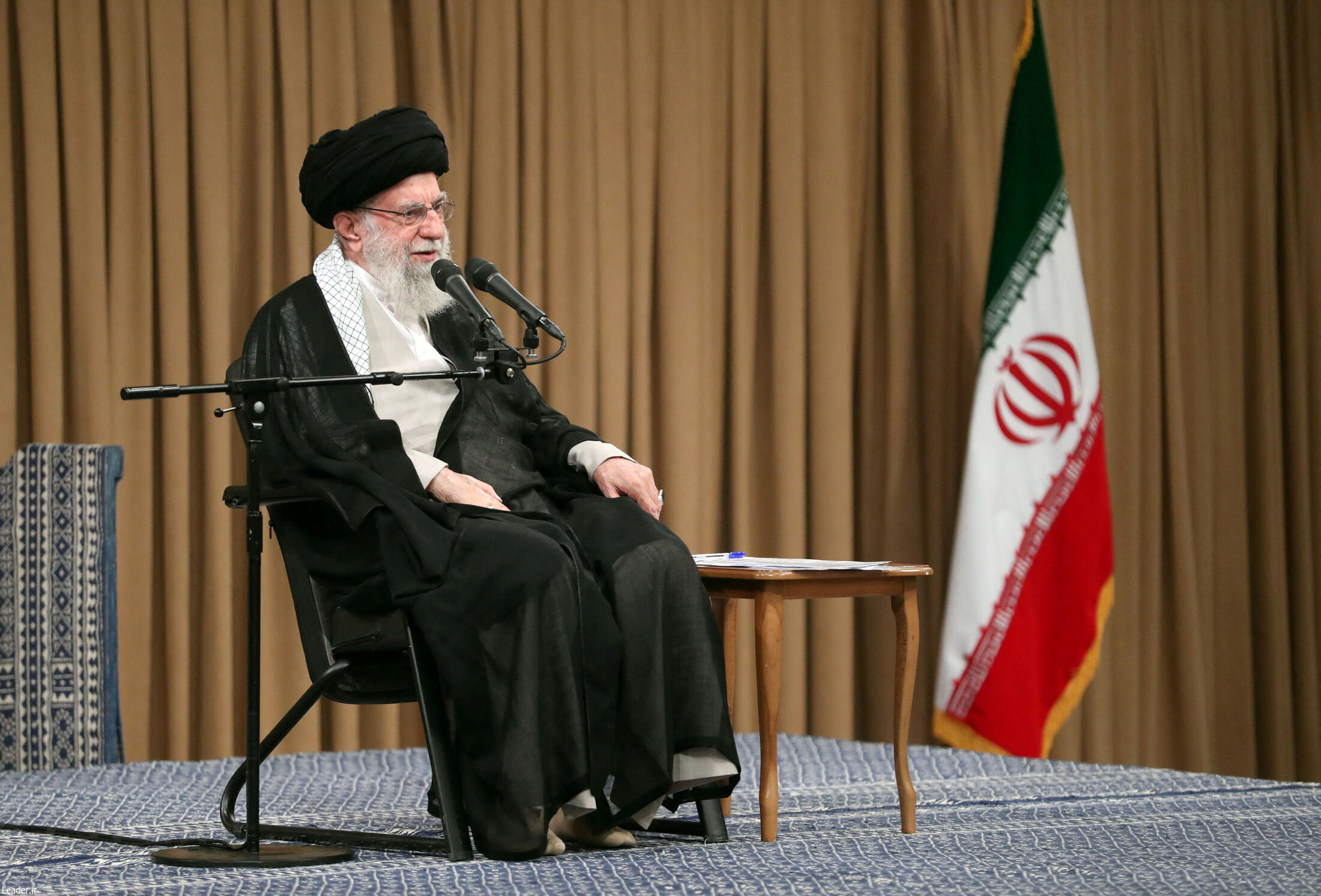
The assertion that there are "no leaders left to talk to" in Iran is not merely a rhetorical flourish; it describes a measurable degradation of the Iranian state’s hierarchical redundancy. To understand the current diplomatic vacuum, one must quantify the systematic erosion of Iran’s decision-making apparatus through three specific vectors: kinetic decapitation of external operations, internal succession instability within the clerical establishment, and the narrowing of the "permissible" diplomatic elite. When the primary interlocutors of a state are either deceased, politically sidelined, or legally barred from negotiation, the state ceases to be a functional diplomatic counterparty, regardless of its underlying desire for de-escalation.
The Decapitation Framework: Kinetic Erosion of the IRGC-QF
The most visible driver of leadership scarcity is the physical removal of the Islamic Revolutionary Guard Corps - Quds Force (IRGC-QF) command structure. For decades, the Quds Force operated as a "shadow foreign office," often wielding more influence over regional policy than the formal Ministry of Foreign Affairs.
The removal of figures such as Qasem Soleimani created a structural void that has not been filled by equivalent strategic depth. The current leadership operates under a "survival-first" mandate, which prioritizes internal security over the high-stakes risk-taking required for international diplomacy. This creates a specific type of paralysis:
- Loss of Institutional Memory: The veteran commanders who managed the "Resistance Axis" for thirty years possessed personal networks that cannot be replicated by institutional mandates.
- The Deterrence Trap: Successive strikes on high-ranking officials (including recent hits in Damascus and Tehran) force the remaining leadership into deep cover. A leader who cannot communicate securely cannot negotiate effectively.
- Information Asymmetry: Subordinate officers, fearing for their safety or being labeled as "infiltrators," provide filtered, overly optimistic data to the supreme leadership, leading to a breakdown in the rational actor model required for treaty-making.
The Succession Crisis and the Narrowing Gate
Beyond the kinetic loss of military leaders, the Iranian domestic political landscape is experiencing a contraction of its "negotiating class." The Council of Guardians has systematically narrowed the field of eligible candidates for high office, moving from a multi-factional system to a monolithic hardline front.
This creates a "Monolith Paradox." While a unified government should theoretically find it easier to make decisions, it actually lacks the internal "bad cop/good cop" dynamics necessary for complex international bargaining. When the "pragmatists" (the likes of Javad Zarif or Hassan Rouhani) are structurally excluded from the levers of power, the West loses its traditional entry points.
The looming succession of the Supreme Leader further complicates this. Potential successors are currently engaged in a signaling contest to prove their ideological purity. In this environment, any gesture toward diplomacy is viewed as a sign of weakness or a disqualifying trait for the top position. The leadership pool is not just smaller; it is ideologically more rigid and less capable of the flexibility required for a "Grand Bargain."
The Cost Function of Sanctions on Diplomatic Human Capital
Economic pressure has a direct, if under-analyzed, impact on the quality of a nation's leadership. Sanctions regimes often result in "brain drain" within the technocratic tiers of government. The mid-level officials—the ones who actually draft the technical annexes of nuclear or trade agreements—are fleeing the public sector for the private sector or leaving the country entirely.
This leaves the Iranian state with a "Loyalty over Competence" bottleneck. The officials remaining in the negotiating seats often lack the technical expertise or the mandate to deviate from rigid talking points. This creates a situation where the US or EU might be sitting across from an official who has the title of "leader" but lacks the agency to actually lead.
The Credibility Gap as a Barrier to Entry
Diplomacy requires a baseline of "future-value" credibility. If a leader believes that any agreement they sign will be discarded by the next administration, or if they believe their own domestic hardliners will execute them for signing it, the utility of the negotiation drops to zero.
The Iranian leadership currently views the cost of a failed negotiation as higher than the cost of no negotiation. This "Negative Expected Value" (NEV) calculation has led to the current stalemate. The pool of leaders willing to bet their lives and political futures on a Western promise has effectively evaporated.
Strategic Realignment: The Shift to Proxy Autonomy
With the central leadership in Tehran under immense pressure, there is an observable shift toward "Proxy Autonomy." Groups like Hezbollah, the Houthis, and various PMFs in Iraq are increasingly making tactical decisions independently of a central Iranian command.
This decentralization further validates the claim that there are no "leaders" to talk to in the traditional sense. Even if a deal were struck with a central figure in Tehran, that figure might no longer command the absolute loyalty of the regional proxies. The Iranian state is transitioning from a centralized empire to a loose confederation of ideologically aligned but operationally independent militias. This makes the traditional state-to-state diplomatic model obsolete.
The primary constraint on future engagement is not the lack of a phone number in Tehran, but the lack of a consolidated authority capable of enforcing an agreement across the entirety of the Iranian security apparatus. The strategic play is no longer seeking a "moderate" within the system, but identifying the specific power centers that retain veto power over the state's kinetic actions.
Western policy must pivot from searching for a "talking partner" to a strategy of "containment via technical disruption." If the leadership structure is too fractured to negotiate, the only remaining lever is the systematic degradation of their ability to project power through non-diplomatic means. This involves shifting focus from high-level summits to mid-level interdiction of the logistical and financial networks that sustain the IRGC’s remaining functional nodes.
Would you like me to map out the specific financial nodes within the IRGC's "Bonyad" system to identify which entities currently hold the most leverage over Iranian foreign policy?


