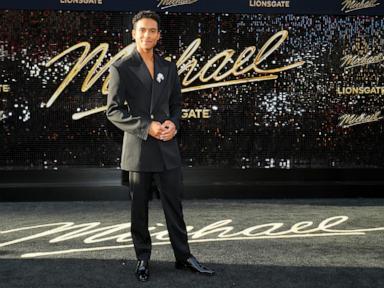
The reclamation of the number one box office position by a theatrical release in its fourth weekend of wide exploitation is a rare macroeconomic anomaly in contemporary exhibition. Typically, modern theatrical distribution is defined by a decay function where second-weekend drops average 50% to 60%, followed by an exponential decay in screen allocation and ticket sales. When Lionsgate’s biographical feature Michael grossed $26.1 million in its fourth weekend—reversing a two-week deficit against The Devil Wears Prada 2—it demonstrated structural theatrical endurance that cannot be explained by standard studio marketing spend or baseline intellectual property awareness.
Understanding this performance requires moving past superficial narratives about star power or nostalgia. Instead, analyzing the mechanics of Michael through the lenses of structural counter-programming, theatrical premium large format elasticity, and the critical-commercial divergence reveals why certain cultural assets resist standard box office decay curves.
The Mathematics of Box Office Decay and Capital Reclamation
To evaluate the significance of a $26.1 million fourth weekend, one must first analyze the historical performance architecture of the musical biopic genre. The benchmark for global monetization in this category remains Bohemian Rhapsody (2018), which concluded its run with a domestic haul of $216 million and an international gross of $687 million, yielding a total worldwide asset yield of $911 million.
Michael entered its fourth week with a domestic cumulative total of $282.7 million and a global aggregate of $703.9 million. This performance profile establishes two structural distinctives:
- Domestic Premium Retention: Michael has already outpaced the total domestic run of Bohemian Rhapsody by over $66 million within 24 days of release, shifting the traditional domestic-to-international revenue split typical of global music IPs.
- The Velocity Function: The film maintained a remarkably flat decay curve, dropping only 31% from its third weekend ($37.9 million) to its fourth ($26.1 million). This deceleration of decay indicates deep market penetration beyond core fans into casual, tertiary demographics.
The primary mechanism driving this revenue retention is the stabilization of the film’s theatrical footprint. Rather than shedding screens to newer market entrants, the film maintained a footprint of 3,560 theaters in its fourth week, yielding a highly efficient per-theater average of $7,338. This indicates a high level of seat utilization that prevented exhibitors from shifting showtimes to newer, lower-yielding titles.
Structural Failures of Market Competitors
A film does not reclaim the top chart position in a vacuum; its resurgence requires a simultaneous contraction among competing products. The weekend box office hierarchy reveals an immediate deceleration across alternative studio offerings, creating a vacuum that Michael exploited through sustained consumer demand.
Weekend Box Office Revenue Allocation (Top 5 Components)
1. Michael: $26.1M (Weekend 4)
2. The Devil Wears Prada 2: $18.0M (Weekend 3)
3. Obsession: $16.1M (Weekend 1)
4. Mortal Kombat II: $13.4M (Weekend 2)
5. The Sheep Detectives: $9.3M (Weekend 2)
The second-place finisher, The Devil Wears Prada 2, which had previously occupied the top spot, experienced a standard capital contraction, falling to $18 million in its third weekend. More illustrative, however, is the structural collapse of front-loaded genre intellectual property. Mortal Kombat II experienced a steep 65% drop-off in its sophomore frame, collapsing from its opening metrics to register just $13.4 million. This steep decay curve is characteristic of fan-centric, front-loaded properties where demand is exhausted within the first 72 to 120 hours of release.
Concurrently, new market entrants failed to command sufficient market share to disrupt the holdovers. Focus Features’ horror release Obsession over-performed relative to its modest $750,000 production budget by generating $16.1 million across 2,615 theaters. While highly profitable from a return-on-invested-capital perspective, its absolute gross was insufficient to challenge a high-volume holdover. Low-performing entrants like Guy Ritchie's In the Grey ($3 million) and the revenge drama Is God Is ($2.2 million) further diluted the aggregate box office without consolidating an audience large enough to capture meaningful market share.
Premium Screen Elasticity and Capacity Re-allocation
A critical operational factor missed by standard trade reporting is the physical inventory management of theatrical exhibition—specifically, Premium Large Format (PLF) screens, including IMAX, Dolby Cinema, and proprietary exhibitor brands. These screens command ticket price premiums ranging from 20% to 50% above standard digital projection.
During weekends two and three, contractual obligations forced exhibitors to yield a significant portion of PLF screens to newer arrivals like Mortal Kombat II. However, box office yield is a function of ticket price multiplied by capacity utilization. When freshman titles underperform on a per-screen basis, exhibitors rapidly optimize their auditoriums.
Because Michael demonstrated superior per-theater yield, exhibitors re-allocated a percentage of these high-margin PLF screens back to the biopic for its fourth weekend. This inventory re-allocation caused an artificial inflation of the average ticket price for Michael, offsetting the natural volume decline in total ticket sales. The film's capacity to recapture these premium screens three weeks after its initial street date points to an ongoing supply-and-demand mismatch that favored the higher-yielding legacy title over volatile new releases.
The Critical-Commercial Divergence Framework
The monetization trajectory of Michael offers a clear case study in the structural decoupling of critical consensus from consumer purchasing behavior. The film presents an extreme statistical variance on review aggregation platforms:
- Critical Approval Rating: 39%
- Audience Sentiment Score: 97%
In traditional media models, low critical consensus serves as a leading indicator for steep second- and third-week box office drops, as negative word-of-mouth suppresses non-core audience attendance. This predictive model failed for Michael due to the nature of the underlying asset. The subject’s musical catalog and historical cultural footprint operate as a pre-validated intellectual property.
For the general consumer, the purchasing decision is driven by theatricality—specifically the reproduction of iconic performance sequences engineered for audio-visual scale—rather than narrative complexity or structural adherence to traditional cinematic biographic formats. The 97% audience sentiment score indicates that the specific elements valued by the consumer base (e.g., sonic fidelity, choreography, theatrical scope) were successfully delivered, rendering critical evaluation irrelevant to the long-tail monetization of the film.
Geographic Yield Split and Long-Tail Valuation
A core limitation in projecting the final valuation of Michael lies in the domestic-to-international revenue distribution. The current global gross allocation sits at 40% domestic ($282.7 million) and 60% international ($423.9 million).
While Michael has structurally decoupled from Bohemian Rhapsody domestically, the international marketplace remains the deciding factor for whether the film can breach the $1 billion threshold. Bohemian Rhapsody achieved its historical status by maintaining an extraordinary 23.7% domestic and 76.3% international split, driven by prolonged theatrical runs in Asian and European territories where the band Queen retained generational market dominance.
The international trajectory for Michael faces distinct regional macroeconomic variables, including localized censorship, variable theatrical density in emerging markets, and differing cultural resonance across age groups. However, the film's international baseline of over $423 million within a month indicates that the global distribution network has established a high floor for the property's theatrical tail.
Strategic Capital Allocation for Music Biopics
The operational takeaway for studio executives and media equity investors is that the musical biopic genre, when executed at a high production budget tier ($155 million for Michael), behaves less like standard filmed entertainment and more like a recurring consumer packaged good. The capital risk is mitigated by a built-in consumer base that lowers the customer acquisition cost typically associated with non-franchise releases.
To replicate the structural endurance demonstrated by Michael, future studio allocations must prioritize two tactical plays:
First, theatrical distribution windows must be aggressively defended against early Premium Video-on-Demand (PVOD) insertion. The holdover power of Michael was preserved because the theatrical ecosystem retained exclusive rights to the asset, forcing consumers into physical theaters to experience the high-margin PLF presentation.
Second, talent agreements should be structured around backend gross receipts tied to long-tail box office milestones rather than front-loaded fixed cash compensation. This aligns stakeholder incentives toward maximizing theater retention over multiple weekends rather than optimizing merely for the opening weekend press cycle. The ongoing resilience of the theatrical marketplace depends on titles that can sustain high-margin, consistent seat utilization over 30- to 45-day horizons, proving that long-term asset value trumps short-term opening weekend volume.