The financial markets treat the imminent initial public offering of SpaceX as an unprecedented space exploration listing, yet the company’s S-1 filing reveals a structural reality that is entirely different: SpaceX is executing the most vertically integrated artificial intelligence infrastructure buildout ever attempted. By targeting a valuation of $1.75 trillion to $2 trillion for its expected June 12, 2026 debut under the symbol SPCX, the entity is bypassing the traditional capital-raising lifecycle. It seeks to raise up to $80 billion in a single public liquidity event while running a net loss of $4.28 billion in the first quarter of 2026 alone.
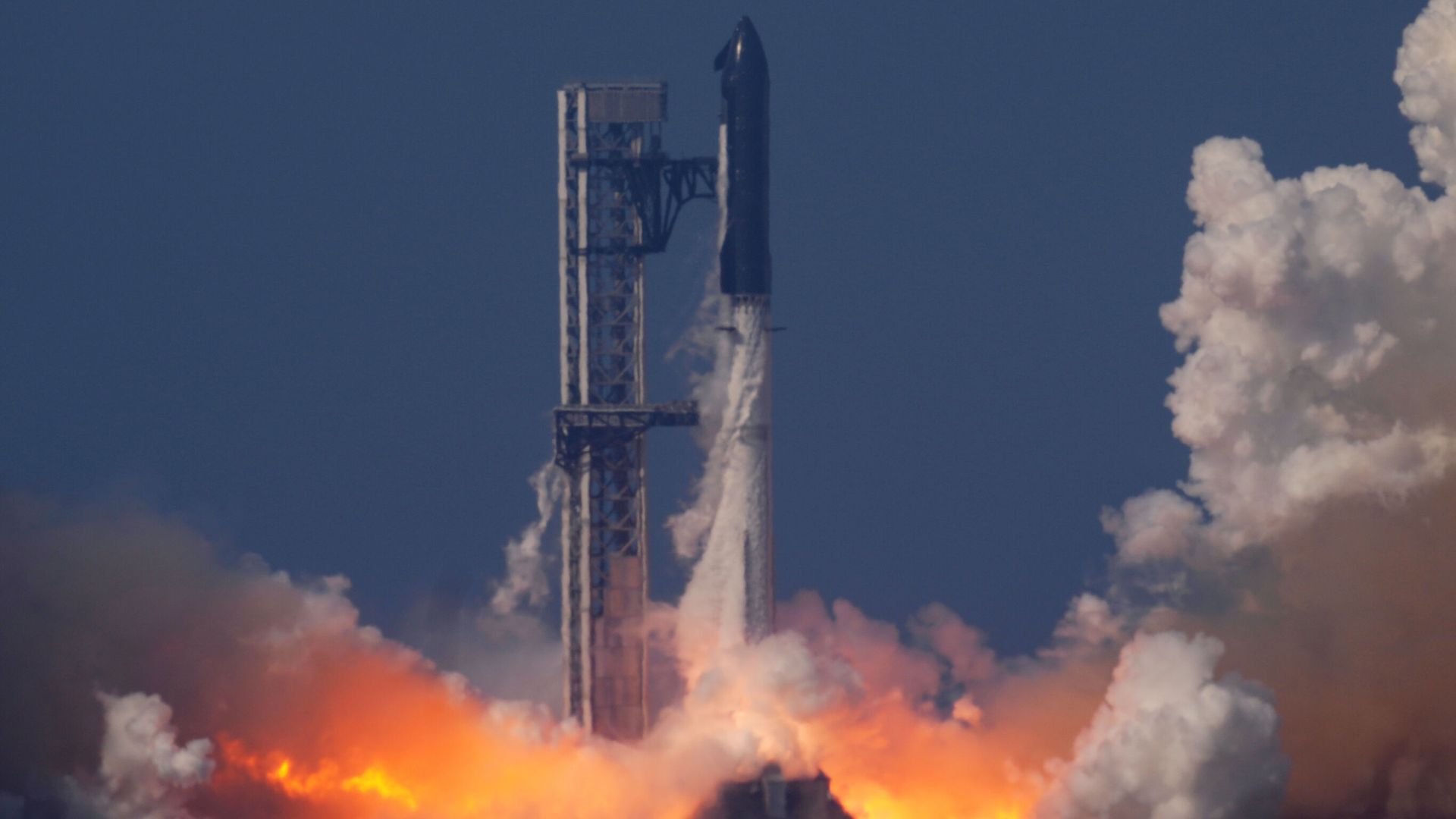
To evaluate this valuation framework, analysts must look past the spectacle of the successful May 22, 2026 launch of Starship Version 3 (V3) Flight 12. The core mechanism driving this capitalization is an economic closed-loop system where low-Earth-orbit connectivity subsidizes high-density compute infrastructure, which in turn optimizes launch capacity. This analysis maps the structural dependencies, cost functions, and capital allocation frameworks that underpin the largest planned public listing in market history.
The Three Pillars of the Tri-Segment Unit Economics
The SpaceX S-1 filing delineates a business model operating across three distinct, capital-interdependent segments: Launch Operations, Starlink Connectivity, and Advanced AI Infrastructure. The financial interplay between these divisions functions as a cross-subsidization matrix, where high-margin commercial recurring revenue offsets the massive capital expenditures required for generational hardware development.
+-------------------------------------------------------------------+
|                     SPACEX STRUCTURAL CASH MATRIX                 |
+-------------------------------------------------------------------+
|  1. STARLINK CONNECTIVITY                                         |
|     - 2025 Revenue: $11.4 Billion (61% of Group Total)            |
|     - 2025 Operating Income: $4.4 Billion                         |
|     --> Cash Engine flows directly into:                          |
+-------------------------------------------------------------------+
                                 │
                                 ▼
+-------------------------------------------------------------------+
|  2. AI INFRASTRUCTURE & ADVANCED COMPUTE                          |
|     - 2025 Capex: $12.7 Billion (Exceeded Launch & Starlink)     |
|     - Q1 2026 Segment Cash Burn: $2.5 Billion                     |
|     --> Powered by Anthropic Anchor Contract ($1.25B / month)     |
+-------------------------------------------------------------------+
                                 │
                                 ▼
+-------------------------------------------------------------------+
|  3. LAUNCH OPERATIONS (STARSHIP V3)                              |
|     - 2025 Total Group Revenue: $18.7 Billion                     |
|     - Cumulative Deficit: $41.3 Billion                           |
|     --> Lowers Mass-to-Orbit Costs via 100% Reusability           |
+-------------------------------------------------------------------+
The Starlink Cash Engine
Starlink represents the primary revenue engine of the enterprise, accounting for $11.4 billion of the $18.7 billion total revenue generated in fiscal year 2025. With an operating income of $4.4 billion within the satellite division, consumer, maritime, and aviation broadband subscriptions yield the predictable cash flows necessary to support speculative, long-horizon projects. This segment scales linearly with subscriber density, operating on a high upfront capital expenditure model followed by low incremental marginal costs per user.
The AI Infrastructure Pivot
The most significant revelation in the prospectus is that xAI and broader machine learning operations have been formally consolidated as a core operating segment. In 2025, SpaceX allocated $12.7 billion to AI capital expenditures—surpassing the combined spending of the launch and satellite divisions. This segment is anchored by a massive enterprise contract with Anthropic, which committed to paying $1.25 billion per month through May 2029 for access to SpaceX-linked data center capacity. The revenue predictability of this single contract shifts the company's valuation from a volatile defense-and-aerospace multiple to an enterprise SaaS and cloud infrastructure multiple.
Launch Capacity Subsidization
The foundational launch business, despite its high cadence, functions as an operational cost center that services the other two pillars. Total group revenue grew 33% year-over-year from $14.1 billion in 2024 to $18.7 billion in 2025, yet the company posted a full-year GAAP net loss of $4.94 billion. The divergence between an adjusted EBITDA profit of $6.6 billion and the steep GAAP net loss is explained by heavy asset depreciation on the Starlink constellation and intense infrastructure spending.
The Starship V3 Cost Function and Mass-to-Orbit Efficiency
The successful Flight 12 test of Starship V3 from Starbase, Texas, directly alters the unit economics of orbital deployment. The transition from Version 2 to Version 3 represents a complete architectural overhaul aimed at optimizing the cost-per-kilogram metric ($C_{kg}$), which governs the scale at which both Starlink and space-based data centers can be deployed.
The fundamental cost function of orbital mass injection can be expressed through the following relationship:
$$C_{kg} = \frac{C_{launch} + C_{payload}}{M_{payload}}$$
Where:
- $C_{launch}$ is the fully burdened cost of the launch vehicle operations (propellant, pad infrastructure, recovery logistics).
- $C_{payload}$ is the manufacturing cost of the satellites or hardware being deployed.
- $M_{payload}$ is the total mass successfully delivered to the target orbital insertion parameter.
By engineering a 408-foot-tall vehicle designed for absolute structural reusability, SpaceX targets the minimization of $C_{launch}$ through asset amortization across hundreds of flights, while simultaneously expanding $M_{payload}$.
+-------------------------------------------------------------------------+
|                  VEHICLE DESIGN & COST OPTIMIZATION                     |
+-------------------------------------------------------------------------+
|  STARSHIP V2 ARCHITECTURE             │  STARSHIP V3 ARCHITECTURE       |
|  - High unit cost per launch          │  - Amortized vehicle cost       |
|  - Variable deployment cadence        │  - Rapid turnaround capability   |
|  - Lower mass-to-orbit efficiency     │  - Expanded payload bay ($M$)   |
+-------------------------------------------------------------------------+
                                     │
                                     ▼
                      [ REDUCED COST PER KILOGRAM ($C_{kg}$) ]
                                     │
                                     ▼
+-------------------------------------------------------------------------+
|  - Accelerated Starlink V3 deployments (Direct-to-Cellular link)        |
|  - Viable transport architecture for orbital data center components     |
+-------------------------------------------------------------------------+
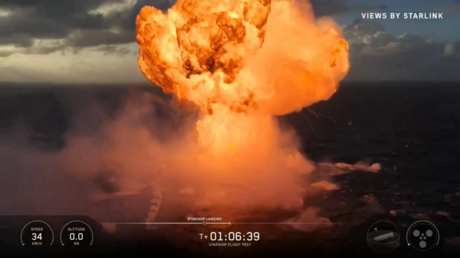
The Flight 12 milestones—including a controlled splashdown of the Super Heavy booster and the orbital upper stage in the Indian Ocean—demonstrate that the structural loads of the larger V3 design can withstand atmospheric reentry.
This operational capability creates two distinct bottlenecks for competitors:
- The Launch Cadence Divergence: Legacy launch providers rely on expendable rocket architectures where the vehicle cost is completely written off during each mission. This fixes their $C_{launch}$ at a high baseline. SpaceX's architecture converts hardware acquisition costs into a capital depreciation line item, allowing the operational cost of a launch to approach the raw cost of liquid methane and liquid oxygen propellants.
- Payload Volume Scaling: Starship V3’s expanded payload bay allows the simultaneous deployment of heavier, higher-throughput Starlink satellites featuring direct-to-cellular capabilities. This eliminates the bottleneck of terrestrial ground station proximity, opening up untapped subscriber markets in remote geographies.
The Strategic Architecture of Space-Based Compute
The long-term justification for the $1.75 trillion valuation rests on a highly non-traditional thesis detailed in the prospectus: the deployment of orbital data centers beginning in 2028. SpaceX is positioning itself to capture a significant portion of a projected multi-trillion-dollar AI infrastructure market by exploiting the convergence of its launch capabilities and satellite network.
The strategy addresses three critical constraints plaguing terrestrial data centers:
- Thermal Dissipation: Terrestrial facilities consume vast amounts of water and electricity for cooling. In low-Earth orbit, data centers can reject heat directly into the deep-space thermal sink via specialized radiative panels, completely bypassing terrestrial water dependencies.
- Energy Capture: Orbital nodes avoid atmospheric attenuation and the day-night cycle. A solar-collector array on a space-based data center captures continuous, uninhibited solar radiation, yielding significantly higher power density per square meter than terrestrial solar farms.
- Geopolitical and Regulatory Insulation: By operating outside national jurisdictions, an orbital compute network bypasses sovereign data-localization laws, land-use restrictions, and localized grid capacity constraints.
This orbital data strategy introduces its own unique technical limitations. Radiation shielding against high-energy cosmic rays and solar particle events requires substantial mass, which increases the payload weight.
Furthermore, data transmission relies entirely on laser cross-links, introducing potential latency overheads for complex, multi-node parallel computing workloads. SpaceX plans to mitigate these issues by using its upcoming "Terafab" partnership with Tesla and Intel to design specialized, radiation-hardened silicon architectures tailored specifically for vacuum environments.
The Capital Structure and Market Microstructure of the Listing
The mechanics of the SPCX listing are engineered to trigger extreme institutional buying pressure while preserving absolute founder autonomy. Rather than a standard capital-raising IPO, this transaction is structured around market index dynamics and strict dual-class voting rights.
Dual-Class Governance Architecture
Public investors in the IPO will receive Class A shares, which carry one vote per share. Elon Musk retains 42% of the total equity but controls 85.1% of the total voting power through Class B shares, which carry ten votes per share.
This governance model ensures that public shareholders cannot alter the company's long-term capital allocation strategy. This structure is further emphasized by Musk's compensation package outlined in the S-1, which consists of 15 tranches of stock awards tied to $500 billion valuation increments up to $7.5 trillion, alongside the operational requirement of establishing a permanent colony on Mars.
The 15-Day Fast-Entry Catalyst
Wall Street underwriters, led by Goldman Sachs and Morgan Stanley, are leveraging a specific technical inclusion rule on the Nasdaq exchange. Due to the scale of the company’s capitalization, SpaceX is positioned to qualify for fast-entry inclusion into the Nasdaq-100 index within 15 days of its initial listing.
This rapid timeline creates a forced buying mechanism:
+------------------------------------------------------------------------+
|                      FAST-ENTRY INDEX INCLUSION                        |
+------------------------------------------------------------------------+
|  SpaceX lists on Nasdaq (SPCX) at a $1.75T+ valuation baseline         |
+------------------------------------------------------------------------+
                                    │
                                    ▼
+------------------------------------------------------------------------+
|  Triggers 15-Day Fast-Entry inclusion rule for the Nasdaq-100 index    |
+------------------------------------------------------------------------+
                                    │
                                    ▼
+------------------------------------------------------------------------+
|  Passive investment vehicles (ETFs, Mutual Funds) forced to rebalance  |
+------------------------------------------------------------------------+
                                    │
                                    ▼
+------------------------------------------------------------------------+
|  Inelastic buying pressure generated independent of fundamental price  |
+------------------------------------------------------------------------+
This structural demand helps insulate the stock price from immediate volatility, even as the company continues to report billions of dollars in quarterly net losses due to its aggressive capital expenditures.
Strategic Play: Portfolio Exposure Allocation
For institutional asset managers and sophisticated retail investors, navigating the SPCX listing requires a clear-eyed assessment of capital expenditure cycles rather than traditional valuation multiples. Standard price-to-earnings metrics are useless here given the company's $41.3 billion accumulated deficit and continuous investment into machine learning infrastructure.
The prudent investment play is to treat SpaceX not as an aerospace asset, but as an infrastructure play with a highly variable risk profile. Capital deployment should be scaled according to two core operational milestones over the next 24 months:
- Starship V3 Reuse Cadence: Investors must monitor the turnaround time between Starship V3 launches. If SpaceX can reduce the interval between flights to under 14 days, the cost-per-kilogram metric will drop far enough to make the Starlink network highly profitable, validating the baseline valuation.
- Anthropic Revenue Realization: Capital allocation should track the timely execution of the $1.25 billion monthly compute contract. Any delay in deploying the infrastructure required for this contract will directly widen GAAP net losses and delay the path to positive free cash flow.
With Alphabet holding an estimated $64 billion stake via its early 2015 positioning, public investors are entering at a mature phase of the private asset realization lifecycle. Position sizing must account for the lack of shareholder voting rights and the high likelihood of future equity dilution to fund the orbital data center initiatives. Capital should be committed in tranches, utilizing the post-index-inclusion stabilization window to build exposure rather than chasing the initial listing-day momentum.