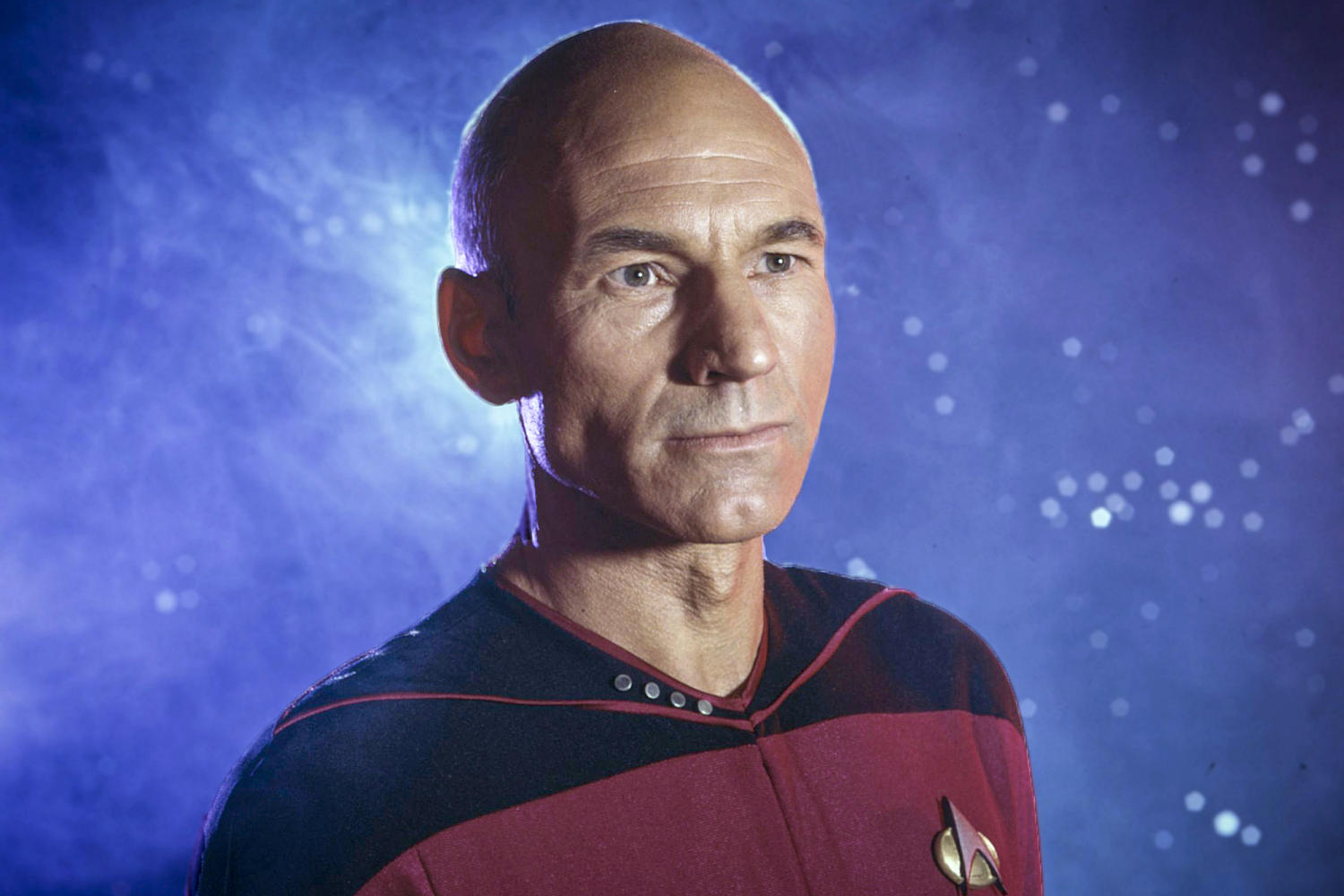
Rumors of Patrick Stewart’s death at age 86 are false, serving instead as the latest example of how automated content farms and legacy media anxieties exploit high-profile actors for algorithmic clicks. The acclaimed British actor, best known for his authoritative turns as Captain Jean-Luc Picard in Star Trek and Professor Charles Xavier in the X-Men franchise, has repeatedly been the target of premature death announcements and fabricated obituary headlines. While the competitor headline frames a sudden, tragic loss, the real story lies in the mechanics of digital media, the vulnerability of aging icons to search-engine manipulation, and the strange economics of the pre-written obituary.
It happens with clockwork predictability. A vaguely worded headline surfaces on a low-tier aggregator or a hijacked social media account, declaring that an 86-year-old legend has passed away. Within minutes, search volume spikes. Fans panic, refreshing their feeds to verify whether the voice that defined a generation of science fiction and Shakespearean theater has actually gone silent. By the time reputable outlets step in to debunk the claim—or before the public realizes the headline was generated by an automated script scraping birthdates and pairing them with morbid templates—the traffic has already been harvested.
The Economics of the Premature Obituary
Modern digital publishing runs on a brutal, unforgiving math. Traffic equals survival, and few search queries generate the immediate, panicked velocity of a celebrity death rumor. When an actor reaches their mid-eighties, their name sits permanently on the "amber list" inside every major newsroom from London to Los Angeles.
Legacy outlets maintain vast vaults of pre-written obituaries—known in the trade as "advance obits" or "canned obits"—for figures of Stewart’s stature. Editors assign veteran writers to draft comprehensive retrospectives years in advance, updating them periodically as the subject takes on a new role or receives another honor. The goal is speed. When a major figure dies, the outlet that publishes a polished, deeply researched retrospective within ninety seconds captures the lion's share of search traffic and social shares.
Sometimes, human error breaches the firewall. Major networks and wire services have accidentally published draft obituaries for living icons—Steve Jobs, Queen Elizabeth II, and Dick Van Dyke have all been prematurely buried by accidental clicks in content management systems.
More often today, however, the culprit is not a sleepy copy editor. It is an algorithmic content mill. Automated networks continuously scan public databases for aging celebrities, calculating statistical probabilities of mortality and testing click-through rates with fabricated death headlines. Because Patrick Stewart was born on July 13, 1940, an automated system operating in late 2026 naturally tags him at 86 years old, feeding the exact age into a synthetic headline designed to bypass casual skepticism. The specificity of the number lends the lie an illusion of journalistic authority.
Why Patrick Stewart Is a Prime Target
Not every octogenarian actor triggers a global internet meltdown when a fake headline drops. The intensity of the reaction to a fabricated Patrick Stewart obituary stems from the unique, dual-pillar architecture of his career. Unlike performers who are famous for a single niche, Stewart bridges two massive, fiercely loyal demographics that rarely overlap in the same way.
First, there is the institutional prestige of the British stage. Before he ever stepped onto the bridge of the Enterprise-D, Stewart spent decades grinding through the trenches of the Royal Shakespeare Company. He was a theater actor's theater actor—disciplined, vocally formidable, and deeply respected by critics who generally looked down their noses at American genre television.
Second, there is the pop-culture immortality of Star Trek and Marvel. When Paramount cast a bald, middle-aged Shakespearean stage veteran as the successor to William Shatner in 1987, industry insiders predicted disaster. Stewart himself kept his suitcases unpacked for the first six weeks of filming Star Trek The Next Generation, fully convinced the show would be canceled before the season ended.
Instead, he redefined what a television action hero could be. Picard was not a swashbuckling cowboy; he was a diplomat, a philosopher, and a reluctant warrior who solved crises with ethics and restraint. Decades later, Stewart repeated the feat as Charles Xavier, grounding the comic-book spectacle of the early X-Men films with genuine gravitas.
That combination creates an unusually protective audience. Fans do not merely admire Stewart's work; they associate his voice and demeanor with moral clarity and stability. When a headline claims he has died at 86, it triggers an immediate emotional reflex, driving millions of people to click, share, and verify before checking the URL.
The Structural Failure of Aggregator Journalism
Look closely at how a false or premature death headline spreads, and you will see the rot at the center of modern news aggregation. In the golden age of print and early broadcast, confirmation required two independent, verified sources—usually a family representative, a publicist, or an official hospital statement.
Today, verification has been replaced by circular citation. One dubious site publishes a headline claiming an actor has died. A second automated scraper picks up the metadata and rewrites the summary, citing "reports circulating online." Within twenty minutes, a dozen low-authority domains are echoing the exact same phrasing, creating the illusion of consensus.
Search engines and social algorithms struggle to distinguish between coordinated truth and coordinated fabrication during the first hour of a breaking news cycle. Because user engagement—clicks, dwell time, frantic comments—spikes dramatically on death rumors, the algorithms interpret the surge as a signal of high relevance and push the false headline even higher into trending feeds.
Even when the URL is broken, missing, or clearly fraudulent, the headline itself does the damage. Most internet users never click past the preview card. They read the name, the two-word summary of the career, and the age, and they internalize the claim as established fact.
The Illusion of the Definitive Retrospective
If the internet keeps trying to write Patrick Stewart’s final chapter prematurely, it is largely because his actual career resists neat categorization. Most obituaries rely on a tidy narrative arc—early struggle, mid-career triumph, late-life victory lap. Stewart’s trajectory refuses to follow that script.
Born into working-class poverty in Mirfield, West Yorkshire, Stewart grew up in a household scarred by domestic violence. His father, Alfred Stewart, was a regimental sergeant major in the British Army who returned from World War II suffering from severe, untreated post-traumatic stress disorder. For young Patrick, the local theater was not an artistic luxury; it was a physical sanctuary from a volatile home life.
That early trauma shaped his entire approach to acting. He learned early on to observe human behavior with clinical precision and to use his voice as an instrument of control. When he eventually reached the Royal Shakespeare Company in 1966, working alongside giants like Peter Brook and Ian Richardson, he brought a blue-collar work ethic to classical verse.
Yet by the mid-1980s, despite critical acclaim in London, Stewart was largely unknown to mainstream global audiences. He had appeared in supporting roles in I, Claudius, Excalibur, and David Lynch's Dune, earning steady paychecks without achieving household recognition. Accepting the role of Picard at age 47 was widely viewed by his British peers as selling out for steady television money.
It turned out to be the smartest financial and artistic gamble of his life. Rather than trapping him in typecasting, Star Trek gave him the leverage to return to the stage on his own terms, headline major studio franchises, and eventually subvert his own dignified image through deadpan comedic turns in Extras, American Dad, and Blunt Talk.
How to Spot a Fabricated Death Hoax in Ten Seconds
Media literacy is no longer optional when navigating celebrity news. Because automated headlines will continue to target aging icons with exact, algorithmically calculated ages, readers have to act as their own fact-checkers before hitting the share button.
Check the Domain and the Metadata
Legitimate breaking news regarding a major public figure never originates on an obscure blog, a broken URL, or a generic content portal. If the story is real, the Associated Press, Reuters, the BBC, and The Hollywood Reporter will have confirmation within minutes, complete with statements from the actor's management or family.
Look for the Missing Attribution
Real obituaries lead with the "where" and the "how" attributed to a specific, named source—a publicist, a spouse, or an official representative. Fake articles rely on passive, evasive phrasing such as "fans are mourning" or "news broke earlier today" without naming a single human being who confirmed the death.
Beware the Hyper-Specific Age Trap
Hoax generators love using exact ages because numbers look like facts. Seeing "dies aged 86" triggers an automatic assumption that a journalist did the math and verified the timeline. Always cross-reference the claim against the actor's official social media channels or verified press representatives before accepting the number as proof.
The Strange Reality of Living Through Your Own Obituary
There is a quiet, dark absurdity to reaching your mid-eighties in the public eye. Every public appearance becomes a referendum on your physical frailty; every quiet month away from the cameras sparks morbid speculation in the corners of the internet.
Stewart himself has addressed aging and mortality with characteristic candor, particularly in his 2023 memoir Making It So and during the final season of Star Trek Picard. Rather than hiding from the realities of getting old, he built them directly into his late-career performances, allowing Picard to be visibly older, slower, and haunted by past mistakes.
That honesty is precisely why the fabricated obituary headlines feel so cheap. A real life—especially one spanning eight decades of stagecraft, political activism, and cultural reinvention—cannot be reduced to an automated click-trap designed to exploit search volume. Until a verified statement comes from the people who actually represent him, the internet's premature farewells remain nothing more than static on the screen.