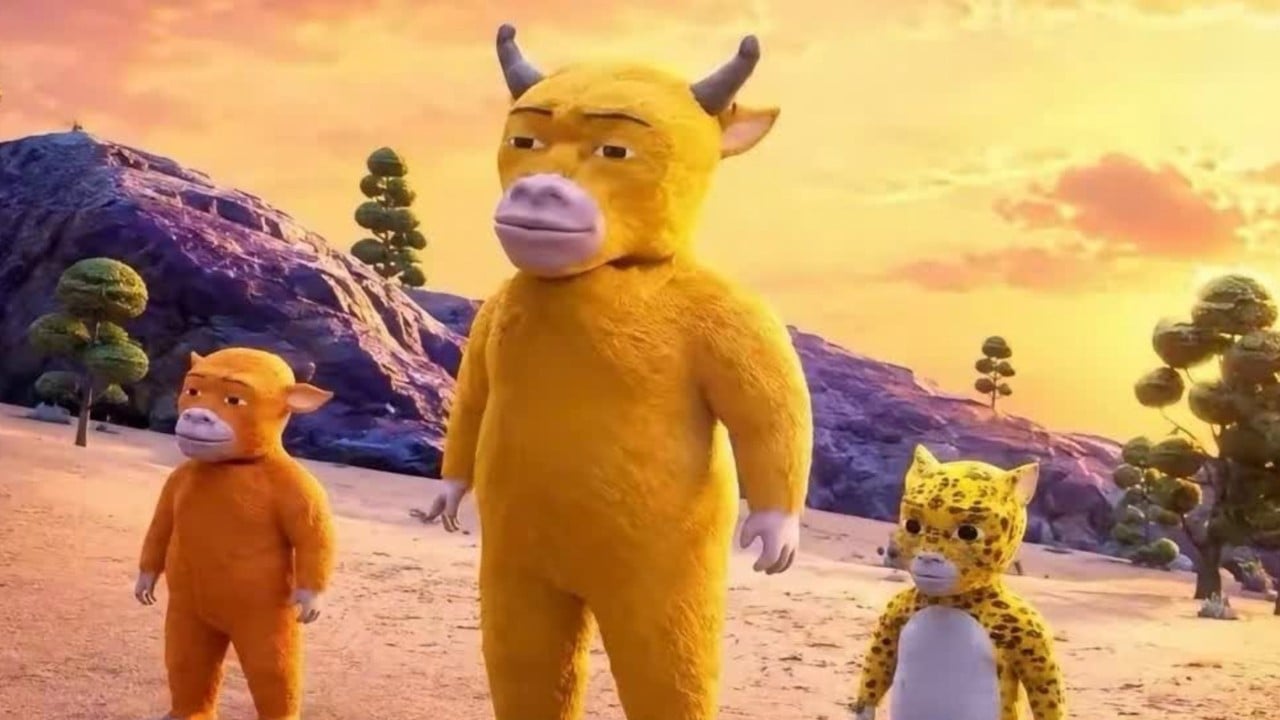
The internet is currently convulsing over a lawsuit filed by the veteran Christian metal band Demon Hunter against Netflix. The grievance is straightforward: the streaming juggernaut's animated global sensation KPop Demon Hunters shares enough linguistic DNA with the band to cause "substantial confusion". Legal analysts and commentators are shaking their heads, pointing out the David versus Goliath asymmetry of a niche metal group taking on a multi-billion-dollar enterprise over trademark rights.
The lazy consensus across the media landscape is that the band has lost its mind, committing commercial suicide by picking a fight it cannot possibly win in court. The narrative paints them as out-of-touch relics facing an existential crisis, stumbling blindly into a legal buzzsaw. Meanwhile, you can read related events here: Dan and Shay Confront the Cost of Success in Young.
That consensus is entirely wrong. Not because the band is guaranteed a massive payout—they are not—but because everyone is looking at a brilliant marketing arbitrage opportunity through the cloudy lens of traditional corporate litigation.
The Flawed Premise of Consumer Confusion
Let us dispense with the polite fiction that trademark law exists to protect delicate consumer sensibilities. Trademark law exists to prevent passing off and commercial misdirection. In their complaint, the band's corporate entity, Hyde Lane, cites choice examples of actual confusion: a fan dropping five hundred dollars on concert tickets expecting a family-friendly animated pop revue only to walk into a punishing heavy metal show, alongside various social media mix-ups. To see the full picture, we recommend the detailed report by Variety.
Critics mock these anecdotes as statistical noise. They miss the point entirely.
In the attention economy, absolute clarity is a tax on growth. For a quarter-century, Demon Hunter built an ultra-loyal, hard-earned cult following in the extreme music underground. They own a specific trademark for recorded music and merchandise registered back in 2022, with live performance filings pending. When a cultural monolith like Netflix drops an atomic bomb of pop-culture IP onto the global consciousness, it oxygenates every adjacent term in the dictionary.
The lazy critique assumes the band wants to force Netflix to scrub its title from existence. That is an expensive pipe dream. What they are actually doing is executing a masterclass in hijacking top-of-funnel discovery.
The Economics of Accidental Traffic
Imagine a scenario where a parent searches ticket platforms for the upcoming live tour associated with the Netflix phenomenon, fat-fingers a search query, and lands directly on the metal band's merchandise page. In legacy business models, this is an error. In the modern digital marketplace, it is high-intent top-of-funnel traffic that would otherwise cost a fortune in targeted programmatic ad spend to acquire.
The band's monthly Spotify listener count sits comfortably in the hundreds of thousands, while the animated franchise commands tens of millions. The overlap in actual genre taste is practically zero. A teenager headbanging to aggressive industrial-tinged metal is rarely looking for sugary bubblegum pop vocals, and vice versa.
Yet, commercial proximity breeds curiosity. By launching this lawsuit, the band has successfully tethered its legacy brand to the most searched, most talked-about intellectual property on the planet. Every major entertainment blog, tech outlet, and news aggregator covering the legal filing is running the band's name directly alongside a multi-billion-dollar Netflix blockbuster.
You cannot buy that kind of cross-demographic earned media. Public relations agencies burn millions of dollars trying to engineer cross-over relevance, and here is a legacy metal band getting it for the price of a federal filing fee.
What Everyone Gets Wrong About the Legal Strategy
Legal purists argue that the lawsuit is weak because the underlying goods and services are distinct—animated films and streaming versus heavy metal albums and black t-shirts. But trademarks do not exist in a vacuum when expansion enters the chat. Netflix and its live-tour promoter, AEG Presents, are rolling out massive global live tours, branded merchandise lines, and interactive experiences that cross straight into the band's traditional territory.
When a streaming service starts operating as a live music promoter and merchandise vendor on a massive international scale, the legal walls separating "movies" from "concerts" begin to crumble.
Even if a judge ultimately tosses the injunction request or scales back the damages demand, the strategic objective has already been secured. The band has established legal priority as a senior user of the mark in specific classes, creating a permanent thorn in the side of corporate legal teams who must now account for this friction in future licensing or expansion deals.
The Unconventional Playbook for Niche Brands
If you run a legacy brand facing sudden encroachment from a heavily funded tech or entertainment giant, stop whining about fair play. The market is entirely indifferent to your history.
- Weaponize the Collision: Do not hide from the confusion. Lean into the algorithmic cross-contamination. When algorithms mix up your metadata with a giant's, optimize your landing pages to capture the spillover.
- Trade Litigation for Leverage: Lawsuits against goliaths are rarely won in the courtroom; they are leveraged at the settlement table for co-marketing concessions, distribution partnerships, or high-value cross-promotional carve-outs.
- Turn Critics into Customers: Take the bewildered parents who bought the wrong tickets and give them a masterclass in extreme music culture. Convert the accident into an introduction.
The media wants you to believe this lawsuit is an act of desperation by an aging band shouting at clouds. It is actually a ruthless, pragmatic land grab for attention in a world where being ignored is the only true death sentence.
Stop playing defense against cultural titans. Learn how to ride their wake.