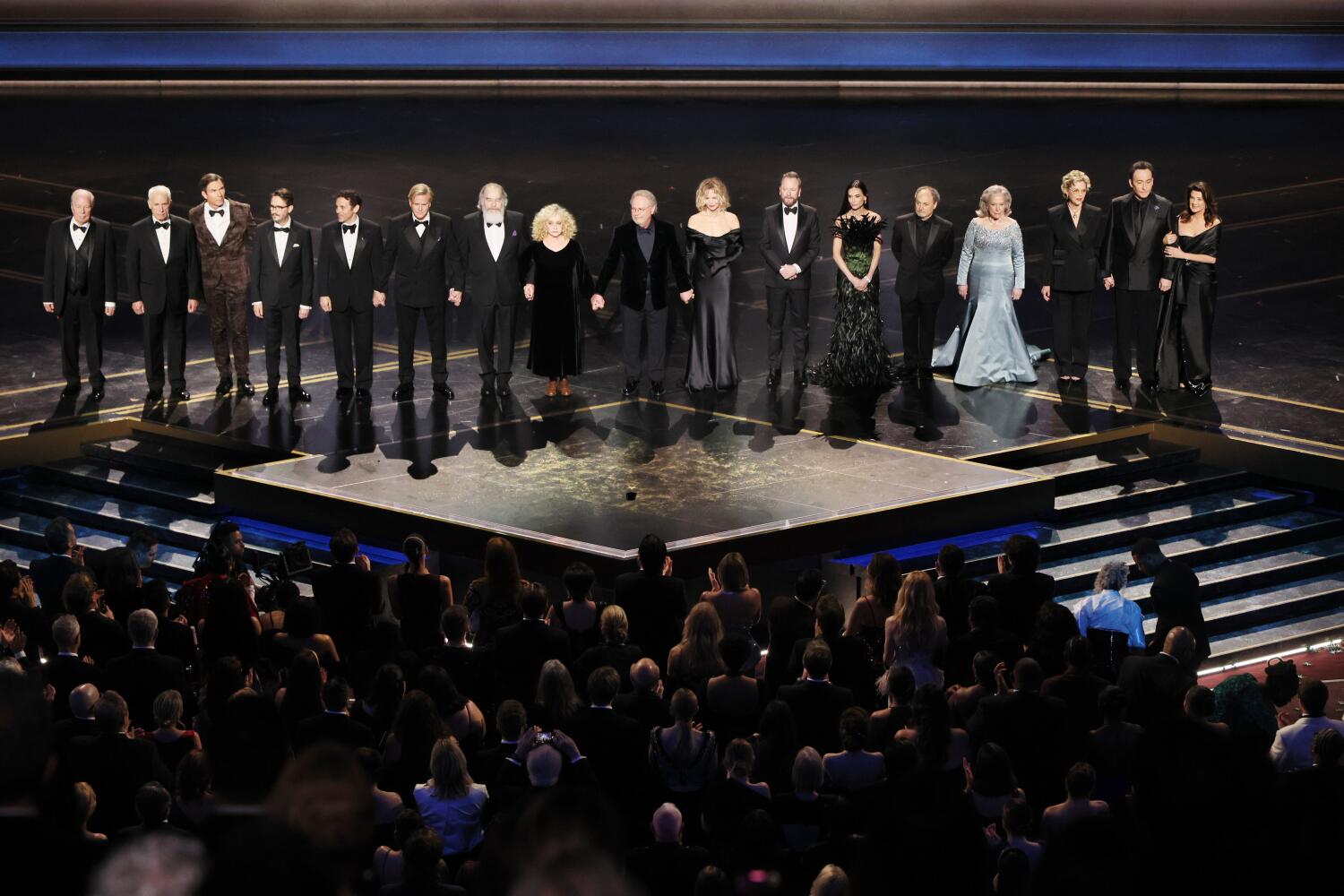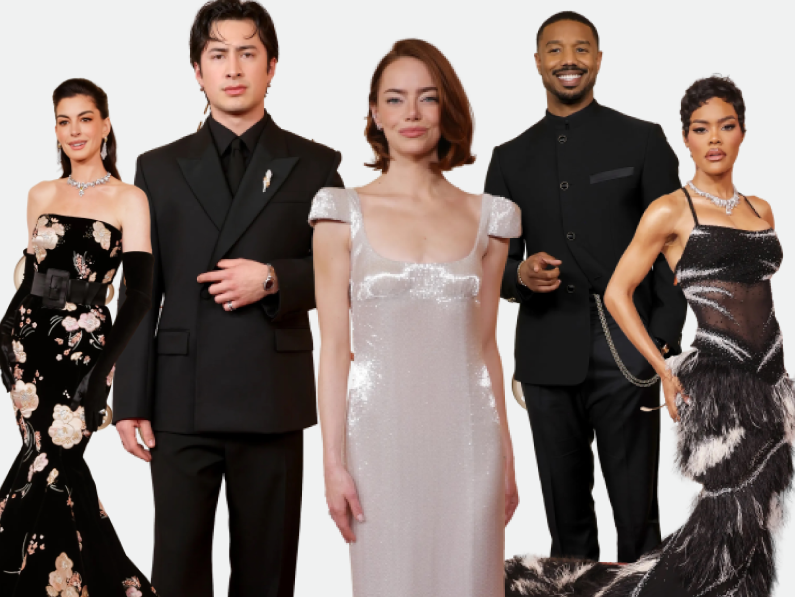
The red carpet of the 98th Academy Awards serves as the primary liquidity event for global fashion equity. While observers categorize the evening through the lens of "best dressed" lists, the reality is a sophisticated deployment of archival preservation, brand positioning, and the tactical use of human silhouettes to signal market dominance. Recreating these looks requires more than an imitation of fabric; it necessitates an understanding of the structural engineering and color theory that convert a static garment into a viral cultural asset.
The Triad of Visual Authority
To analyze why certain garments succeed where others fail, we must apply a framework of three distinct variables: Chromatic Saturation, Architectural Integrity, and Historical Weight. For a deeper dive into this area, we suggest: this related article.
1. Chromatic Saturation and the Digital Eye
The 2026 red carpet saw a shift toward "Optic Primaries"—colors specifically calibrated for high-dynamic-range (HDR) mobile displays. We observed a departure from muted pastels in favor of high-chroma magentas and deep cobalt. The mechanism at work here is the Contrast Ratio. A garment must possess enough internal contrast to remain legible against the chaotic, high-intensity flash photography of the step-and-repeat.
When a look fails, it is often due to "Value Compression," where the color of the dress bleeds into the skin tone of the wearer or the red of the carpet, rendering the silhouette an undifferentiated mass in digital previews. To get more information on the matter, comprehensive coverage can also be found at Vanity Fair.
2. Architectural Integrity and Structural Engineering
The most successful looks this year utilized internal scaffolding—corsetry and 3D-printed sub-structures—to defy natural drape. This isn't mere tailoring; it is the application of tension and compression.
- The Cantilever Effect: Gowns that featured gravity-defying shoulder or hip elements relied on carbon-fiber inserts.
- The Columnar Foundation: Traditional silhouettes were discarded for "Hyper-Structured" forms that maintain their shape regardless of the wearer’s movement.
3. Historical Weight as Social Currency
Luxury is increasingly defined by the "Archival Multiplier." Celebrities wearing 1990s couture or early 2000s "deadstock" are leveraging the scarcity of the past to build modern relevance. This creates a barrier to entry; you cannot simply buy the look, you must have the institutional access to borrow it from a vault.
Deconstructing the Top Tier: Case Studies in Strategy
The Neo-Minimalist Pivot
One dominant trend involved the "Stripped Aesthetic." This is a high-risk strategy that relies entirely on the Precision of Fit. Without sequins or feathers to hide behind, the garment’s seams become the primary narrative. The logic here is "Subtraction as Distinction." By removing noise, the wearer forces the viewer to focus on the technical execution of the textile—often heavy silks or liquid metallics that require bespoke bias-cutting.
Recreation Logic: To replicate this at a consumer level, the focus must shift from the garment itself to the Tailoring Overhead. A $200 mass-market dress with $300 of professional structural alterations will outperform a $2,000 designer piece off the rack. The objective is to eliminate "Fabric Drag"—the unsightly bunching at the waist or knees that signals a lack of customization.
The Maximalist Volume Play
Conversely, several actors utilized "Volumetric Dominance." By occupying more physical space on the carpet, they monopolize the camera lens. This is a deliberate play on Visual Real Estate. These garments often utilized tiered tulle or architectural ruffles.
Recreation Logic: The bottleneck in recreating volume is weight. Industrial-grade crinoline is heavy and heat-retentive. For a functional version, look for "Horsehair Braid" finishes on hems. This provides the necessary rigidity to lightweight fabrics, allowing the hem to "bounce" and hold a bell shape without the need for ten layers of netting.
The Physics of Red Carpet Grooming
The "look" is a composite of the garment and the biological canvas. In 2026, we saw the maturation of "Subsurface Radiance"—a skin-prep methodology that prioritizes light refraction over matte coverage.
The Refractive Index of Skin
High-definition cameras (8K and beyond) detect the depth of makeup layers. The "pancake" look of previous decades has been replaced by Strategic Hydration.
- Base Layer: Hyaluronic acid cross-polymers that hold moisture in the stratum corneum.
- Reflective Layer: Mica-based primers applied only to the "High Points" (zygomatic bone, supraorbital ridge, and philtrum).
This creates a "Halo Effect" where the skin appears to emit light rather than just reflecting it. To achieve this, consumers should abandon heavy foundations in favor of "Spot Concealing" combined with a high-viscosity face oil. The goal is a skin texture that maintains its natural pores while evening out the tonal variance.
The Logistics of Personal Brand Replication
If the red carpet is the "Pro Model," the consumer version is the "Commercial Adaptation." This transition often fails because of a misunderstanding of Material Science.
Textile Substitution Framework
Designers use 40-momme silk; fast fashion uses polyester satin. These materials behave differently under tension.
- Sheen Variance: Polyester has a high-frequency plastic shine that looks "cheap" under artificial light. Silk has a low-frequency, deep luster.
- Drape Memory: Natural fibers "remember" their shape after being steamed. Synthetics often revert to their folded state or melt under high heat.
Strategic Fix: If you cannot afford high-grade silk, opt for Acetate or Rayon. These semi-synthetics mimic the drape and thermal properties of natural fibers much more effectively than petroleum-based polyesters.
The Accessory Anchor
The "Center of Gravity" in a red carpet look is often a singular, high-value accessory. In 2026, we saw a resurgence of "Architectural Jewelry"—pieces that are integrated into the garment rather than worn on top of it.
- The Hardware Constraint: Recreating this requires moving away from "Fast Jewelry." Use vintage brass or heavy-plated metals that have actual mass. The way a necklace sits against the collarbone is determined by its Weight-to-Volume Ratio. If it’s too light, it shifts and destroys the symmetry of the photo.
Critical Limitations and Market Realities
It is vital to acknowledge the "Couture Gap." A red carpet look is a prototype. Like a concept car, it is not designed for durability or extended wear. It is designed for a 60-second walk and a 10-minute seated interview.
- The Mobility Trade-off: Many of the "Best Dressed" candidates were physically unable to sit down or breathe deeply.
- The Lighting Context: A look that works under 50,000 watts of professional lighting will often look garish or "theatrical" in a standard event space.
When adapting these styles, you must recalibrate for the Ambient Light Environment. If your event is dim, increase the metallic content of your fabric. If it is outdoors, prioritize the "Movement Fluidity" of the textile over its static structure.
The Strategic Deployment of Trend Data
The 2026 Oscars signals a definitive move toward Aggressive Femininity—a blend of soft textures with hard, masculine tailoring. This "Gender-Fluid Synthesis" is the most significant takeaway for the coming fashion cycle.
To capitalize on this, the move is to invest in high-quality blazers with exaggerated, padded shoulders, paired with sheer or ultra-soft interior layers. This creates a visual tension between "Armor" and "Vulnerability."
The final tactical play: disregard the specific brand names mentioned in the tabloids. Focus instead on the geometric ratios—the height of the slit relative to the hem, the width of the shoulder relative to the waist, and the saturation level of the primary color. That is the blueprint for aesthetic dominance in the post-Oscar landscape. Match the math, and the style will follow.