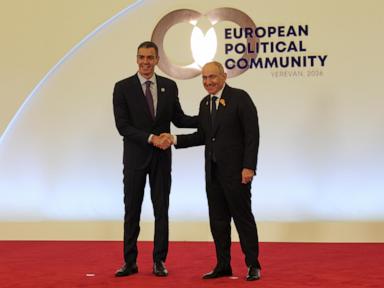
Yerevan is no longer just looking west; it is sprinting. The recent diplomatic gathering in the Armenian capital marks a definitive break from decades of Kremlin-centered security. While the surface-level narrative focuses on democratic shared values, the underlying reality is a desperate, calculated gamble to survive a predatory regional neighborhood. Prime Minister Nikol Pashinyan is betting the nation's entire sovereignty on the hope that Brussels can provide what Moscow no longer will: a guarantee of physical and economic existence.
The shift is born of necessity. For years, Armenia relied on the Collective Security Treaty Organization (CSTO) as its ultimate shield. That shield shattered during the 2020 and 2023 Azerbaijani offensives. When Russian peacekeepers stood by as Nagorno-Karabakh was dissolved, the psychological contract between Yerevan and Moscow died. Now, Armenia seeks a new protector, but the European Union is a civilian power, not a military one. This creates a dangerous gap between Armenia’s security needs and Europe’s actual capabilities.
The Economic Divorce from the Ruble
Armenia’s pivot is not merely political. It is a high-stakes restructuring of a national economy that has been tethered to Russia since the fall of the Soviet Union. Currently, Russia remains Armenia’s largest trading partner, accounting for over 35% of its exports. Moving toward the EU means untangling a web of energy dependencies and supply chains that Moscow can—and likely will—use as a weapon.
We have seen this playbook before. When Georgia and Ukraine attempted similar pivots, the Kremlin responded with energy blackouts and "sanitary" bans on agricultural products. Armenia is particularly vulnerable because Russia’s Gazprom owns the majority of its internal gas distribution network. To counter this, the EU is dangling a multi-billion euro investment package aimed at diversifying Armenia’s energy grid and supporting small businesses.
The goal is to flip the script. If Armenia can integrate into the European Single Market, it gains access to 450 million consumers. However, the standards for entry are grueling. Armenian producers must overhaul their entire quality control infrastructure to meet EU regulations. This is a decades-long project being compressed into a few years of emergency reform.
The Security Vacuum and the French Connection
If the EU provides the carrot of economic stability, the military question remains the stick that could break Armenia. Brussels does not have an army. To bridge this, Yerevan is bypassing the collective EU structure to ink bilateral defense deals with individual member states, most notably France.
The arrival of French armored vehicles and radar systems on Armenian soil represents a psychological shift. It signals to Baku and Ankara that the monopoly on regional influence is over. But there is a catch. Modern warfare, as seen in the plains of Ukraine, requires massive quantities of ammunition and integrated air defenses. A few dozen French Bastion vehicles are a statement, not a wall.
Armenia is currently trying to reform its military doctrine from a Soviet-style top-down command to a more flexible, Western-aligned model. This requires more than just new hardware. It requires a complete cultural overhaul of the officer corps, many of whom were trained in Russian academies. The risk of internal friction—or even a pro-Russian coup attempt—remains a constant shadow over the Ministry of Defense.
The Border Paradox
One of the most significant outcomes of the recent summit was the expansion of the EU Mission in Armenia (EUMA). These are unarmed observers patrolling the tense border with Azerbaijan. Their presence is meant to act as a "tripwire" for international condemnation.
Critics argue this is theater. Azerbaijan has shown a willingness to ignore international norms when it perceives a strategic advantage. If a major border escalation occurs, an unarmed observer with a clipboard cannot stop a T-90 tank. The value of the EUMA is purely political; it forces the EU to remain engaged in a conflict it would otherwise prefer to ignore. It makes Armenia’s security a European problem, at least on paper.
Diversifying the Tech Sector
Beyond brandy and apricots, Armenia is betting on its burgeoning tech sector to provide the hard currency needed to fund its Western shift. Yerevan has quietly become a hub for software development and engineering, partly fueled by the influx of Russian tech exiles who fled mobilization.
The government is now trying to institutionalize this growth. By aligning with EU data protection laws and intellectual property standards, Armenia hopes to attract major European tech firms to set up regional headquarters. This would move the country away from being a "corridor" and toward being a "destination."
The math is simple:
- Russia trade consists mostly of raw materials and re-exported goods.
- EU trade offers the potential for high-value service exports.
- The transition requires a massive influx of capital that Armenia does not currently possess.
The Turkish Variable
No discussion of Armenia’s future can ignore the neighbor to the west. Normalizing relations with Turkey is the "holy grail" of Armenian diplomacy. A functional border with Turkey would instantly provide Armenia with a land bridge to Europe, bypassing the need to rely on the unstable routes through Georgia or the expensive air corridors.
Ankara, however, remains tightly synced with Azerbaijan’s interests. The demand for a "Zangezur Corridor"—a sovereign passage through Armenian territory to connect Azerbaijan to its exclave—is a non-starter for Yerevan. Armenia views this as a violation of sovereignty, while Azerbaijan views it as a condition for peace. The EU is attempting to mediate this by proposing "Crossroads of Peace," a plan where all regional borders open under the host country’s jurisdiction. It is a logical solution that lacks a willing partner in Baku.
The High Cost of Neutrality
For decades, Armenia practiced "multi-vector" diplomacy, trying to please both Washington and Moscow. That era is over. The war in Ukraine has forced a binary choice. By hosting EU summits and participating in joint exercises with the U.S. military, Armenia has effectively chosen a side.
Moscow’s response has been uncharacteristically quiet, which is perhaps the most concerning sign. The Kremlin usually reacts to "lost" satellites with sudden, violent shifts in policy. Whether this takes the form of a manufactured energy crisis this winter or a green light for further Azerbaijani incursions remains to be seen.
Armenia is not just changing its foreign policy; it is attempting to change its geography. It is trying to become an island of European democracy in a sea of authoritarianism. The success of this move depends on whether the EU’s commitment is a temporary geopolitical jab at Russia or a long-term strategic investment.
Western leaders speak of "European aspirations," but for the person on the street in Yerevan, the aspiration is simply to not be erased from the map. The summit in Yerevan was a celebration, but the morning after brings the cold reality of a nation that has burned its bridges behind it while the new bridge ahead is still being built.
Armenia must now secure its borders with more than just European observers and French radars. It must build a state that is too valuable to lose and too difficult to swallow. The window for this transformation is narrow, and the neighbors are watching the clock.