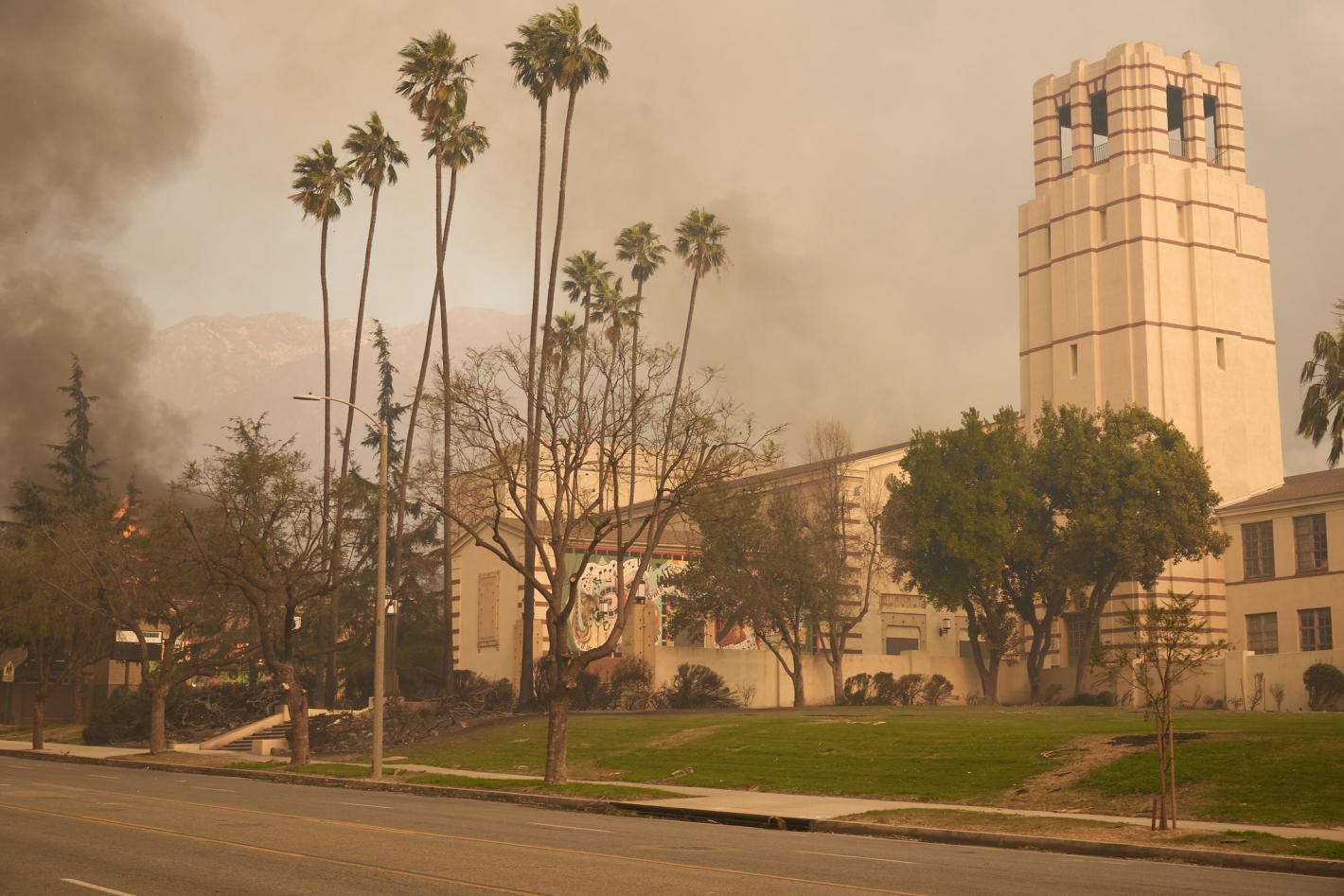
The smoke has cleared from the San Gabriel foothills, but the silence left behind in Altadena is louder than the fire ever was. A year after the embers cooled, the narrative of "resilience" often pushed by local boosters feels increasingly hollow to those who actually lost their livelihoods. Resilience is a convenient word for those who didn't lose their manuscripts, their studios, or their sense of safety. For the writers and artists tucked into the canyons of this unincorporated patch of Los Angeles County, the recovery isn't a straight line. It is a jagged, exhausting struggle to reclaim a voice that was literally choked by soot.
The fire didn’t just burn timber. It scorched the psychological infrastructure that makes creative work possible in a high-risk wildland-urban interface. When five local writers sat down to reflect on the anniversary of the disaster, the conversation moved quickly past the initial shock of evacuation. They began to dismantle the myth that tragedy is a natural catalyst for great art. For many, the trauma of the fire acted as a profound silencer, proving that the "starving artist" trope is a lie. You cannot create when your nervous system is stuck in a loop of checking wind speeds and humidity levels.
The Architecture of Creative Displacement
Most people view a wildfire through the lens of property damage. They see charred beams and melted siding. But for a writer, the loss of a home is the loss of a cognitive map. Altadena has long served as a refuge for the literary set because it offers a specific kind of isolation—a proximity to the city without the constant hum of its anxieties. When the fire breached those canyon walls, it destroyed more than desks and laptops; it destroyed the sanctity of the "deep work" environment.
The displacement that follows a fire is rarely short-term. Insurance battles and the hunt for affordable rentals in a predatory housing market consume the mental bandwidth required for complex narrative construction. One writer recounted how the rhythm of a novel-in-progress was shattered not by the flames, but by the subsequent six months of living out of a suitcase in a Glendale motel. The prose became clipped, fearful, and eventually stopped altogether. This is the hidden tax of the climate crisis on our culture. We are losing stories because the people who write them are too busy surviving.
When the Muse Suffocates
There is a persistent, almost romantic notion that suffering produces depth. In reality, catastrophe often produces a peculiar kind of creative paralysis. The writers in Altadena found that the immediate aftermath of the fire was characterized by a frantic need to document the loss, followed by a long, desert-like period of emptiness.
The sensory triggers are the hardest part to manage. The smell of a neighbor’s fireplace or the sight of a hazy orange sunset can trigger a physiological "freeze" response. How do you write a domestic scene when the air outside smells like your previous life burning? This isn't just writer's block. It is a neurological byproduct of environmental trauma. The brain prioritizes immediate safety over abstract thought.
The Myth of the Clean Slate
We love the idea of the phoenix rising from the ashes. It makes for a great headline. But the "clean slate" provided by a fire is rarely clean. It is cluttered with debris, toxic ash, and the bureaucratic nightmare of rebuilding in a zone that many insurers are now abandoning. For the Altadena five, the realization that their neighborhood might never be "safe" again changed the texture of their writing.
The work coming out of the foothills now is darker and more preoccupied with impermanence. There is a sense of urgency that borders on mania. If the house can burn at any moment, every sentence must be vital. But that level of pressure is unsustainable. You cannot live at a high frequency forever without burning out, much like the hillsides that are now stripped of their stabilizing root systems.
The Financial Erosion of the Foothills
We have to talk about the money. Altadena’s creative community is being squeezed by a combination of rising premiums and the literal cost of fire hardening. For an independent author, a $4,000 jump in annual homeowners insurance isn't just an inconvenience; it’s the difference between taking a year to finish a book or taking a soul-sucking corporate copywriting gig to stay afloat.
The industry analyst in me sees a clear trend: the "creative class" is being priced out of the very environments that inspired them. If only the wealthy can afford to live in the beauty of the San Gabriels, the art produced there will become homogenized and detached. We are seeing a gentrification by fire. Those who can't afford the retrofitting or the skyrocketing insurance rates are moving to the high desert or out of state, taking their perspectives with them.
Data of the Burn
To understand the scale, look at the land use. Altadena sits in a "Very High Fire Hazard Severity Zone." This isn't a designation that goes away once the rain starts.
- Insurance Non-Renewals: Up 40% in foothill communities over the last three years.
- Reconstruction Costs: Increased by 25% due to supply chain issues and specialized fire-code requirements.
- Mental Health Impact: A significant spike in reported anxiety disorders among residents in burn scars.
These numbers represent the death of a certain kind of California dream. The writers who stayed are now the stewards of a disappearing way of life. They are writing against the clock, and against the climate.
Reclaiming the Narrative from the Flames
The most hard-hitting realization from these survivors is that the fire never really ends. It lives in the "fire weather" warnings that pop up on their phones every October. It lives in the scorched oaks that still stand like skeletal sentinels on the ridges.
To survive creatively, these writers had to stop waiting for things to go back to "normal." They had to incorporate the fire into their identity. One poet described it as "learning to write with charcoal." They are finding beauty in the chaparral that grows back first—the hardy, scrubby plants that know how to handle the heat.
This isn't the romanticized resilience of a Hallmark card. It is a grittier, more cynical form of endurance. It involves acknowledging that the landscape is hostile and choosing to stay anyway. It involves writing through the cough and the fear.
The lesson for the rest of us is that the creative spirit is incredibly durable, but it is not invulnerable. It requires a stable foundation. As we watch more communities face the same fate as Altadena, we have to ask ourselves what we are willing to lose. If we don't find ways to support the human infrastructure of these places—the artists, the thinkers, the storytellers—then the only thing that will survive the next fire is the silence.
Go to your local bookstore. Buy a book by someone who lives in a zip code that has burned. Read their words not as a curiosity, but as a transmission from the front lines of a changing world. They are telling us what happens when the floor drops out, and we should be paying very close attention.