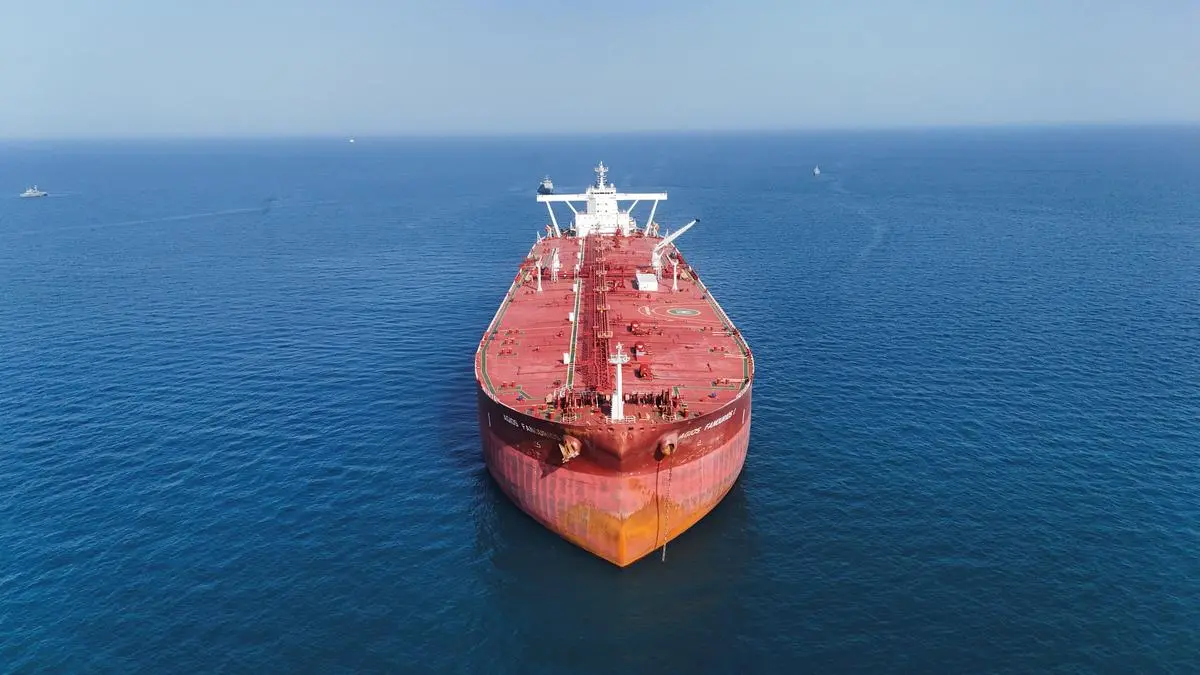
The Islamic Revolutionary Guard Corps (IRGC) has transitioned from reactive maritime harassment to a structured regulatory blockade, signaling a shift in how Iran exerts leverage over the global energy supply chain. By imposing rigorous new navigation protocols under the guise of environmental and safety compliance, Tehran is effectively testing a "grey zone" sovereignty model that bypasses traditional international maritime law. This strategic pivot serves as a direct counter-pressure mechanism against US-led sanctions on Iranian oil exports, transforming the Strait of Hormuz into a programmable toll gate where political alignment dictates operational friction.
The Architecture of Navigational Friction
The IRGC’s new regulatory framework functions as a non-kinetic blockade. Instead of using kinetic force to sink vessels—which would trigger a decisive military escalation—the IRGC utilizes administrative and procedural delays to increase the "Cost of Passage" (CoP). This cost is not measured in currency but in operational risk, insurance premiums, and transit time.
The Three Pillars of Administrative Interdiction
- Mandatory Communication Protocols: Requiring all commercial vessels to identify cargo, destination, and ownership through IRGC-controlled radio channels rather than the standard Omani or international monitoring stations.
- Selective Safety Inspections: Utilizing environmental concerns or "collision risk" as a legal pretext to board and detain tankers associated with nations enforcing US sanctions.
- Route Deviation Mandates: Forcing vessels to deviate from the established Traffic Separation Scheme (TSS) into Iranian territorial waters, thereby stripping them of "innocent passage" protections under the United Nations Convention on the Law of the Sea (UNCLOS).
This framework allows the IRGC to maintain a "permanent state of harassment" that remains just below the threshold of open warfare. By institutionalizing these rules, Tehran shifts the burden of escalation onto the United States and its allies. If the US Navy intervenes to protect a commercial vessel, Iran frames the action as an infringement on its sovereign right to regulate its coastal waters.
The Cost Function of Maritime Chokepoint Control
The efficacy of the IRGC’s strategy is quantifiable through the volatility of the tanker market. The Strait of Hormuz handles approximately 21 million barrels of oil per day, representing roughly 21% of global petroleum liquid consumption. Even a marginal increase in transit friction creates a disproportionate impact on global energy security.
The economic impact is driven by three primary variables:
- War Risk Premiums (WRP): Insurance underwriters adjust premiums based on the perceived probability of seizure. Following the imposition of strict navigation rules, WRPs for the Persian Gulf typically spike by 10% to 50%, adding hundreds of thousands of dollars to the cost of a single voyage.
- Demurrage Rates: When a vessel is delayed for "inspection" or diverted, the daily hire rate (demurrage) continues to accrue. For a Very Large Crude Carrier (VLCC), these costs can exceed $80,000 per day.
- Supply Chain Decoupling: Persistent instability in the Strait forces long-term buyers to seek alternatives, such as West African or US shale oil, even if the per-barrel price is higher, simply to mitigate the risk of supply interruption.
Strategic Divergence from UNCLOS Norms
The IRGC’s assertion of authority creates a fundamental legal conflict. UNCLOS Article 17 grants ships of all states the right of innocent passage through territorial seas. However, Iran—which has signed but not ratified UNCLOS—frequently cites its own domestic maritime laws to justify interference.
The Sovereignty Trap
Iran argues that the Strait of Hormuz does not constitute "international waters" but rather overlapping territorial seas of Iran and Oman. Under this interpretation, the IRGC claims the right to enforce "non-innocent" status on any vessel it deems a threat to national security or the environment. The "US blockade" on Iranian ports is used as the moral and legal justification for this reciprocal restriction. By defining the US sanctions as "economic warfare," Iran classifies the presence of US-aligned tankers as a hostile act, thereby voiding their right to innocent passage.
This creates a bottleneck in international law. The US Navy operates under the "Freedom of Navigation" (FON) doctrine, which relies on the physical assertion of rights. The IRGC operates under "Regulatory Denial," which relies on the bureaucratic assertion of rights. The friction between these two doctrines occurs at the point of boarding.
Tactical Implementation and Drone Integration
The enforcement of these new navigation rules is not handled by the traditional Iranian Navy (Artesh) but by the IRGC Navy (IRGCN). The IRGCN utilizes a swarm-based operational model, which is better suited for enforcing administrative rules than a blue-water fleet.
The Enforcement Hierarchy
- Fast Inshore Attack Craft (FIAC): These vessels provide the physical presence required to intercept tankers. Their speed and maneuverability allow them to surround a target, making it difficult for larger escort destroyers to intervene without risking collateral damage.
- Unmanned Aerial Vehicles (UAVs): Platforms like the Mohajer-6 and Shahed series provide 24/7 persistent surveillance. They are used to identify vessels hours before they reach the mouth of the Strait, allowing the IRGC to pre-select targets based on ownership data.
- Coastal Missile Batteries: While rarely fired, the presence of Noor and Ghadir anti-ship cruise missiles along the coast provides the "escalation dominance" required to ensure commercial vessels comply with IRGC radio commands.
The second limitation of this strategy is its reliance on the passivity of the global shipping industry. If shipowners collectively refuse to comply with IRGC radio demands, the IRGC is forced to either let them pass—eroding their authority—or seize them, which risks a kinetic response from the International Maritime Security Construct (IMSC).
Energy Geopolitics as a Zero-Sum Game
The IRGC’s tightening grip on the Strait is a direct response to the "Maximum Pressure" legacy and the ongoing enforcement of oil sanctions. Tehran’s logic follows a simple causal chain: If Iran cannot export its oil through the Strait, it will ensure that the cost of others doing so becomes prohibitively high.
This creates a "Security Dilemma" for regional actors like Saudi Arabia and the UAE. While they possess pipelines that bypass the Strait (such as the East-West Pipeline in Saudi Arabia and the ADCOP pipeline in Abu Dhabi), these alternatives lack the capacity to handle the full volume of Gulf exports.
- Saudi East-West Pipeline: Capacity of 5 million barrels per day (bpd).
- ADCOP (UAE): Capacity of 1.5 million bpd.
- Total Bypass Capacity: Roughly 6.5 million bpd.
Since total exports exceed 20 million bpd, the "Bypass Strategy" is insufficient to nullify Iranian leverage. The Strait remains the only viable exit for nearly 70% of the region’s crude. The IRGC understands this math perfectly. Their navigation rules are designed to exploit the delta between total production and bypass capacity.
The Mechanism of Selective Enforcement
Precision is the hallmark of the current IRGC strategy. They do not target all vessels equally. Instead, they apply a "Risk Tiering" system:
- High Risk: Vessels flagged or owned by nations actively seizing Iranian tankers or enforcing sanctions (e.g., US, UK, Greece).
- Medium Risk: Vessels carrying cargo to or from "unfriendly" regional competitors.
- Low Risk: Vessels destined for China or India, Iran’s primary remaining oil customers.
This selective enforcement ensures that the IRGC does not alienate its few remaining economic partners while still inflicting maximum pain on its adversaries. It transforms the Strait from a public good into a geopolitical tool.
Future Projections and Strategic Play
The institutionalization of IRGC navigation rules suggests that the Strait of Hormuz will not return to a "status quo" of free transit even if sanctions are partially lifted. Tehran has discovered that regulatory friction is a more effective and sustainable tool than overt kinetic threats.
For global energy markets, the strategic play is no longer just about monitoring for "explosions" or "seizures," but about monitoring the "regulatory climate" of the IRGCN. The primary indicator of future escalation will be the frequency of mandatory "safety inspections" and the expansion of the IRGC’s declared "Environmental Protection Zones."
Investors and maritime operators must shift from a tactical response mindset to a structural risk model. This requires:
- Diversification of Transit Windows: Avoiding predictable transit patterns that allow IRGC drone assets to pre-calculate interception points.
- Legal Hardening: Updating charter party agreements to clearly define "Regulatory Force Majeure" in the event of IRGC administrative detention.
- Enhanced Electronic Countermeasures: Utilizing advanced AIS (Automatic Identification System) protection to prevent spoofing or "ghosting" by IRGC shore stations.
The IRGC has successfully weaponized the bureaucracy of the sea. Until an international consensus establishes a hard counter to "grey zone" maritime regulation, the Strait of Hormuz will function as a sovereign Iranian chokehold, where the law of the sea is secondary to the requirements of the Islamic Republic’s survival.