The seizure of an Iranian-linked tanker by U.S. forces within the Strait of Hormuz is not merely a tactical maneuver; it is a high-stakes stress test of international maritime law versus regional power projection. The six-hour standoff reveals a specific operational calculus where the physical capture of a vessel is secondary to the management of "Escalation Dominance." This event demonstrates how modern naval interdiction functions as a complex system of signaling, kinetic readiness, and legal maneuvering. To understand the mechanics of the raid, one must look past the headlines and examine the three structural pillars of the operation: the geography of the chokepoint, the protocol of Visit, Board, Search, and Seizure (VBSS), and the psychological threshold of a kinetic response.
The Geography of Constraints
The Strait of Hormuz serves as the ultimate bottleneck for global energy markets, forcing 20% of the world’s petroleum through a passage where the shipping lanes are only two miles wide in each direction. This compressed geography removes the luxury of distance. In this environment, any interdiction becomes an immediate, close-quarters confrontation.
The physical constraints dictate the Reaction Window. When U.S. forces move to intercept a tanker, they are operating within the literal and metaphorical "radar shadow" of Iranian coastal defense cruise missiles and fast-attack craft (FAC). The proximity to the Iranian shoreline means that the time between a radar lock and a missile impact is measured in seconds, not minutes. This geographic reality forces the U.S. Navy to maintain a specific defensive posture:
- Aegis Integration: Using the SPY-1 or SPY-6 radar systems to create a 360-degree protective bubble over the boarding party.
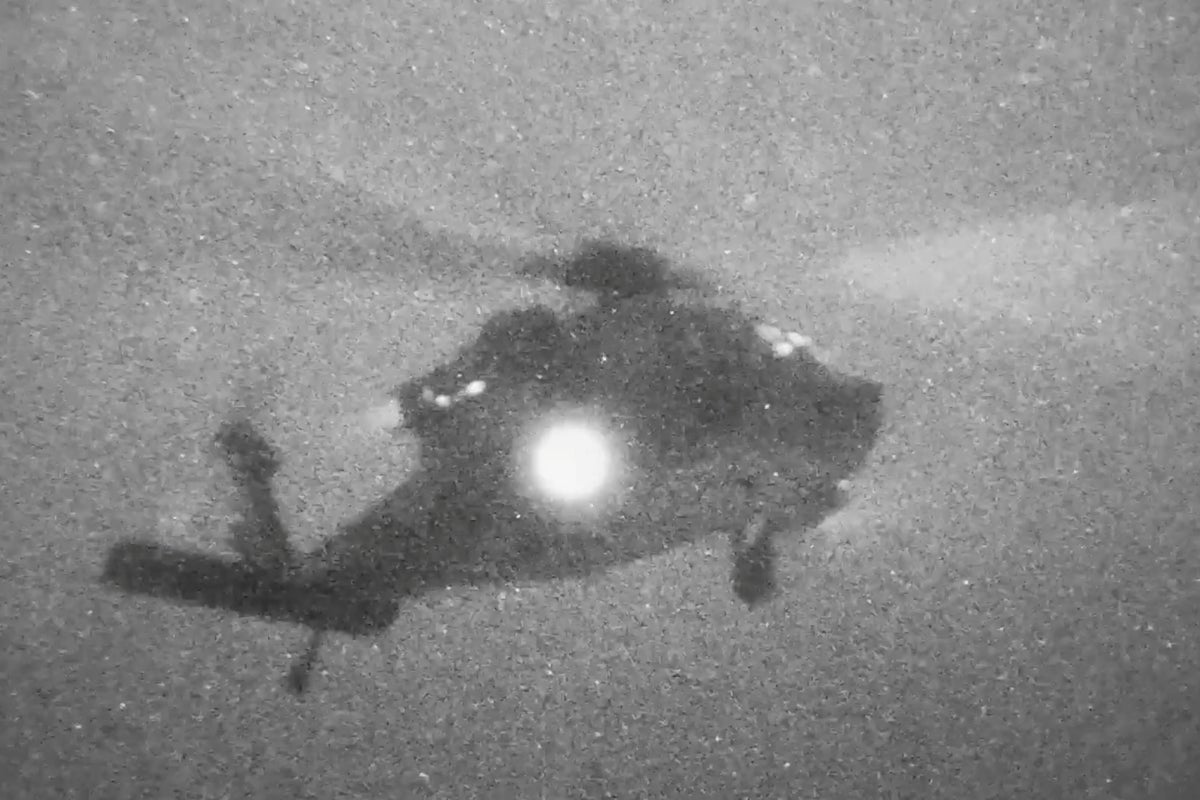
- Overhead Persistence: Utilizing MH-60S Seahawk helicopters or MQ-9 Reaper drones to provide real-time visual telemetry, ensuring the boarding team is not flanked by submerged or low-profile threats.
- Stand-off Distance: Keeping the primary surface combatant (such as a Destroyer) far enough away to avoid a swarm attack, yet close enough to provide suppressive fire if the VBSS team is compromised.
The Anatomy of the Six Hour Standoff
The duration of the standoff—six hours—is a metric of the friction inherent in maritime law enforcement. This time was not spent in a static state of waiting; it was an active cycle of OODA (Observe, Orient, Decide, Act) loops performed under extreme pressure. The timeline can be categorized into three distinct operational phases.
Phase One: The Legal and Kinetic Approach
The first two hours are defined by the "Vaildation of Authority." U.S. forces must establish a legal basis for the boarding, often citing sanctions violations or safety of navigation. During this phase, the target vessel—the tanker—becomes a piece of contested terrain. The U.S. Navy utilizes "Bridge-to-Bridge" radio communications to demand the vessel's cooperation while simultaneously maneuvering a boarding team into position.
The primary friction point here is the Resistance Profile of the tanker’s crew. If the crew refuses to stop, the U.S. must decide whether to use non-lethal deterrents (long-range acoustic devices, warning shots) or to move directly to a "non-compliant" boarding. A non-compliant boarding significantly increases the risk of casualties and hardware damage, as it requires fast-roping from helicopters or utilizing high-speed inflatable boats (RHIBs) to scale the hull while the ship is moving.
Phase Two: The Iranian Counter-Signaling
In the middle three hours of the Hormuz standoff, the Iranian Revolutionary Guard Corps Navy (IRGCN) typically deploys fast-attack craft. These are not intended to sink a U.S. Destroyer; they are intended to disrupt the Operational Rhythm. By buzzing the tanker or making high-speed runs toward the boarding party, the IRGCN forces the U.S. commander to divert focus from the tanker to the surrounding sea space.
This creates a "Target Saturation" problem. The U.S. commander must track twenty small, highly maneuverable targets while simultaneously managing the logistics of the boarding team inside the tanker. Each IRGCN boat represents a variable in a complex equation of intent: is this a suicide run, a harassment maneuver, or a visual intelligence-gathering mission? The standoff persists as long as both sides are unwilling to be the first to pull the trigger, a state of "Stable Instability."
Phase Three: The Consolidation of Control
The final hour involves the physical security of the bridge and the engine room. Once the VBSS team has gained control, the mission shifts from a naval operation to a forensic one. They must secure the ship's manifest, verify the cargo’s origin, and ensure the vessel can be safely navigated out of the contested zone. The "Standoff" ends when the U.S. establishes "Escalation Dominance," meaning they have demonstrated that any further interference by Iranian forces would result in a disproportionate and devastating response that Iran is not yet prepared to absorb.
The Cost Function of Maritime Interdiction
Every hour spent in a standoff carries an escalating cost, both in terms of fuel and ammunition, and in terms of political capital. The U.S. Navy operates on a logic of Resource Optimization. Deploying a Carrier Strike Group or a Destroyer to seize a single tanker is, on the surface, an inefficient use of assets. However, the value is found in the "deterrence dividend."
The cost of the operation is measured by the Probability of Kinetic Escalation ($P_e$). If $P_e$ remains low, the mission is a success. If $P_e$ crosses a certain threshold, the cost-benefit analysis flips. The U.S. must weigh the value of the seized oil and the enforcement of sanctions against the potential loss of a multi-billion dollar airframe or, more importantly, the loss of life that would trigger a broader regional war.
The Iranians use a different cost function. Their goal is "Asymmetric Attrition." By using cheap fast-attack craft to tie up expensive U.S. assets for six hours, they achieve a symbolic victory. They demonstrate that they can challenge the world's most powerful navy in their own "backyard," even if they do not ultimately prevent the seizure.
Technological Multipliers in Contested Waters
The effectiveness of the U.S. raid was largely dependent on the integration of specific technical systems that allowed for superior "Situational Awareness." Without these, a six-hour standoff could easily have devolved into a chaotic skirmish.
- Link 16 Tactical Data Link: This allows the Destroyer, the hovering helicopters, and regional command centers to see a unified tactical picture. Every Iranian boat is tracked as a single, shared data point, preventing "friendly fire" and ensuring that no threat goes unaddressed.
- Electronic Warfare (EW) Suites: Systems like the AN/SLQ-32 are used to jam Iranian communications and radar, creating a "Fog of War" for the adversary while maintaining a clear picture for the U.S. forces.
- Non-Lethal Weaponry: The use of optical dazzlers and directed energy can temporarily blind the pilots of approaching IRGCN boats without causing permanent damage, providing a middle ground between "doing nothing" and "opening fire."
The Logic of Professionalism vs. Provocation
A recurring theme in these encounters is the contrast between the "professional" conduct of the U.S. Navy and the "unprofessional" or "unsafe" maneuvers of the IRGCN. This is not just a matter of maritime etiquette; it is a fundamental difference in Operational Doctrine.
The U.S. Navy operates under the International Regulations for Preventing Collisions at Sea (COLREGs). Adherence to these rules provides a predictable framework that minimizes accidents. The IRGCN, conversely, uses "unpredictability" as a weapon. By violating COLREGs—crossing the bows of ships at high speed or failing to signal intent—they create a state of high anxiety for U.S. sailors. This is a deliberate tactic designed to provoke a mistake. If a U.S. sailor fires on an Iranian boat out of fear or confusion, Iran wins the information war, painting the U.S. as the aggressor in regional waters.
The standoff remains a standoff because the U.S. crews are trained to manage this "Anxiety Gap." They are disciplined enough to wait until the last possible second before engaging, thereby maintaining the moral and legal high ground.
Structural Weaknesses in the Interdiction Model
Despite the successful outcome of the raid, several structural vulnerabilities remain in the current U.S. strategy for the Strait of Hormuz.
- The Persistence Gap: U.S. assets cannot be everywhere at once. For every tanker seized, several others likely slip through using "dark ship" tactics (turning off AIS transponders) or ship-to-ship transfers in the middle of the night.
- The Legal Grey Zone: International law is often ill-equipped to handle state-sponsored oil smuggling. Iran frequently uses complex layers of shell companies and flags of convenience (e.g., Panama, Liberia) to obscure the true ownership of vessels, leading to long delays in legal adjudication.
- The Swarm Threat: While a single Destroyer can handle a few fast-attack craft, a coordinated swarm of fifty or more boats, combined with shore-based artillery and drones, could potentially overwhelm even the most advanced defensive systems.
Strategic Realignment and Future Posture
The Strait of Hormuz is shifting from a zone of "Freedom of Navigation" to a zone of "Managed Friction." The U.S. and its allies can no longer rely on mere presence to deter Iranian interference; they must transition to a more Dynamic Force Employment model.
The strategic play moving forward involves the proliferation of "Unmanned Surface Vessels" (USVs). By deploying hundreds of small, autonomous sensors and interceptors, the U.S. can bridge the persistence gap. These drones can shadow tankers 24/7, providing a constant video feed and "legal proof" of smuggling activities without putting human sailors at risk. This lowers the $P_e$ (Probability of Escalation) because the loss of a drone does not carry the same political weight as the loss of a manned ship.
Furthermore, the U.S. must integrate more "Financial Intelligence" into its naval operations. The raid on the tanker should be seen as the final step in a chain that begins with tracking digital currency payments and insurance fraud. The navy is simply the "bailiff" enforcing a global economic judgment.
The ultimate goal in the Strait of Hormuz is not the total elimination of Iranian influence—an impossibility given the geography—but the creation of an environment where the "Cost of Interference" for Iran becomes prohibitively high. By refining the VBSS process, leveraging autonomous technology, and maintaining extreme discipline during standoffs, the U.S. ensures that the world’s most vital energy artery remains under the rule of law rather than the rule of force. The six-hour standoff was a victory of system over chaos, but the system must continue to evolve as the friction of the Strait intensifies.