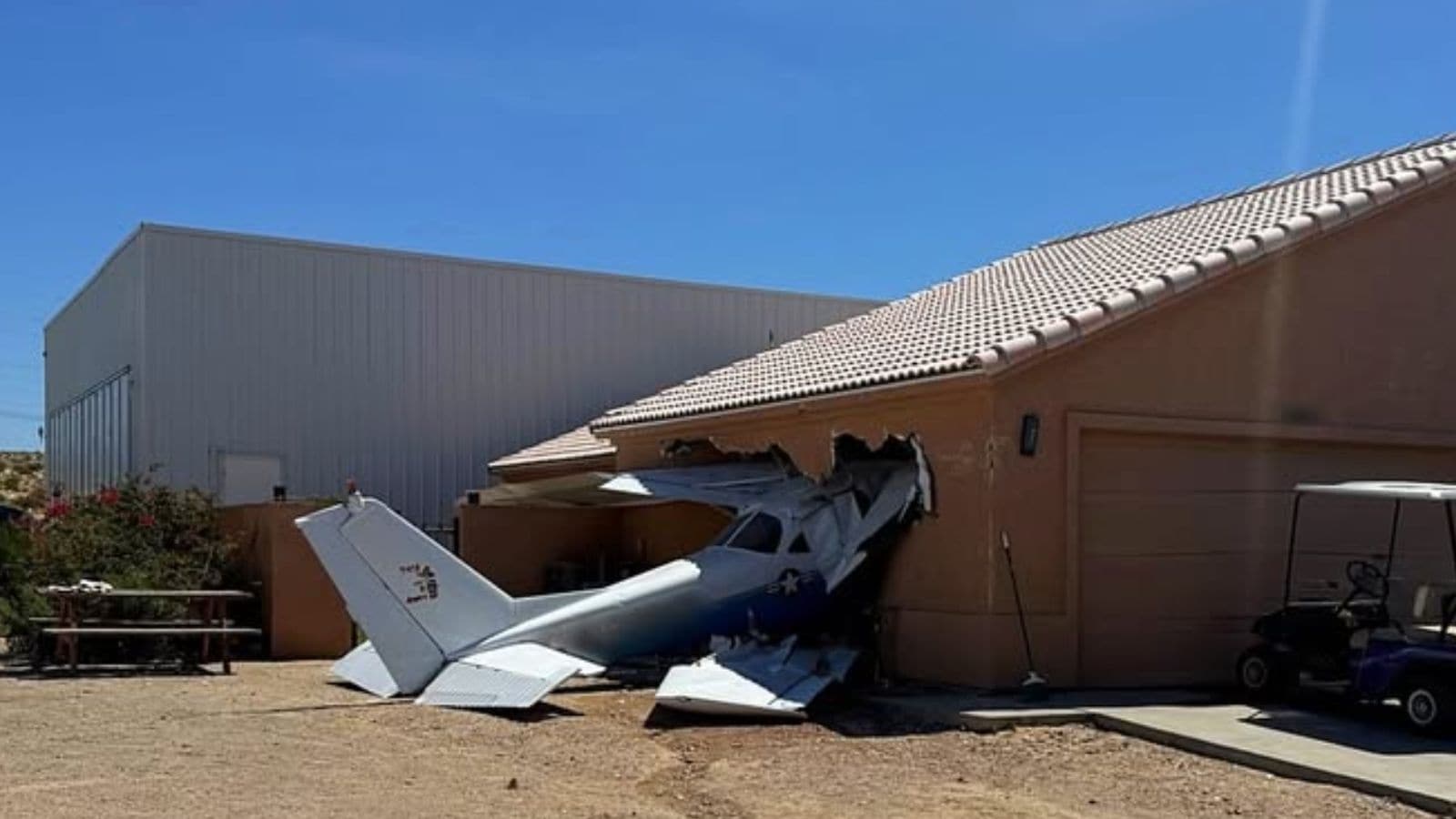
The loss of two lives in an Arizona light aircraft crash initiates a standardized, multi-agency investigative protocol designed to isolate mechanical failure from human error and environmental variables. While initial reports often focus on the tragic immediacy of the event, the structural integrity of the subsequent investigation relies on the Aviation Safety Framework, a system that categorizes data into three distinct silos: man, machine, and medium. Determining the root cause of such an event requires a forensic deconstruction of the flight path, engine performance metrics, and the pilot’s decision-making matrix during the critical phases of flight.
The Kinematics of Impact and Site Forensic Mapping
The initial phase of the investigation centers on the Energy Distribution Profile. When a small aircraft strikes the ground, the debris field serves as a physical recording of the kinetic energy present at the moment of impact. Investigators utilize the wreckage trail to calculate the angle of incidence and the velocity of the aircraft.
- Compact Debris Fields: Suggest a low-forward-speed, high-vertical-speed impact, often indicative of an aerodynamic stall or a loss of control where the aircraft enters a spin.
- Linear Distribution: Indicates high forward momentum, suggesting the pilot may have had partial control or was attempting a forced landing but encountered an obstacle or terrain mismatch.
- Component Separation: If critical components, such as a wing section or tail surface, are found a significant distance from the main impact site, the investigation shifts focus toward In-flight Structural Failure.
The Arizona terrain adds a specific variable: Density Altitude. In high-temperature or high-elevation environments, the air is thinner, which reduces both engine horsepower and wing lift. A pilot operating a light aircraft under these conditions faces a narrowed margin for error, particularly during climb-out or maneuvering.
The Powerplant and Systems Failure Matrix
To determine if mechanical failure was the primary catalyst, the National Transportation Safety Board (NTSB) and Federal Aviation Administration (FAA) perform a "tear-down" of the engine and control surfaces. This is not a search for general wear and tear but a hunt for Pre-impact vs. Post-impact Damage.
- Propeller Signature: A "curled" or "S-bent" propeller blade indicates the engine was producing significant power at the moment of impact. Conversely, a straight propeller with minimal damage suggests the engine was stagnant or "windmilling," pointing toward fuel exhaustion, mechanical seizure, or ignition failure.
- Control Continuity: Investigators must verify that the cables, pulleys, and hydraulic lines connecting the cockpit to the ailerons, elevator, and rudder were intact. A break in these lines before impact constitutes a catastrophic mechanical failure that removes the pilot's ability to recover the aircraft.
- Instrument Forensic Analysis: In older aircraft lacking digital flight data recorders, "light bulb filament stretch" is analyzed. If a warning light was on during impact, the heat makes the filament malleable, causing it to stretch under the force of the crash. This provides a "snapshot" of what the pilot saw in the final seconds.
Human Factors and the Decision-Making Bottleneck
The "Man" component of the investigation examines the pilot’s physiological state and their adherence to Standard Operating Procedures (SOPs). The investigation utilizes the 72-hour history protocol, which scrutinizes the pilot's sleep patterns, nutrition, and psychological stressors leading up to the flight.
The most complex element to quantify is the Cognitive Load during an emergency. When a pilot faces a sudden system failure—such as an engine out—they must execute a series of high-priority tasks under extreme stress. The transition from a routine flight to an emergency descent requires immediate stabilization of the aircraft's "best glide" speed. Any delay in this transition results in a rapid loss of altitude and potential stall. The Arizona investigation will cross-reference the pilot's total flight hours against their "time-in-type," as proficiency in a specific aircraft model is a primary predictor of successful emergency management.
Environmental Variables and Localized Micro-Climates
Arizona’s geography introduces specific atmospheric risks, notably Thermal Turbulence and Microbursts. In the desert, rapid heating of the ground creates rising columns of air (thermals) that can be violent enough to challenge the structural limits of a light aircraft or cause a sudden loss of lift at low altitudes.
The investigation will pull data from the nearest Automated Surface Observing System (ASOS) to reconstruct the exact wind vectors and barometric pressure at the time of the crash. If the aircraft was in a "base-to-final" turn—the most dangerous portion of a landing pattern—a sudden tailwind gust could cause an "overshoot," leading the pilot to tighten the turn. This maneuver increases the load factor on the wings, raising the stall speed and potentially triggering an irrecoverable spin.
The Probabilistic Timeline of the Final Report
Aviation investigations are not instantaneous; they follow a tiered release schedule to ensure accuracy over speed.
- Preliminary Report (10-14 days): Contains factual data regarding the aircraft type, weather conditions, and pilot certifications. It offers no analysis of cause.
- Factual Report (6-12 months): Compiles all laboratory findings, engine tear-down results, and witness statements.
- Probable Cause (12-24 months): The NTSB issues its final determination, often citing a "chain of events" rather than a single isolated failure.
This delay is a structural necessity. Rushing to a conclusion risks missing systemic issues, such as a manufacturing defect common to a specific fleet of aircraft. By the time the Arizona cause is identified, the data will have been scrubbed through metallurgy labs and flight simulators to ensure the findings can be used to update safety regulations for the entire general aviation community.
Strategic Assessment of General Aviation Risk
The incident in Arizona underscores the inherent volatility in the General Aviation (GA) sector compared to commercial Part 121 operations. Commercial aviation relies on redundant systems, two-pilot crews, and rigorous dispatch monitoring. GA, by contrast, often operates with a Single Point of Failure—be it the engine, the pilot, or the lack of real-time weather telemetry.
To mitigate these risks, the industry is shifting toward the integration of Electronic Flight Bags (EFBs) and ADS-B In/Out technology which provides pilots with better situational awareness. However, technology cannot override the laws of aerodynamics. The primary defense against such tragedies remains a rigorous adherence to "Go/No-Go" decision matrices, particularly in high-density altitude environments where aircraft performance is fundamentally compromised.
Safety professionals must treat every incident as a data point in a larger trend analysis. If the Arizona investigation reveals a mechanical trend, it may trigger an Airworthiness Directive (AD), forcing all owners of that specific model to ground their planes for inspection. If the cause is determined to be human error, it will be integrated into training curricula to emphasize the specific risks of desert flying. This feedback loop is the only mechanism by which the industry can reduce the fatal accident rate, which currently sits significantly higher for private small-craft operations than for any other form of regulated transport.
The focus now shifts to the NTSB’s recovery of any onboard electronics, including GPS units or smartphones, which can provide non-volatile memory data to supplement the physical wreckage analysis. This digital trail is often the only way to reconstruct the final vertical speed and bank angle when no black box is present.
Prioritize the implementation of Angle of Attack (AOA) indicators in all light aircraft operating in high-elevation regions. Unlike traditional airspeed indicators, AOA sensors provide a direct measurement of the remaining lift, offering a clear visual warning before an aerodynamic stall occurs, regardless of density altitude or aircraft weight. This hardware intervention addresses the most common cause of fatal light aircraft accidents: the loss of control during the approach and landing phase.



