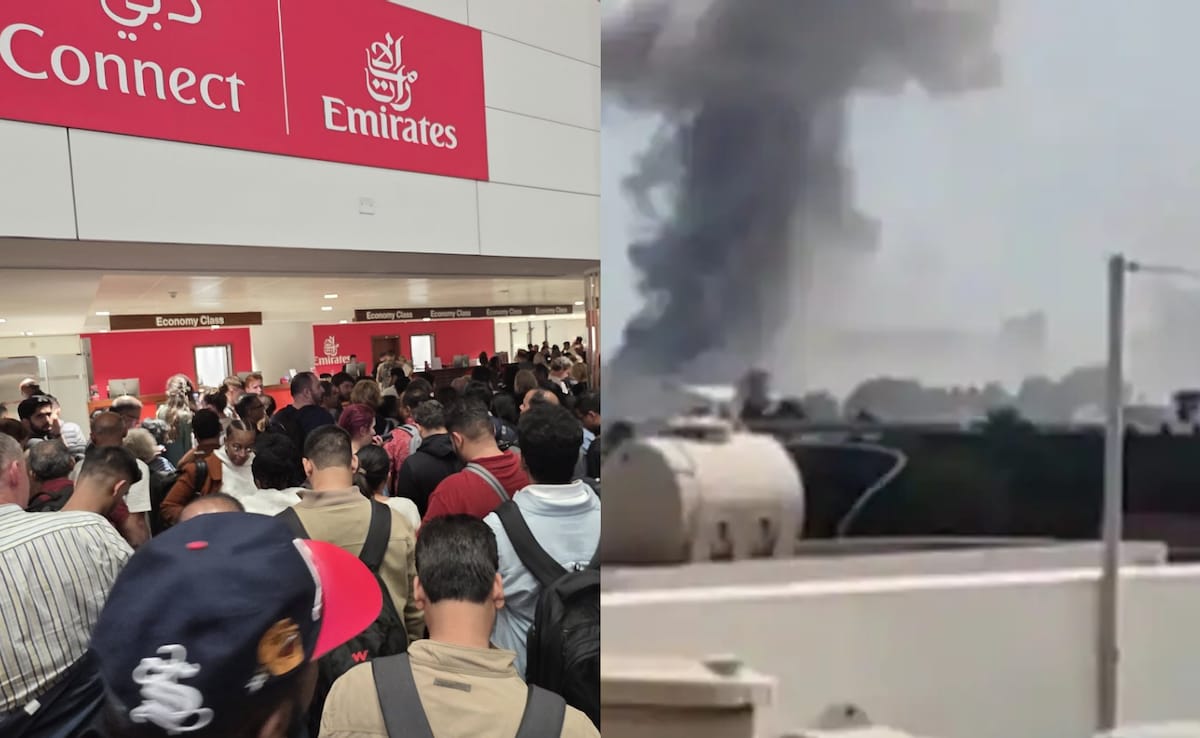
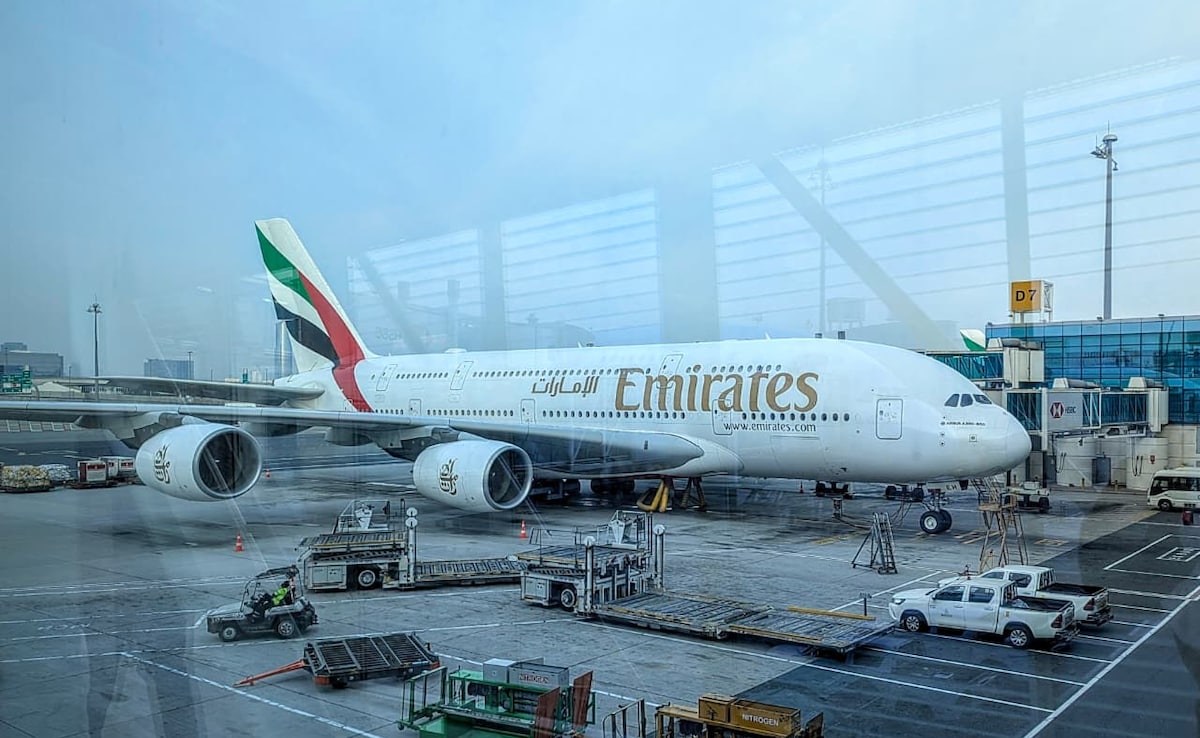
The closure of Dubai International (DXB) and the subsequent halting of flight corridors across the Middle East following Iranian ballistic missile activity represents a systemic failure of the "Hub and Spoke" transit model under geopolitical duress. When a primary global node like DXB—the world’s busiest international airport—ceases operations, the result is not a localized delay but a global kinetic stall. This breakdown occurs because the modern aviation network is built on the assumption of geographic permeability; when that permeability is removed, the efficiency of the entire system reverts to a pre-globalization state of fragmented regional pockets.
The Mechanism of Airspace Paralysis
Airspace closure is rarely a singular event. It is a cascading sequence of risk assessments that move from military intelligence to civil aviation authorities and, finally, to individual airline dispatchers. The paralysis seen during the recent escalation follows a predictable three-stage failure logic.
- Kinetic De-escalation Zones: Once missile trajectories are detected, "Notice to Air Missions" (NOTAMs) are issued. These are not suggestions; they are legal prohibitions that invalidate aircraft insurance policies if ignored. This immediately removes the physical "pipes" through which global traffic flows.
- The Divergent Load Stress: Aircraft already in flight cannot simply "stop." They must divert to "alternates"—smaller regional airports like Amman, Muscat, or Larnaca. These secondary nodes lack the fuel reserves, gate capacity, and customs personnel to handle a sudden influx of wide-body jets. This creates a "ground-stop bottleneck" where the diversion airports themselves become paralyzed.
- The Crew Duty Clock: Aviation safety regulations dictate strict maximum working hours for pilots and cabin crew. When a flight is diverted and stuck on a tarmac for six hours, the crew "times out." Even if the airspace reopens, the plane cannot move because the crew is legally ineligible to fly. This is why "thousands stranded" is a mathematical certainty rather than a sensationalist claim.
The Economics of the Stranded Passenger
The financial impact of a Middle Eastern airspace blackout is governed by the Recovery Cost Curve. For an airline, the cost of a delay is non-linear. A one-hour delay is a fuel expense; a twenty-four-hour delay is a logistical catastrophe involving hotel accommodations, re-booking fees, and the "misconnection" ripple effect.
- The Hub-and-Spoke Penalty: Because Dubai, Doha, and Abu Dhabi operate as "Mega-Hubs," roughly 60-80% of their passengers are not going to those cities; they are passing through them. If a flight from London to Sydney is disrupted in Dubai, the airline is now responsible for two separate legs of a journey that no longer align.
- Asset Underutilization: A Boeing 777-300ER represents roughly $375 million in capital. Every hour it sits on a tarmac in a diversion city, it is a depreciating asset generating zero revenue. For a fleet of 200 aircraft, a 12-hour shutdown represents tens of millions in lost opportunity cost and operational burn.
Structural Vulnerabilities of the Middle East Corridor
The Middle East serves as the "Global Crossroads," a narrow geographic bottleneck connecting Europe and Asia. The geography of the region offers limited alternatives. To the north lies Russian airspace (largely closed to Western carriers due to the Ukraine conflict). To the south lies the vastness of the Indian Ocean, which requires massive fuel loads that many medium-haul aircraft cannot carry.
When Iran—a central geography in this corridor—becomes a kinetic zone, the remaining "available" airspace in Saudi Arabia and Egypt becomes dangerously congested. This creates a Throughput Ceiling. Even if the airspace is technically "open," the separation requirements between aircraft (the "bubble" of space required for safety) mean that only a fraction of the normal volume can pass through.
Tactical Realities for the Global Traveler
For the individual caught in this systemic stall, the "chaos" is actually a predictable lack of information flow. Airlines prioritize the movement of metal (aircraft) over the movement of people.
- Information Asymmetry: Airline apps often update slower than the physical reality at the gate. This is because the "Flight Management System" must wait for a human dispatcher to manually input a new flight plan that avoids the conflict zone—a process that can take hours during mass disruptions.
- The Priority Queue: In a mass-cancellation event, re-booking is not first-come, first-served. It is governed by "Passenger Value Scores." Frequent flyers and full-fare business class passengers are automated into the first available seats, while "economy-saver" travelers are pushed to the back of a multi-day queue.
The Failure of Just-in-Time Aviation
The aviation industry has spent two decades optimizing for "just-in-time" arrivals. This means minimal "slack" in the system. There are no spare planes sitting around, and there are no "extra" pilots waiting in hotel lobbies. Every resource is utilized to the maximum to maintain profit margins.
When a ballistic event occurs, this lack of slack means the system has zero "shock absorbers." The "chaos" reported is simply the visual manifestation of a system that has been optimized for efficiency at the total expense of resilience.
The Geopolitical Risk Premium
Aviation insurers are now factoring in a permanent "Middle East Risk Premium." This affects the "Base Fare" of every ticket sold for routes passing through the region. If the threat of ballistic interference becomes a recurring theme—rather than a "black swan" event—airlines will be forced to permanently reroute.
Rerouting around the Middle East (e.g., flying over Africa or back-tracking through North America) adds 3 to 5 hours to a flight. This increases fuel burn by 15-20%, which in turn reduces the passenger or cargo capacity the plane can carry to stay under its Maximum Takeoff Weight (MTOW).
Strategic Re-evaluation of the Transit Model
For the global consultant or corporate traveler, the Dubai shutdown serves as a case study in Dependency Risk. Relying on a single geographic point for 100% of East-West transit is a strategic error.
The immediate tactical move for carriers is the diversification of technical stops. Instead of concentrating all transit in one "Mega-Hub," airlines may begin to favor "Secondary Hubs" that offer more geographic exit points. For the traveler, the strategic play is the "Bypass Route"—choosing flights that avoid the 30th parallel north, even at a higher cost, to ensure certainty of arrival.
The closure of DXB is not a weather event; it is a fundamental stress test of the globalized world's circulatory system. The system failed the test. Recovery will not be measured in hours, but in the weeks it takes to reposition "timed-out" crews and displaced airframes across six continents.
Future resilience depends on the "De-Hubbing" of high-risk corridors. Until that occurs, any traveler passing through a geopolitical chokepoint must price the "Stranded Cost" into their itinerary. The "Masterclass" takeaway is simple: efficiency is a luxury of peace; in conflict, geography is the only metric that matters.
Move all critical East-West logistical dependencies to a "Dual-Track" system, utilizing the trans-Pacific corridor as a redundant failover, regardless of the 12% increase in base operational cost.