Hollywood is celebrating a ghost.
The trades are practically weeping with joy over A24’s The Backrooms pulling in $100 million in less than a week. The dominant narrative is already set in stone: a triumphant victory for internet culture, a validation of creepypasta lore, and definitive proof that indie studios can beat legacy gatekeepers at their own blockbuster game.
It is a comforting story. It is also entirely wrong.
This $100 million milestone is not a victory for independent cinema. It is a corporate hijack disguised as a grassroots miracle. By treating a viral, algorithmically optimized aesthetic as a cinematic breakthrough, the industry is sprinting toward a future where texture replaces text, and vibe replaces plot.
I have spent fifteen years watching distribution executives chase shiny objects, throwing millions at whatever fleeting digital trend captures the zeitgeist for a microsecond. They always misread the data. They are doing it again right now. The Backrooms is not the future of filmmaking; it is a financial anomaly that will leave a trail of bankrupt copycats in its wake.
The Monetization of Liminal Void
To understand why this box office haul is a warning sign rather than a milestone, you have to look at what is actually onscreen.
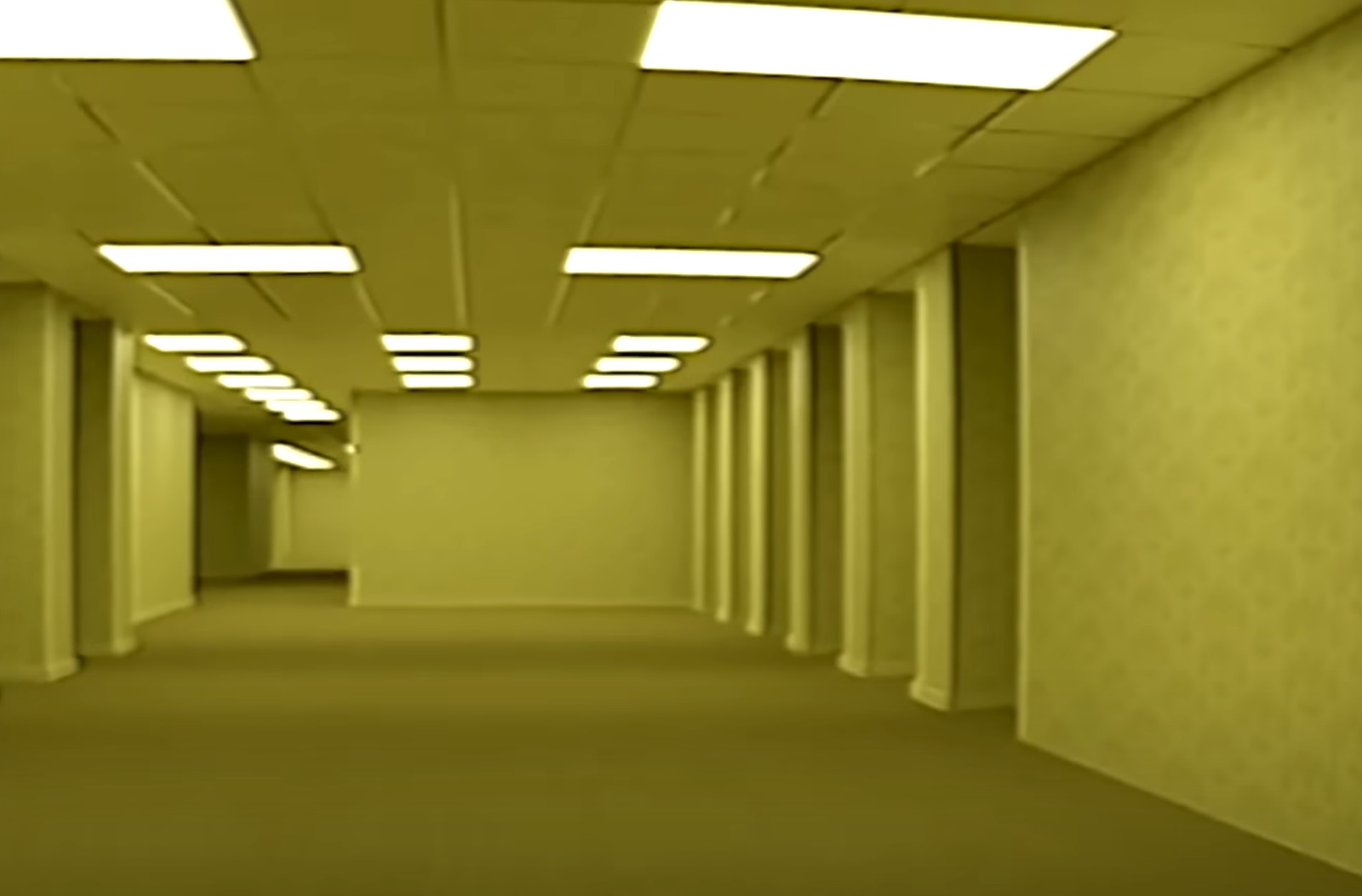
The Backrooms concept originated on 4chan in 2019—a yellow-hued, fluorescent-lit maze of empty office spaces. Kane Parsons, the brilliant teenager who popularized it on YouTube, captured lightning in a bottle. His short films worked because they were free, bite-sized, and relied on the viewer’s active imagination to fill in the blanks.
When you scale that up to a two-hour theatrical release backed by Chernin Entertainment and A24, the structural integrity of the concept collapses.
The Dilution of the Micro-Genre
- Atmosphere vs. Exposition: Creepypasta relies on ambiguity. Features require explanations. The moment you introduce a traditional narrative arc to a liminal space, you kill the liminality.
- The IP Trap: A24 did not buy a script; they bought a recognizable thumbnail. They bought an SEO term.
- Audience Inflation: Opening weekend numbers reflect accumulated internet hype, not cinematic staying power.
Let's look at the actual economics of horror and internet-adjacent adaptations. The history of cinema is littered with the corpses of properties that transitioned from digital subcultures to the silver screen. Remember the Slender Man adaptation in 2018? It crawled to a miserable $51 million worldwide because it arrived years too late, attempting to formalize a mythos that only existed through collaborative internet fiction.
A24 escaped that immediate critical failure through sheer brand prestige and Parsons' genuine talent. But the financial lesson other studios will extract from this week's data is catastrophic. They will assume that any intellectual property with a billion views on TikTok can be translated into a nine-figure theatrical event.
Dismantling the People Also Ask Consensus
The industry analysis surrounding this release is fundamentally flawed. If you look at the dominant questions being asked across entertainment media right now, the premises themselves are broken.
"Does this prove YouTube creators are ready to replace Hollywood directors?"
This is the wrong question. Kane Parsons is a singular anomaly, an exceptionally gifted visual storyteller who mastered 3D rendering software in his bedroom. The prevailing industry assumption is that a high subscriber count equates to cinematic literacy. It does not.
Directing a feature film is not an exercise in asset management or visual effects rendering. It is an grueling exercise in human psychology, logistics, and managing unionized crews of hundreds of people under immense time constraints. The trend of handing $50 million budgets to teenagers based on viral videos will result in production disasters. For every Parsons, there are a thousand content creators who cannot block a scene with actual actors or manage a standard three-act structure.
"Will the success of The Backrooms save the mid-budget indie film?"
Absolutely not. It will actively strangle it.
When a studio like A24 achieves a blockbuster return on a horror property, it shifts internal greenlight benchmarks. Development executives do not look at The Backrooms and say, "Let’s fund more original, character-driven dramas." They say, "Find me the next analog horror IP."
Original voices without a pre-existing digital footprint are being pushed out of the room. The mid-budget space is being cannibalized by IP-driven genre experiments that prioritize built-in marketing over storytelling substance. If your script requires the audience to care about human relationships rather than recognizing a digital creepypasta meme, your chances of getting funded just plummeted.
The Trap of Algorithmic Aesthetic
We are witnessing the birth of Algorithmic Aesthetic Cinema. This is filmmaking designed to satisfy the passive viewing habits of an audience raised on short-form video loops.
The Backrooms works because it triggers a specific neurological response: familiarity mixed with unease. It is passive world-building. But cinema is an active medium. It demands friction, character evolution, and thematic depth.
[Traditional Cinema]  ---> Conflict ---> Character Arc ---> Resolution
[Algorithmic Cinema]  ---> Aesthetic ---> Mimetic Loop   ---> Brand Extension
When you look at the financial breakdown of The Backrooms' opening week, the numbers reveal a terrifying reality about modern distribution.
| Metric | Traditional Indie Feature | The Backrooms |
|---|---|---|
| Core Marketing Driver | Critical reviews, festivals | TikTok algorithms, YouTube reaction videos |
| Audience Retention | Word of mouth on story | Completion of online lore discussion |
| Merchandising Potential | Minimal | Massive (clothing, digital assets, games) |
The film did not make $100 million because it was a masterpiece of tension. It made $100 million because it functioned as a physical meetup space for an online community. It was an event, a live-action rendering of a digital space they had already inhabited for years.
Once that curiosity is satisfied, the box office drop-off will be historic.
The Economics of Hyper-Specific Nostalgia
The broader entertainment industry is misinterpreting this box office surge as a revival of original horror. It is actually the ultimate evolution of nostalgia-baiting.
Instead of mining the 1980s or 1990s through reboots of Ghostbusters or Star Wars, A24 mined the early 2010s digital aesthetic—the era of source engine glitches, early internet mystery videos, and corporate office depression. It is nostalgia for a time that never existed, packaged for Gen Z and Gen Alpha.
But hyper-specific nostalgia has a remarkably short shelf life. You cannot build a sustainable studio model on internet aesthetics because the internet discards its own visual language every six months. By the time a studio options a viral trend, hires a writer, clears the rights, shoots the film, and schedules distribution, the subculture has already moved through three separate iterations of irony and irrelevance.
I have watched production companies burn through capital trying to adapt memes that died during pre-production. The Backrooms hit the absolute perfect, miraculous window where the lore was still fresh enough to care about, yet old enough to feel nostalgic. Lightning does not strike twice on the same forum thread.
Stop Looking for the Next Meme
If you are an independent filmmaker, a producer, or an investor looking at this $100 million week with envy, change your strategy immediately. Do not browse Reddit for your next feature film concept. Do not look at viral TikTok audios as potential score tracks.
The lesson of The Backrooms is not that the internet is a goldmine for cinematic intellectual property. The lesson is that audiences are desperate for environments that feel completely distinct from the glossy, hyper-edited, over-explained blockbusters pushed out by legacy studios. They wanted something raw, stripped-down, and mysterious.
The tragedy is that the industry's response will be to over-produce, over-explain, and over-saturate the exact aesthetic that made the concept appealing in the first place. They will turn the empty, terrifying halls of the Backrooms into a franchise with spin-offs, origin stories, and action figures.
You cannot institutionalize the avant-garde without killing it. Stop trying to replicate a viral phenomenon. Go write a story about real people, with real stakes, in worlds that cannot be rendered in Blender over a long weekend. The algorithm will eventually eat itself. Make sure you are not standing inside the maze when it does.