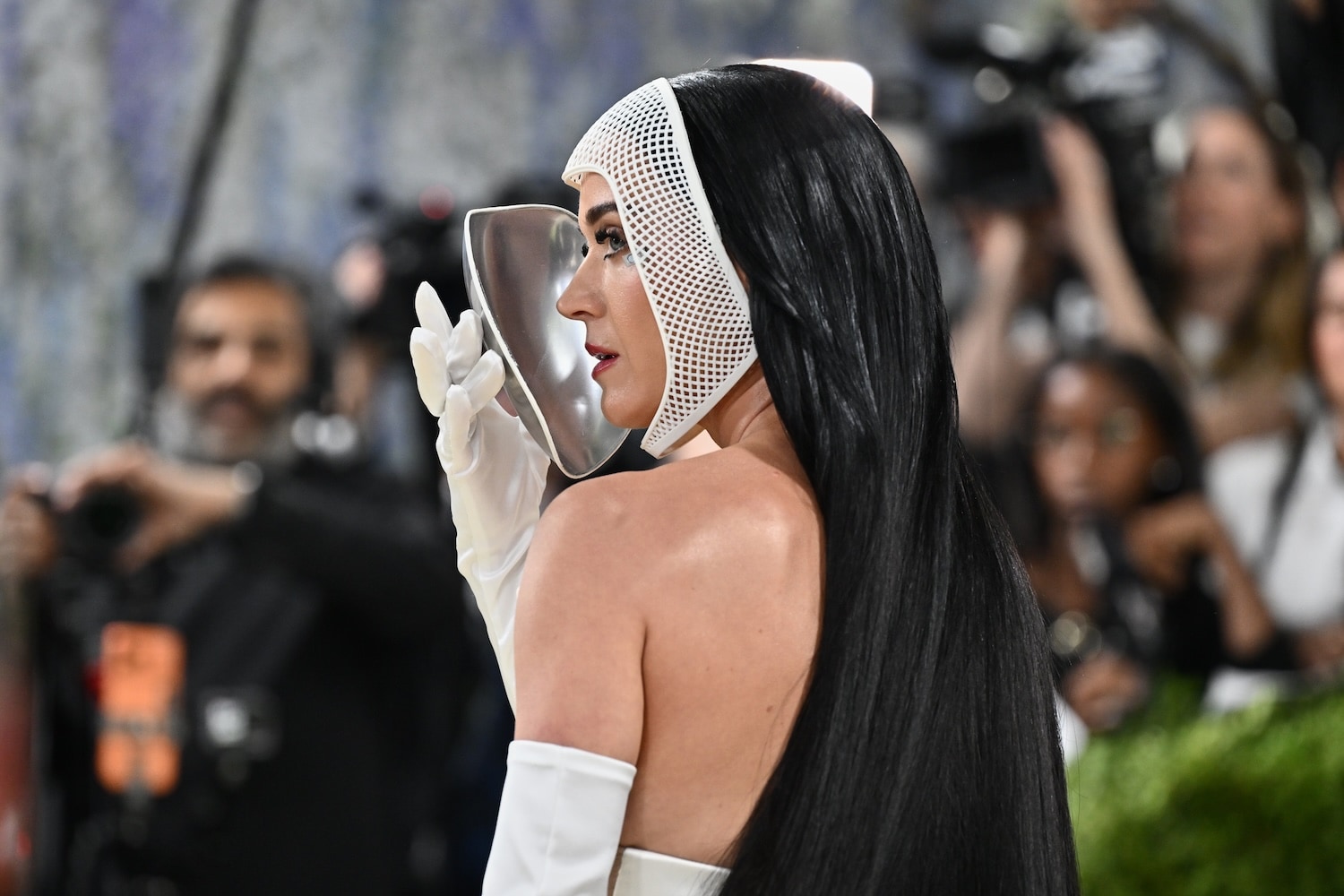
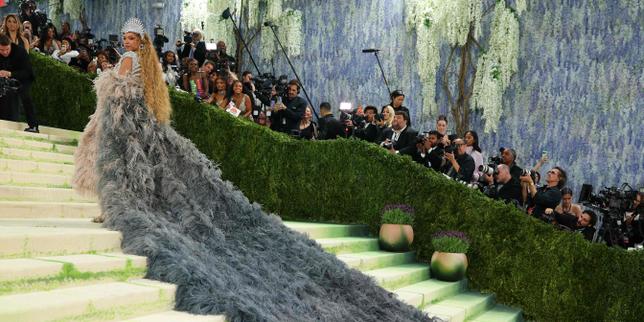
The fashion press is currently tripping over itself to laud Bad Bunny’s latest Met Gala appearance as a "brave" meditation on mortality and the "aging body." They see a corseted Maison Margiela silhouette, some strategic grey hair, and a weathered fabric choice, and they immediately sprint toward a narrative of profound vulnerability.
They are wrong.
What we witnessed wasn't a subversion of beauty standards. It was the ultimate flex of the untouchable elite. When a global superstar in his physical prime "cosplays" as aged or decaying, he isn't challenging the cult of youth. He is mocking it from a position of absolute safety.
The High Fashion Fetish for Decay
The mainstream critique of the "Sleeping Beauties: Reawakening Fashion" theme focuses on the romanticism of the past. But let’s look at the mechanics of what John Galliano and Bad Bunny actually put on the carpet. The "aging body" look isn't about the lived experience of getting older. It is about the aestheticization of entropy.
In the world of high-concept couture, "decay" is just another texture, like silk or velvet. To the industry insiders who have spent decades trying to erase every fine line with neurotoxins and fillers, "age" is only acceptable when it is a costume. Bad Bunny isn't showing us the reality of a body losing its utility. He is showing us that he is so rich and so relevant that he can afford to look "old" for four hours because he knows he can snap back to 24-karat perfection the moment the cameras stop flashing.
It’s the "derelict" trend of the early 2000s repackaged for the 2020s. We used to watch models wear $5,000 rags; now we watch icons wear $50,000 wrinkles.
The Lazy Logic of "Representation"
The most common misconception floating around social media is that this look "normalizes" aging in a youth-obsessed culture. This is a fundamental misunderstanding of how celebrity influence works.
Representation only matters when there is a risk involved. If a 65-year-old actor shows up and refuses to hide their age, that is a statement. When a 30-year-old megastar uses makeup and tailoring to simulate the passage of time, it is a safety play. It’s a way to claim depth without having to pay the biological taxes of actual seniority.
Think about the "old age" filters that went viral on TikTok a few years ago. People weren't using them to find beauty in sagging skin; they were using them as a joke, a "what if" scenario that felt impossible. Bad Bunny’s Met Gala look functions the exact same way. It relies on the audience knowing it’s a lie. If people actually thought he had aged twenty years overnight, his stock would plummet. The "art" lies in the gap between the mask and the reality.
The Corset as a Tool of Control
Much has been made of the custom Margiela tailoring—specifically the waist-cinching and the structured internal anatomy of the garment. Critics call it a "deconstruction" of masculine tropes.
I’ve spent years analyzing how menswear shifts under the pressure of the spotlight, and this isn't deconstruction. It’s reconstruction.
The corset is the literal opposite of the "aging body." Aging is characterized by a loss of structural integrity. Muscles atrophy. Gravity wins. By putting an "aged" aesthetic over a highly disciplined, corseted, and athletic frame, Galliano and Bad Bunny created a cyborg. They created a version of age that is still under the absolute control of the wearer.
It tells the viewer: "I can have the patina of time, but I refuse the frailty of it."
Dissecting the "Sleeping Beauties" Narrative
The Met’s theme was supposed to be about the fragility of garments—pieces so old they can never be worn again. By trying to mirror this fragility in a human form, the red carpet missed the point of the exhibition entirely.
The exhibition is about the tragedy of the object. Once a dress is too fragile to wear, it loses its primary function. It becomes a ghost.
But a celebrity's primary function is to be a vessel for attention. By donning an "aging" look, Bad Bunny didn't become a ghost; he became a louder version of himself. He didn't embrace fragility; he performed it. And there is a massive difference between being fragile and being a performer who knows how to move like a broken thing.
Why We Fall for the "Deep" Meaning
Why does the public want to believe this is a profound statement? Because it’s easier to celebrate a costume than it is to deal with the reality of age in the entertainment industry.
We live in an era where:
- Leading men are expected to maintain 6% body fat into their 50s.
- Female stars are scrutinized for the slightest sign of "letting themselves go."
- The industry spends billions on "preventative" procedures for teenagers.
In this climate, Bad Bunny’s look acts as a pressure valve. It allows the fashion world to say, "Look, we find age beautiful!" while they simultaneously book zero models over the age of 25 for their main campaigns. It’s corporate gaslighting on a global scale.
The Nuance We Actually Missed
If we want to talk about what was actually interesting about the look, we have to stop talking about "aging" and start talking about theft.
Galliano’s work for Margiela is currently obsessed with the "broken doll" aesthetic—the idea of things being pulled apart and put back together poorly. When Bad Bunny adopts this, he isn't talking about his own life or his own body. He is adopting the visual language of the "marginalized" and the "discarded" to add texture to his own brand.
It is a form of aesthetic slumming.
The "aging body" look is successful only because it is a lie told by a beautiful man. It’s a parlor trick. It’s the equivalent of a billionaire wearing a "tax the rich" shirt. It creates the illusion of solidarity while reinforcing the very walls it pretends to tear down.
The Brutal Reality of the Red Carpet
The Met Gala is not a place for truth. It is a place for the most expensive lies money can buy. To suggest that a meticulously curated, million-dollar ensemble is a "raw" look at aging is an insult to anyone who actually has to navigate the world in a body that is breaking down.
Real aging isn't a custom Margiela suit. It isn't a poetic grey streak in a perfectly coiffed head of hair. Real aging is the loss of the very visibility that the Met Gala exists to provide.
If Bad Bunny really wanted to make a statement about the "aging body," he would have stayed home. He would have let the cameras find someone who the industry has actually discarded. But he didn't, because the goal isn't to change the system. The goal is to be the most interesting thing inside of it.
We shouldn't be asking if his look was "art." We should be asking why we are so desperate to find meaning in a costume that mocks the very reality it claims to celebrate.
Stop looking for "bravery" in a vanity project. It’s just another mask. And this time, the mask is painted to look like the truth, which makes it the most effective lie of all.