The shadow war between Kabul and Islamabad has finally spilled into the open at the gates of Bagram Air Base. For four days, the sprawling military complex—once the crown jewel of American power in Central Asia—has served as the flashpoint for a conflict that many saw coming but few dared to prevent. Afghan officials now claim to have intercepted a Pakistani aerial assault aimed directly at the facility, marking a dangerous escalation that transforms a border skirmish into a full-scale regional crisis. This is no longer just about disputed territory or insurgent hideouts. It is a desperate struggle for control over the most strategic piece of real estate in the Hindu Kush.
The official narrative coming out of the Afghan Ministry of Defense suggests a sophisticated defense of Bagram. They claim their air defense systems, largely composed of repurposed Soviet-era hardware and remnants of the US-trained Air Force, successfully deterred a strike package of Pakistani drones and manned aircraft. While the specifics of the "thwarted" strike remain murky, the intensity of the ground fighting surrounding the event is undeniable. This isn't a simple misunderstanding. It is a calculated test of the Taliban’s ability to hold sovereign ground against a modern, conventional military.
The Strategic Gravity of Bagram
Bagram is not just a collection of runways and concrete hangars. It is a psychological symbol and a logistical necessity. For the current Afghan administration, holding Bagram is the ultimate proof of their legitimacy. If they cannot protect the very base that housed the world’s most powerful military for two decades, their grip on the rest of the country is purely theoretical.
From Islamabad’s perspective, the base represents a persistent threat. The Pakistani security establishment has long feared that Bagram could become a staging ground for groups like the Tehrik-i-Taliban Pakistan (TTP). By launching an airstrike—or even a high-pressure feint—Pakistan is signaling that its patience with cross-border militancy has reached a terminal point. They are willing to risk a regional conflagration to neutralize what they perceive as an existential threat brewing within Afghan borders.
The technology at play here tells a story of uneven modernization. Pakistan has invested heavily in Turkish-made Bayraktar drones and Chinese reconnaissance platforms, giving them a distinct advantage in the "see and strike" department. Afghanistan, conversely, is operating in a vacuum of parts and technical expertise. Their success in thwarting a strike, if true, suggests either a massive failure in Pakistani coordination or the presence of non-state technical advisors who have helped the Afghans patch together a functional radar net.
Why the Border Is Burning Now
The current fighting did not emerge from a vacuum. It is the result of three specific, intersecting pressures that have made the status quo untenable.
- The TTP Factor: Islamabad’s primary grievance is the sanctuary they believe the Afghan Taliban provides to the Pakistani Taliban. The TTP has ramped up attacks inside Pakistan with terrifying frequency, and the Pakistani military is under immense domestic pressure to retaliate at the source.
- The Durand Line Dispute: The historical border remains a festering wound. Afghanistan has never officially recognized the 2,640-kilometer line as an international boundary. Recent attempts by Pakistan to fence the border have led to direct firefights between frontier guards, which have now escalated into the use of heavy artillery and air power.
- Internal Afghan Fractures: Kabul is not a monolith. There are competing factions within the Afghan leadership regarding how to handle Pakistan. Some favor a pragmatic, trade-heavy relationship, while others see Islamabad as the eternal architect of Afghan suffering. The current escalation suggests the hardliners, who favor a military response to any perceived slight, currently hold the upper hand.
The Mechanics of an Aerial Thwarting
How does an air force with no international support stop a modern strike? It doesn't happen with Top Gun maneuvers. It happens through early warning and sheer volume. Reports from the ground indicate that Afghan forces have moved significant amounts of anti-aircraft artillery (AAA) and Man-Portable Air Defense Systems (MANPADS) into the hills surrounding Bagram.
These aren't sophisticated enough to take down a high-flying F-16, but they are more than capable of creating a "no-go" zone for low-flying drones. By saturating the approach vectors with fire, the Afghans can force Pakistani pilots or drone operators to choose between losing an expensive asset or aborting the mission. In this case, it appears they chose to abort.
The Failed Diplomacy of the Region
For months, back-channel talks in Doha and Tashkent have attempted to de-escalate the tension. These meetings have failed for one simple reason: neither side trusts the other to deliver on their promises. Pakistan wants the TTP handed over in crates; Afghanistan wants Pakistan to stop treating its border regions like a colonial frontier.
The international community, meanwhile, has largely looked away. The United States, having washed its hands of the region in 2021, has little appetite for mediating a conflict between an uncrecognized government and a nuclear-armed "major non-NATO ally." China and Russia have expressed concern, but their interests are purely extractive and security-focused. They want the minerals and they want the extremism contained, but they aren't willing to spill blood to stabilize the Durand Line.
This lack of a credible mediator has created a dangerous feedback loop. Every bullet fired at the border justifies the next drone strike. Every drone strike justifies the next suicide bombing in a Pakistani market. The cycle is self-sustaining and increasingly violent.
The Economic Toll of a Four Day Siege
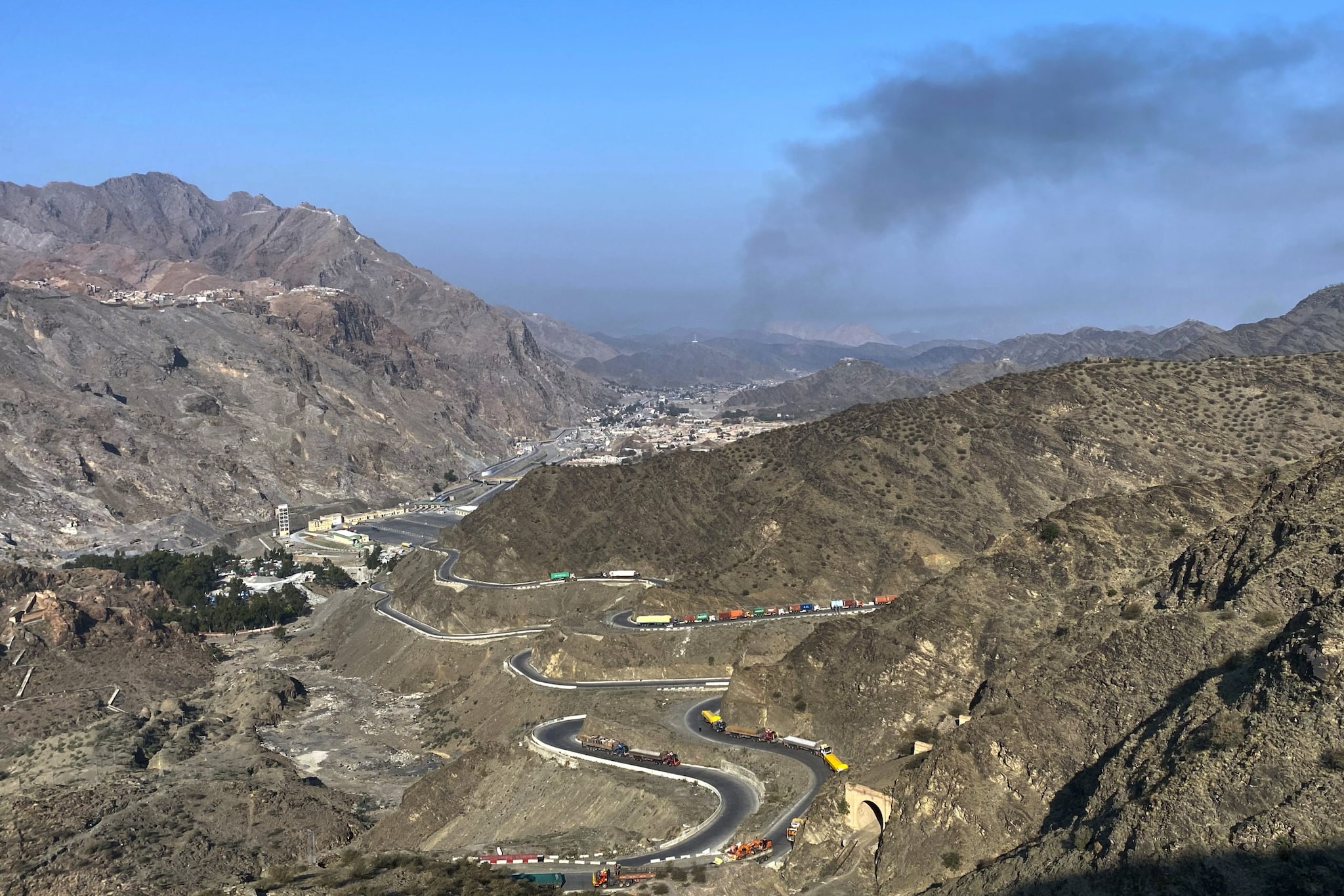
While the military commanders count their shells, the civilians are counting their losses. The Torkham and Spin Boldak crossings—the lifeblood of Afghan trade—are frequently closed during these skirmishes. Thousands of trucks carrying perishable food and essential medicines are currently stranded on both sides of the border.
The Afghan economy, already on life support, cannot survive a prolonged conflict with its largest trading partner. If Pakistan implements a total blockade in response to the Bagram incident, the humanitarian disaster in Kabul will dwarf the current crisis. We are looking at the possibility of a total market collapse in eastern Afghanistan within weeks.
In Pakistan, the cost is different but equally severe. The military is burning through resources it can ill afford as the country grapples with an ongoing fiscal crisis. Every flight hour for a fighter jet and every missile fired represents money that isn't going toward debt or infrastructure. This is a war of two poor nations burning their futures to satisfy the pride of their generals.
Intelligence Gaps and Misinformation
Investigating these claims requires a healthy dose of skepticism. In the "fog of war" that characterizes the Afghan-Pakistani border, truth is often the first casualty. Kabul has every reason to exaggerate its military prowess to boost domestic morale. Islamabad has every reason to downplay its involvement in an airstrike that could be seen as an act of war under international law.
Independent satellite imagery shows increased activity around Bagram, including the fortification of perimeter defenses and the deployment of mobile radar units. However, there is no visual evidence yet of downed Pakistani aircraft. This suggests that the "thwarting" was likely a tactical withdrawal by Pakistani forces rather than a kinetic shoot-down. The distinction matters. A shoot-down would lead to an immediate and overwhelming Pakistani retaliation; a tactical withdrawal suggests there is still a thin sliver of space for a ceasefire.
The Role of Technology in Modern Border Conflict
We are seeing a shift in how these regional powers fight. It is no longer about massed infantry charges. It is about electronic warfare, thermal optics, and low-cost loitering munitions.
- Electronic Jamming: There are unconfirmed reports that Afghan forces have acquired commercial-grade GPS jammers to disrupt drone navigation.
- Thermal Imaging: Small, off-the-shelf drones are being used by both sides to direct artillery fire with terrifying precision.
- Encrypted Communication: Both the TTP and Afghan border guards have moved away from radios toward encrypted messaging apps, making it harder for Pakistani intelligence to intercept their movements.
The Fragile Reality of the Next Forty-Eight Hours
The situation on the ground is extremely fluid. Both armies have moved heavy reinforcements toward the border. The 4th day of fighting has seen a shift from sporadic rifle fire to sustained artillery duels. If another aerial attempt is made on Bagram, the likelihood of a localized skirmish turning into a general war increases exponentially.
The Afghan leadership is currently in an emergency session in Kabul. Their decision-making will be driven by the need to look strong. They cannot afford to let a Pakistani strike go unanswered, but they also cannot afford a full-scale invasion. It is a tightrope walk over an abyss.
Pakistan, for its part, is waiting to see if the threat to Bagram has forced Kabul to the negotiating table regarding the TTP. If it hasn't, the next strike package might not be so easily "thwarted." The Pakistani Air Force has the capability to level the Bagram hangars from a distance that Afghan AAA cannot reach. The fact that they haven't done so yet suggests this was a warning shot, not a final solution.
The international community must acknowledge that the policy of "strategic neglect" toward Afghanistan has failed. You cannot leave a vacuum in the middle of a nuclear-armed neighborhood and expect it to stay empty. The fighting at Bagram is the sound of that vacuum being filled by the oldest currency in the region: violence.
Monitor the movement of the Pakistani 11th Corps and the Afghan "Omari" Army Corps. Their positioning in the coming hours will dictate whether this is a four-day blip or the start of a long, bloody summer. The gates of Bagram are closed, but the window for a peaceful resolution is closing even faster.
Check the status of the Torkham border crossing immediately. If the heavy armor begins to move toward the gates, the diplomatic window has officially shattered.