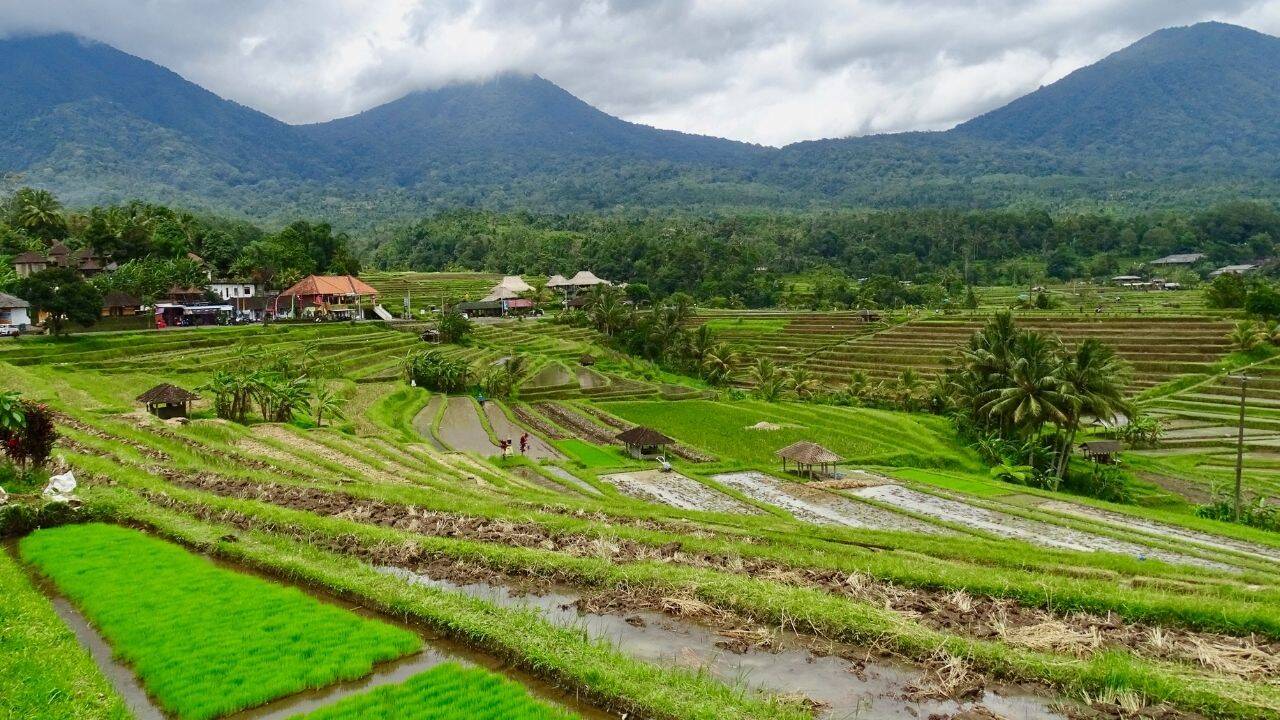
You have probably seen the photos. Endless terraces of emerald-green rice fields cascading down Balinese hillsides, glistening under the tropical sun. It is the ultimate postcard of serene, untouched harmony.
But if you step off the tourist trail in 2026 and talk to the people who actually tend those fields, you will get a very different story. The ground is bone dry. The springs are failing. And the ancient system that kept Bali green for over a thousand years is quietly collapsing under the weight of concrete, swim-up bars, and ice baths.
The truth is brutal. Bali is running out of water, and the very fields that tourists love to photograph are disappearing at an alarming rate to feed the island's relentless tourism machine.
The Ancient Subak is Falling Apart
For more than ten centuries, Bali did not need modern water infrastructure. It had the subak.
Developed around the ninth century, the subak is far more than just a network of muddy canals. It is a complex, democratic, and deeply spiritual water-sharing cooperative. Rooted in the Balinese philosophy of Tri Hita Karana—harmony between humans, nature, and the divine—it operates on collective decision-making rather than competition.
Farmers meet in water temples to synchronize their planting cycles. By flooding and draining their fields in unison, they historically managed pests naturally and ensured that everyone, from the upstream farms to the lowest plots, received a fair share of water.
But the subak was also Bali's secret ecological weapon. A flooded rice paddy acts as a giant sponge. It slows down heavy tropical runoff, retains water, and allows it to filter slowly back into the ground, recharging the underground aquifers.
Now, that sponge is being paved over.
According to data from Bali’s National Land Agency, over 6,500 hectares of rice fields have vanished in just the past five years. That is a drop of nearly 10% of the island's traditional agricultural land, gone forever under a layer of concrete.
When Paddies Turn to Concrete, the Aquifers Run Dry
The math is simple but devastating. When you replace a rice field with a villa, a boutique gym, or a padel court, you do two things simultaneously:
- You destroy the natural recharge zone that replenishes the island’s groundwater.
- You drastically increase the local demand for water.
A single local resident uses about 30 to 50 liters of water a day. Compare that to a luxury tourist resort, which can suck up anywhere from 2,000 to 4,000 liters of water per guest, every single day. With over 16 million tourists visiting the island annually, the local infrastructure simply cannot cope.
Because the public water utility (PDAM) is notoriously unreliable, hotels and commercial villa complexes drill deep, unauthorized borewells to tap directly into the deep aquifers.
The consequences of this unregulated extraction are already hitting local communities hard:
- Saline Intrusion: As freshwater is aggressively pumped out of coastal aquifers in southern Bali, ocean water is rushing in to fill the vacuum. Coastal wells are turning brackish, leaving locals with salty, undrinkable tap water.
- The Trucked-Water Economy: In areas like Uluwatu, public water might only run for an hour a day on a good day. Residents are forced to buy water from private tanker trucks. A single 5,000-liter delivery costs around 350,000 IDR (roughly $22 USD)—a massive sum that can easily swallow up 10% of a local family's monthly income.
- Drying Springs: In the central highlands, sacred mountain springs that have flowed for generations are simply drying up. Farmers who once relied on gravity-fed subak streams now have to purchase pumps and fuel just to keep their crops alive.
The Unfair Trade of Bali’s Water
If you follow the rumble of the water trucks through the narrow lanes of Jimbaran, you will find where this water is coming from. Behind private gates, massive commercial pumps run constantly, sucking up groundwater to fill waiting fleets of tanker trucks.
While some of these operations hold government permits, researchers estimate that nearly half of the estimated 10,000 water-selling businesses on the island operate illegally. Nobody is monitoring how much they extract, and nobody is paying for the long-term damage to the island's water security.
Essentially, the water that belongs to the Balinese people is being sold back to them—or siphoned off to fill the swimming pools and ice baths of tourists who are entirely oblivious to the crisis.
How to Be Part of the Solution, Not the Problem
If you are planning to visit Bali, you don't have to cancel your trip. Tourism is the lifeblood of the island's economy, but the current model is entirely unsustainable. You can actively reduce your water footprint and support the communities fighting to save their heritage.
1. Choose Accommodation with Rainwater Harvesting
Before booking a villa or hotel, ask them directly about their water source. Do they rely entirely on deep groundwater wells, or do they practice rainwater harvesting and greywater recycling? Support businesses that actively invest in sustainable water management.
2. Support Local Water Initiatives
Organizations like the IDEP Foundation are actively working on community-led water protection programs, including installing rainwater gravity-fed systems and recharging depleted aquifers. Consider donating to or volunteering with these groups.
3. Practice Strict Water Conservation
Skip the daily sheet and towel changes. Take shorter showers. If your villa has a private pool, check if it uses eco-friendly filtration systems that don't require constant refilling. Treating water as a precious, finite resource is the absolute bare minimum we can do as visitors.
4. Buy Local Rice
The subak system only survives if farming remains a viable livelihood for the younger generation of Balinese. When farmers can't make a living, they are forced to sell their land to developers. Seek out local organic rice brands and support farm-to-table initiatives that pay farmers a fair wage for preserving their ancestral lands.