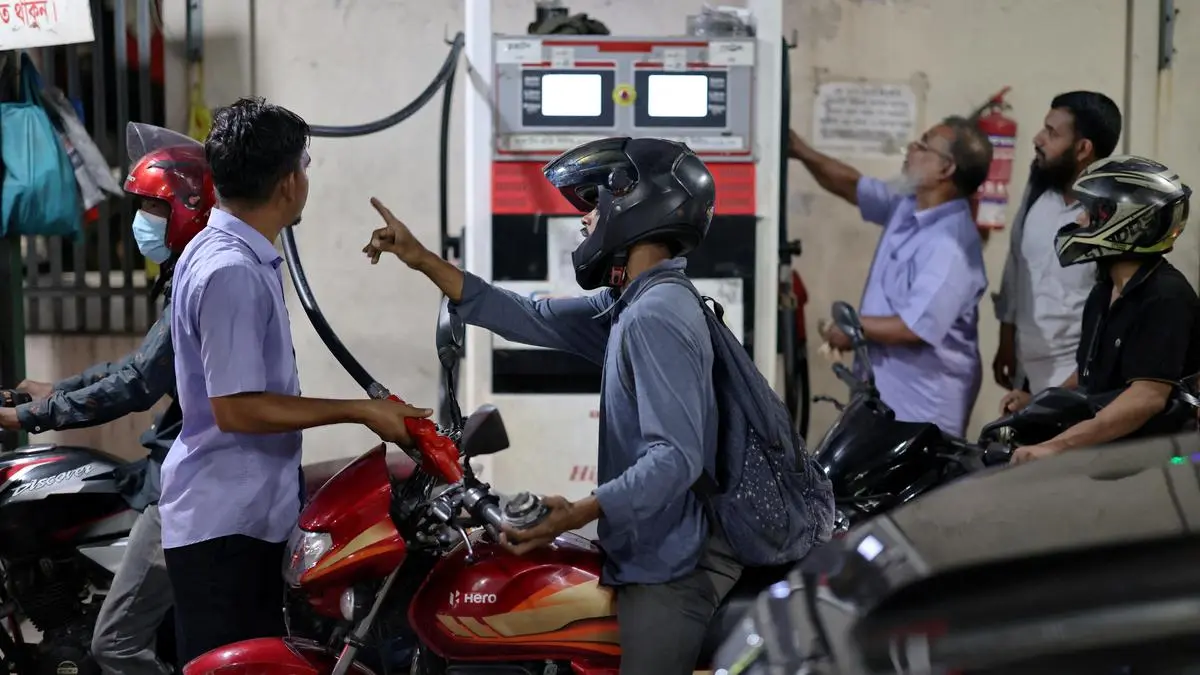
The era of subsidized stability in Dhaka is over. Late Saturday night, the Energy and Mineral Resources Division confirmed what millions of commuters and farmers feared: a double-digit spike in retail fuel prices that effectively ends the government's weeks-long attempt to shield the public from the fallout of the Iran war. Starting Sunday, April 19, 2026, the price of diesel has jumped to Tk 115 per litre, while petrol and octane have been hiked to Tk 135 and Tk 140 respectively.
This is not a minor adjustment. It is a desperate financial pivot. By raising prices between 10% and 16.6% in a single stroke, the administration is admitting that its foreign exchange reserves can no longer bridge the gap between global volatility and domestic affordability. The conflict in West Asia, now entering its fiftieth day, has turned the Strait of Hormuz into a graveyard for predictable pricing.
The Arithmetic of Exhaustion
The government’s primary justification is the surge in crude oil prices, which have lurched toward $116 per barrel from a pre-war baseline of roughly $75. But the headline price of oil is only half the story. The real killer for Bangladesh is the "war premium" attached to every shipment. Freight rates have tripled, and insurance costs for vessels entering or bypassing the conflict zone have reached levels that make spot-market purchases almost prohibitive.
In March alone, the state-run Bangladesh Petroleum Corporation (BPC) was forced to cough up an additional Tk 1,200 crore to secure just ten consignments of oil. For a nation already navigating a $5.5 billion IMF loan program, this level of hemorrhaging is unsustainable. The IMF has been clear: subsidies must be pruned. The war provided the geopolitical catalyst, but the fiscal math made this hike inevitable long before the first drone was launched in the Gulf.
The Myth of Adequate Supply
While officials insist that fuel stocks are sufficient, the reality at the pump tells a different story. Long queues at filling stations in Dhaka, Chattogram, and Sylhet are no longer just a symptom of "panic buying." They are the result of a supply chain that is fundamentally broken. When the Strait of Hormuz closed, Bangladesh was forced to scramble for non-traditional sources and expensive spot-market deals.
The India-Bangladesh Friendship Pipeline and emergency shipments from Kazakhstan are providing a thin buffer, but they are stopgap measures. The country consumes roughly 12,500 tonnes of diesel daily. The most recent shipments scheduled to arrive at Chattogram Port—approximately 1.33 lakh tonnes of diesel—represent barely 11 days of national demand. This is a hand-to-mouth existence for an economy that powers the world’s second-largest garment export industry.
Agriculture in the Crosshairs
The timing of this hike is particularly cruel. We are currently in the heart of the irrigation season, a period where diesel-powered pumps are the lifeblood of rice cultivation. Every Taka added to the price of diesel is a direct tax on food security. Farmers, already struggling with the rising costs of fertilizers, now face a choice: absorb the loss or pass the cost to a consumer base that is already reeling from double-digit food inflation.
The ripple effect does not stop at the farm gate. Transport syndicates are already preparing to demand fare hikes. In a country where logistics depend heavily on a fleet of aging, diesel-hungry trucks and buses, a Tk 15 per litre increase in diesel translates into a permanent upward shift in the cost of living.
The Geopolitical Trap
Dhaka has spent years trying to diversify its energy mix, yet it remains tethered to the volatile whims of Middle Eastern geopolitics. The decision to keep prices "unchanged" for April was a political gamble that failed. The hope was that the war would be short-lived or that diplomatic channels would reopen the Strait of Hormuz quickly. Instead, the conflict has hardened into a regional stalemate.
The government is now seeking an additional $2 billion in external financing just to keep the lights on and the pumps running through the summer. This is a classic debt trap: borrowing to pay for immediate consumption while the underlying infrastructure for energy independence—renewable investment and domestic gas exploration—remains woefully underfunded.
The Policy Failure of Yesterday
Critics point out that this crisis was exacerbated by years of neglected domestic exploration. As domestic gas fields depleted, the reliance on Imported Liquefied Natural Gas (LNG) and refined oil grew. When the global market was cheap, there was no urgency to build the "robust" storage capacity needed to weather a 50-day war. Now, the state is paying the price for that complacency.
A fuel card system is currently being discussed to regulate distribution and prevent hoarding. While this might stop a few black-market speculators, it does nothing to address the fundamental deficit of dollars and fuel. It is a management solution for a structural disaster.
The brutal truth is that Bangladesh is no longer in control of its own economic narrative. As long as the conflict in West Asia persists, the BPC will remain at the mercy of shipping companies and spot-market traders who smell blood in the water. For the average citizen, the new price at the pump is more than just a number; it is a signal that the cost of survival has just gone up, with no ceiling in sight.
Stop looking for a return to the "old" prices. They aren't coming back.